Latest News and Comment from Education

Thursday, June 5, 2014

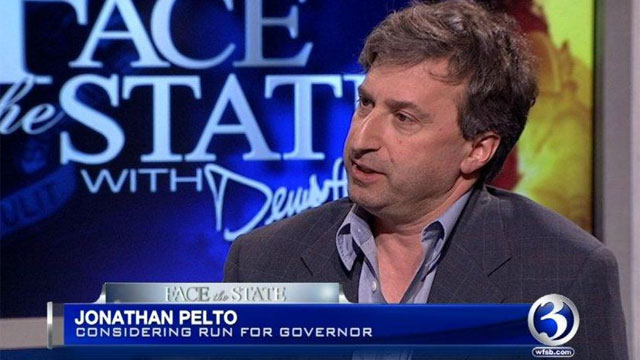
6-4-14 Wait What? - A call to arms (I mean pens) – A big day as I announce a running mate and petitions now available - Wait What?

A call to arms (I mean pens) – A big day as I announce a running mate and petitions now available - Wait What?:


Wait What? 


A call to arms (I mean pens) – A big day as I announce a running mate and petitions now available

After dropping off the appropriate paperwork, the Connecticut Secretary of the State’s office tweeted:   Denise Merrill @SOTS Merrill   @Jonathanpelto today was authorized by my office to collect signatures to be a petitioning candidate for governor.   And Jonathan Pelto is petitioning under the Education and Democracy Party and must collect 7,500 signatures by […] The post A call to arms (I mean


6-4-14 Wait What?
Wait What?: Wait What? Statement from Jonathan Pelto on the Connecticut American Federation of Teachers’s LPAC endorsement of MalloyStatement from Jonathan Pelto, exploring gubernatorial candidate on American Federation of Teacher’s Connecticut Legislative and Political Action Committee (LPAC) endorsement of Dannel Malloy  Without providing gubernatorial candidates with any opportunity to fill out


6-5-14 the becoming radical | A Place for a Pedagogy of Kindness (the public and scholarly writing by P. L. Thomas, Furman University)

the becoming radical | A Place for a Pedagogy of Kindness (the public and scholarly writing by P. L. Thomas, Furman University):


Insurance and the Common Good
A few weeks ago, a hail storm battered my neighborhood: Within the hour after the storm, signs appeared around my neighborhood for miles advertising hail damage repair for cars and homes. And while I have two badly damaged cars, my home suffered only a few dings to the siding and some ripped window screens (none of which will result in my filing insurance claims). But the insurance vultures cont


6-4-14 the becoming radical | A Place for a Pedagogy of Kindness (the public and scholarly writing by P. L. Thomas, Furman University)
the becoming radical | A Place for a Pedagogy of Kindness (the public and scholarly writing by P. L. Thomas, Furman University): Orwellian Educational Change under Obama: Crisis Discourse, Utopian Expectations, and Accountability Failures by Paul ThomasOrwellian Educational Change under Obama: Crisis Discourse, Utopian Expectations, and Accountability Failures by Paul Thomas.1 by plthomasedd / 1h 


City charters get $100M more for special ed than they spend; debate rages in Harrisburg | Philadelphia Public School Notebook

City charters get $100M more for special ed than they spend; debate rages in Harrisburg | Philadelphia Public School Notebook:


City charters get $100M more for special ed than they spend; debate rages in Harrisburg

by thenotebook on Jun 05 2014 Posted in Latest news


Philadelphia charter schools received more than $175 million last year to educate special education students, but spent only about $77 million for that purpose, according to a Notebook analysis of state documents.
That is a nearly $100 million gap at a time when city education leaders are considering raising some class sizes to 41 students and laying off 800 more teachers in District-run schools due to severe funding shortfalls. Payments to charters, which are fixed under law, make up nearly a third of its $2.4 billion budget.
The issue goes beyond Philadelphia. Statewide, charters, including cybers, collect about $350 million for special education students, but spend just $156 million on them, according to calculations from the Pennsylvania Association of School Business Officers (PASBO). The Notebook used the PASBO analysis of state data to calculate the numbers for Philadelphia, which has half the state’s 170 charter schools.
Although most parties agree that this situation is the result of a faulty state charter funding system, there is fierce disagreement over how to fix it. While legislators and the Corbett administration finalize a 2014-15 budget, school districts and charter school proponents are engaged in virtual war as they all scramble for their piece of what most agree is an insufficient pot of money.
“The charters are benefiting from an unfair system, although they didn’t create the system,” said Susan Gobreski of Education Voters PA. “But the basic issue is inadequate resources. People are trying to hold on to anything they’ve got, and they choose not to be concerned about what happens to others."
Charter proponents say that losing this money – now often used to pay for other educational services, but also sometimes plowed into the coffers of for-profit school management companies – will compromise their ability to provide for student needs and even endanger the future of some schools that have become dependent on the funds.
“Politicians that I’ve talked to just don’t understand what this will do to charter schools,” John Swoyer, CEO of MaST Community Charter in Northeast City charters get $100M more for special ed than they spend; debate rages in Harrisburg | Philadelphia Public School Notebook:

Chicago’s George Schmidt on Martin Koldyke, “Golden Apples,” and School “Turnaround” | deutsch29

Chicago’s George Schmidt on Martin Koldyke, “Golden Apples,” and School “Turnaround” | deutsch29:


Chicago’s George Schmidt on Martin Koldyke, “Golden Apples,” and School “Turnaround”

June 5, 2014


On June 4, 2014, I posted this piece by a guest writer, a Chicago area teacher, who has concerns about Martin Koldyke’s “Golden Apples” teacher recognition program. Her concern is that the “Golden Apples” program is a benevolently-disguised, self-serving effort for Koldyke to use teachers to staff his Academy for Urban Leadership “turnaround” schools (AULS).
The guest writer read my book, A Chronicle of Echoes, which includes three chapters detailing the history of mayoral control of Chicago public schools, and wished to add to the details in my book.
In response to the guest post, George Schmidt of Chicago-based Substance News offered the following details. Schmidt originally posted the information below in the comments section of the guest post. However, his experience with the topic warrants its own post.
I give you George Schmidt:

As I’ve posted before at various points and on substancenews.net, Koldyke is one of the main leaders of corporate school reform in Chicago. His original smokescreen was the Golden Apple Foundation. The Foundation began awarding the “Golden Apple” academy awards for “excellence in teaching” in the 1980s, by the way. Chicago’s public television station, WTTW, was part of the Golden Apple hype by 1990. Every year, they aired a ceremony which was basically like the Academy Awards. Some teachers ate it up. It turned out there was a lot of phony stuff about the program.
(Disclosure: I was a semi-finalist one year; I was told by one of the judges that I didn’t make the final cut because they were afraid I would “pull a Jane Fonda” at the TV show. At that time, I had pioneered the “Macintosh Computer Classroom” at Amundsen High School and among other things was featured in a four-page Apple promotional on using the Macs in classrooms…).
Within a few years, the Golden Apples had evolved into as much hype as anything else. One friend of mine who won one told me she did everything but audition for the “show,” changing her wardrobe, practicing a certain kind of telegenic lesson, and even losing some weight while her kids (at one of Chicago’s “better” high schools) worked overtime on their nominating letters.
By the early 1990s, Koldyke, in partnership with then mayor Richard M. Daley, had become the Chicago “School Reform Authority” chairman. As such, he was overseeing the mandated “reform” programs in Chicago, using powers that still lingered from the old “Chicago School Finance Authority.” Koldyke was a right wing ideologue the entire time. The “Reform” authority paid a quarter 
Chicago’s George Schmidt on Martin Koldyke, “Golden Apples,” and School “Turnaround” | deutsch29:

4LAKids - some of the news that doesn't fit 6-5-14

4LAKids - some of the news that doesn't fit:


Education Overturned

Written by Red Queen in L.A., from her blog |  http://bit.ly/1kyridf Thursday 5 Jun 2014  ::  “Teaching To The Test” is a pedagogical revolution. Far from benign, it amounts to a coup d’état of not only the minds of our children, but their hearts as well. Informally, in my personal experience, I became vaguely aware by rumor during the 70′s that some students broke the rules and gamed


4LAKids - some of the news that doesn't fit 6-4-14
4LAKids - some of the news that doesn't fit: TEACHING THHOUGH TRAUMA: LAUSD says budget’s to tight to treat stressed out kidsAnnie Gilbertson | KPCC 89.3 FM | Pass/Fail |  http://bit.ly/1kKPymI Benjamin Brayfield/KPCC Like many students at Highland Park's Franklin High, ninth-grader Noemi Potenciano lost a brother to a drive by. Across L.A. Unified services for students affected by trauma are extr


6-5-14 @ The Chalk Face

@ THE CHALK FACE:


Chicago’s George Schmidt on Martin Koldyke, “Golden Apples,” and School “Turnaround”
On June 4, 2014, I posted this piece by a guest writer, a Chicago area teacher, who has concerns about Martin Koldyke’s “Golden Apples” teacher recognition program. Her concern is that the “Golden Apples” program is a benevolently-disguised, self-serving effort for Koldyke to use teachers to staff his Academy for Urban Leadership “turnaround” schools (AULS). The […]
Why Are So Many More Teachers “Retiring”?
WHY ARE SO MANY MORE TEACHERS “RETIRING”?.


6-4-14 @ The Chalk Face
@ THE CHALK FACE: The Damage Done by the “Texas Meteor”The 2013 NBER paper, “School Accountability, Postsecondary and Attainment,” by Jennifer Jennings, David Deming, Sarah Cohodes, and Christopher Jencks, was initially welcomed as evidence in support of test-driven accountability. Jennings et. al concluded that the Texas test-driven accountability of the 1990s increased student performance of mat


6-5-14 Seattle Schools Community Forum

Seattle Schools Community Forum:


Math Adoption: Thoughts and Analysis

Good morning.   That was quite an evening (and I even got to leave as the Board continue to slog through the lengthy agenda).   I'll try to have another thread about other items I heard about at last night's meeting.As I go thru this thread, some of these thoughts will sound familiar as I quickly went thru the 11(?) threads I wrote for the comments.  Some of these thoughts are your thoughts and I


6-4-14 Seattle Schools Community Forum
Seattle Schools Community Forum: Math Adoption - The Staff Strikes BackReviewing the updated agenda for tomorrow night's Board meeting, it looks like staff have been burning the midnight oil.First, the speakers list is full with nine people on the waitlist.  The overwhelming number of comments are to be about the math adoption.Next, on the K-5 Math Instructional Materials Adoption, there are many


The Quarter Century Con of Vouchers | Larry Miller's Blog: Educate All Students!

The Quarter Century Con of Vouchers | Larry Miller's Blog: Educate All Students!:


The Quarter Century Con of Vouchers

Filed under: Vouchers — millerlf @ 12:17 pm 
By Joel McNally Wednesday, June 4, 2014 Express Milwaukee


It’s taken a quarter of a century, but Republican taxpayers around the state and some of their representatives are finally starting to realize they’ve been hoodwinked by their own party’s flimflam advocacy of private school vouchers.

You have to hand it to the voucher movement, though. One of the biggest complaints about modern-day politics is that political leaders rarely look any further into the future than the next election.

The voucher movement has been one of the longest running cons in Wisconsin political history.

Private school vouchers began in 1990 with 300 Milwaukee students in seven schools at a cost of $700,000. Like that classic ’50s horror movie monster in The Blob, it has grown inexorably ever since into a statewide program with nearly 30,000 students and a cost approaching $230 million a year.
The shocking thing is that this wasn’t one of those big government programs by tax-and-spend Democrats. It was conservative Republicans gleefully feeding the beast. But anyone who looked closely at the Republicans’ rationale for their enormous spending increases knew from the start something was fishy.

Republicans claimed vouchers were a program to improve racial and economic equality by providing the same private school educational opportunities to poor, black children in Milwaukee’s inner city that were available to wealthy, white suburban children.
It’s not an overstatement to say the next Wisconsin Republican legislative proposal to improve the lives of poor African Americans in Milwaukee’s central city will be their first.

Many Republicans wouldn’t even deny it. Since they don’t want to think of themselves as nasty, mean-spirited people, they’ve created an entire political philosophy to justify cuttingThe Quarter Century Con of Vouchers | Larry Miller's Blog: Educate All Students!:

Board President Michael Bonds on MPS in Transition The ‘hidden miracle’ happening in Milwaukee’s public schools By Lisa Kaiser Wednesday, June 4, 2014   Gregory Thornton, who led the district during the tumult over Gov. Scott Walker’s Act 10 and his slashing of aid to K-12 public schools by $800 million in his first budget, is leaving June 30 for Baltimore. The board of directors hopes to name an

Waking Up to Education Activism

Education Activism:


Waking Up to Education Activism

Education ActivismMy journey into education activism began in the Spring of 2003 when I was asked to start an oral history project documenting the African American presence in Bronx Neighborhoods, which had been neglected by scholars of Bronx History as well as African American History in New York City. The project was embraced by scores of community residents, who wanted to tell stories that defied common stereotypes about Black neighborhoods in the Bronx being places of menace and danger.
I found myself conducting as many as three interviews a week during the first two years of the project and before I knew it a portrait was emerging of the Bronx as a place of hope and opportunity for African Americans, West Indians, and Puerto Ricans living in crowded Harlem neighborhoods in the 1930s and 1940s — a place where they could find safer streets, better housing and better educational opportunities for their children.
This was a story that had never been told in print or broadcast media and was completely absent from the few existing books on Bronx history. It was an inspiring and important story of community building, but there was one feature of it that seemed to capture everyone’s imagination, the creation of an incredible live music culture in two multiethnic Bronx neighborhoods, Morrisania and Hunt’s Point, which included jazz, Afro Cuban music, doo wop and rhythm and blues.
The mixture of three cultural traditions – the African American,the West Indian, and the Latin Carribbean – inspired extraordinary musical creativity, present in live form in clubs and theaters, schools and churches, and occasionally in apartments and on street corners. What we came across was truly incredible: Here were two neighborhoods in the Bronx, largely Black and Latino, with a few remaining Jewish and Italian residents, who contributed as much or more to American popular music as any places in the country.
When we started publishing our findings and having articles written about our research in New York’s major newspapers, our work was discovered and seized upon by teachers and administrators in Bronx schools as something that could be incorporated into their curriculum and inspire their students, many of whom had a Education Activism:

EDUCATION REFORM Beneath the Surface Part II: Marketizing School Reform - The Brooklyn Rail

EDUCATION REFORM Beneath the Surface Part II: Marketizing School Reform - The Brooklyn Rail:


EDUCATION REFORM Beneath the Surface
Part II: Marketizing School Reform


I ended the first article in this series by discussing the Department of Education’s focus on closing old and opening new schools. I’ll begin this second article by discussing the complementary focus on the marketization of school selection.
I’m no expert on markets. Indeed, I mostly rely on Michael Lewis, author of books such as The Big Short and the recently published Flash Boys, to understand them. Come to think of it, it might not be a bad idea for Michael Lewis to devote his next book to exposing the underside of the marketization of school reform. In the meantime, let me try to sort things out a bit.
In New York it all began with the establishment of new small high schools to replace quite deadly large high schools, especially in the Bronx. The plan was simple and quite good—close one bad big school and open up three or four new good small schools. That effort began before the Bloomberg era but it was enthusiastically embraced by the new regime. Early on, it secured the support of many millions of dollars from the Gates Foundation. Over a decade, more than 400 new schools were started. A fair assessment would say that most of the small high schools are much better than the schools they replaced, evidenced by much higher rates of high school graduation. But most of those new schools have not reached the goals they were intended to achieve. Those schools were not simply supposed to be better than really dreadful schools; they were intended to be really good schools. That goal remains elusive.
But, in the meantime, one thing did lead to another. The process of developing and approving new schools morphed into what was called, by analogy with financial investment, a “portfolio” strategy. A portfolio of stocks includes winners and losers; over time, the winners and losers are identified; the losers lose money and the winners make it. When this approach is tried on schools, the kids who attend the loser schools—oops!
Ah! The way you avoid that bad outcome is that you give people choices, so they can identify winners and losers and pick winners. This didn’t actually work out so well with 401Ks. In any case, in a school system with only a few winners and a lot of losers, the choice is often a hollow one. Let’s try to understand the balance of winners and losers. Here in New York City, only about 22 percent of high school graduates are meeting the state’s expectations for being prepared for college—meaning that they would not be required to take remedial courses if they did enroll in college. This is a low bar. But that’s hardly the worst of it. For the just over 350 schools for which data for 2012’s graduates were reported, 10 percent (about 40) of the schools produced half of the college-ready graduates. Many of those schools are exam schools or have selective admissions policies. About half of the high EDUCATION REFORM Beneath the Surface Part II: Marketizing School Reform - The Brooklyn Rail:

School District's Use of Worker Visa Program Draws Scrutiny - WSJ

School District's Use of Worker Visa Program Draws Scrutiny - WSJ:


School District's Use of Worker Visa Program Draws Scrutiny

Texas District Allegedly Exploited H-1B Program in Recruiting Teachers From Overseas.

From left, Alfonso Casares Tafur, Elizabeth Niño de Rivera and Francisco Javier Marcano were hired with H-1B visas. They are now advocating for the Garland, Texas, school district to help them stay in the U.S.Cooper Neill for The Wall Street Journal
GARLAND, Texas—As this city outside Dallas turned heavily Hispanic over the past decade, its school district hired foreign teachers like Bernardo Montes-Rodríguez, a Colombian, with the promise of a green card.
Now Mr. Montes and dozens of other teachers are uncertain whether they will be able to permanently settle in the U.S., as federal agencies investigate the Garland Independent School District for allegedly exploiting the worker visa program under which they were recruited.
Widely known as a way to bring in tech workers, the H-1B visa program allows employers to hire skilled foreigners for hard-to-fill positionsfrom software engineer to science teacher. And school districts around the country have used them to hire thousands of foreign teachers.
But the Texas case is the latest example in a string of alleged misuses of the program in schools. Since 2001, the U.S. Department of Labor has found more than 2,000 H-1B violations by individual schools, districts or boards, agency records show. In contrast, in a single-tech company category—custom computer programming—there were about 4,300 violations in roughly the same period. The tech sector traditionally accounts for the biggest number of workers brought in under the program.
In Garland, a city of about 234,000 people, school administrators investigating the matter said in April they discovered that foreign recruits had been hired not to increase the ranks of Spanish-speaking teachers, as intended, but instead, they allege, to enrich a rogue district executive and his associates, who charged immigrants hefty fees for legal and other services.
In a sign the program was being misused, officials say, the district hired teachers through a recruitment firm in the Philippines, where Spanish isn't the official language. They paid $1,000 for an interview with the district's head of human resources, Victor Leos, and $5,000 if they were hired, the district said. Mr. Leos, who retired from the School District's Use of Worker Visa Program Draws Scrutiny - WSJ:


WHY ARE SO MANY MORE TEACHERS “RETIRING”? | DCGEducator: Doing The Right Thing

WHY ARE SO MANY MORE TEACHERS “RETIRING”? | DCGEducator: Doing The Right Thing:


WHY ARE SO MANY MORE TEACHERS “RETIRING”?

Image
No, that is not me!
When I began teaching in 1970, and throughout almost all of my 38 year career in NYC and suburbs, teaching was a lifelong calling. Many, like me, started right out of college, grabbed a Master’s degree on the way to get permanent certification, and taught until retirement age or near it if an early retirement deal was created by boards trying to save labor costs. 
Nationally, in 1990, 20 years into my career, the average length of service was 15 years. Of course that counted those who never were granted tenure and those who realized for a variety of good reasons, that they wanted to do something else. It also, by the way, included second career teachers who started at 40ish and worked fewer years to reach retirement age.
Now the average, as most people know is less than 5 years. This is because of a number of reasons. Short timing TFA corps members and their clones are only one reason. In general, our culture has changed. Post baby boomer generations have shown a propensity to work more jobs for fewer years in their work life than us baby boomers and the depression generation that preceded them.  
But more and more a rising factor has been the degradation of the profession and WHY ARE SO MANY MORE TEACHERS “RETIRING”? | DCGEducator: Doing The Right Thing:

6-5-14 LA School Report - What's Really Going on Inside LAUSD

LA School Report - What's Really Going on Inside LAUSD (Los Angeles Unified School District):


Non-profit and Dodgers partner to bring breakfast to LAUSD students
Click to view slideshow. A new partnership between a non-profit and the Los Angeles Dodgers Foundation (LADF) is ensuring that more LAUSD students can look forward to eating healthier breakfasts at school during the 2014-2015 academic year. The partnership comes as an efforts to bolster School Fuel, an initiative launched by the Los Angeles Fund for Public Education (The LA Fund), which reduces th


Galatzan doubles down in effort to block nominee to bond panel
Stuart Magruder, Architect on LAUSD Bond Oversight Committee LA Unified school board member Tamar Galatzan is not going down quietly when it comes to Stuart Magruder, a staunch opponent of the district’s $1 billion iPad program whom the board removed from the Bond Oversight Committee last month. Magruder was the representative of the American Institute of Architects (AIA). Galatzan had opposed his

Analysis: Why the LAUSD school board race attracted so few voters
The voters have spoken. Well, some of them spoke. OK, a handful did. Turnout for the California primary on Tuesday was routinely disappointing — 18.3 percent statewide, 13.1 percent across LA County and how about that LA Unified District 1 school board race: 10 percent. Democracy inaction. Among 338,986 registered voters in the district, only 34,876 cast a ballot for someone to serve on the board


Morning Read: Money race begins for McKenna, Johnson
McKenna, Johnson seek funds, backers in L.A. Unified race The top two finishers in this week’s election for the Los Angeles Board of Education will meet in an August runoff, but first they face another crucial contest: the race for money and powerful endorsements. Each faces challenges in getting over the top. McKenna, 73, a retired district administrator, has a community base, but needs dollars f


6-4-14 LA School Report - What's Really Going on Inside LAUSD
LA School Report - What's Really Going on Inside LAUSD (Los Angeles Unified School District): Just in: School Board race heads to runoffWith 53 percent of the precincts reporting in the LA Unified school board’s District 1 race, the results indicate a runoff is in the cards between George McKenna and Alex Johnson. Latest updates available at the County Clerk’s office.  2 5h hide  //  saveJust in: