Latest News and Comment from Education

Monday, December 21, 2020

Cartoons on Zooming for Work and School | Larry Cuban on School Reform and Classroom Practice

Cartoons on Zooming for Work and School | Larry Cuban on School Reform and Classroom Practice
Cartoons on Zooming for Work and School


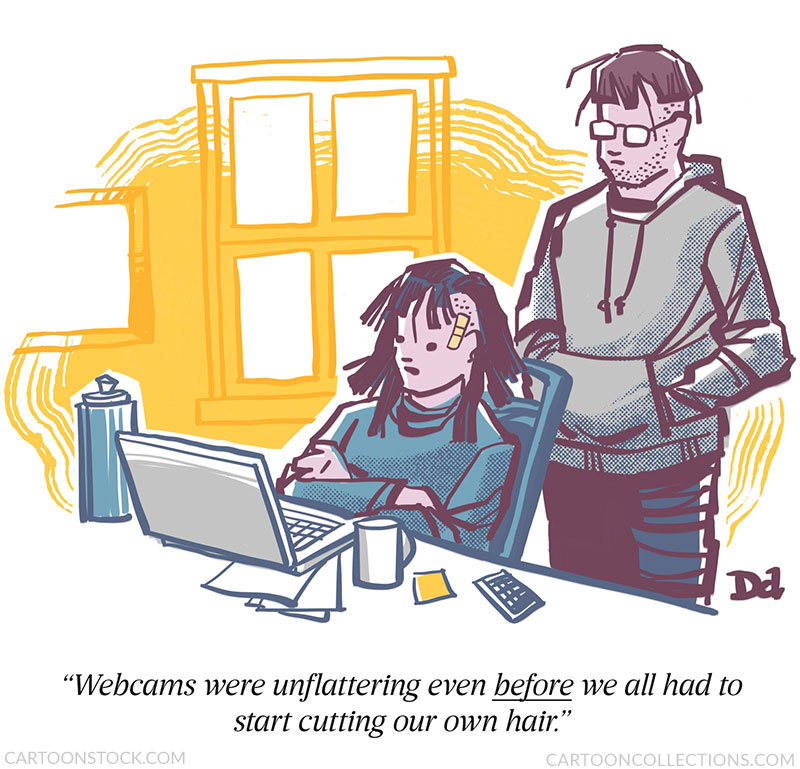
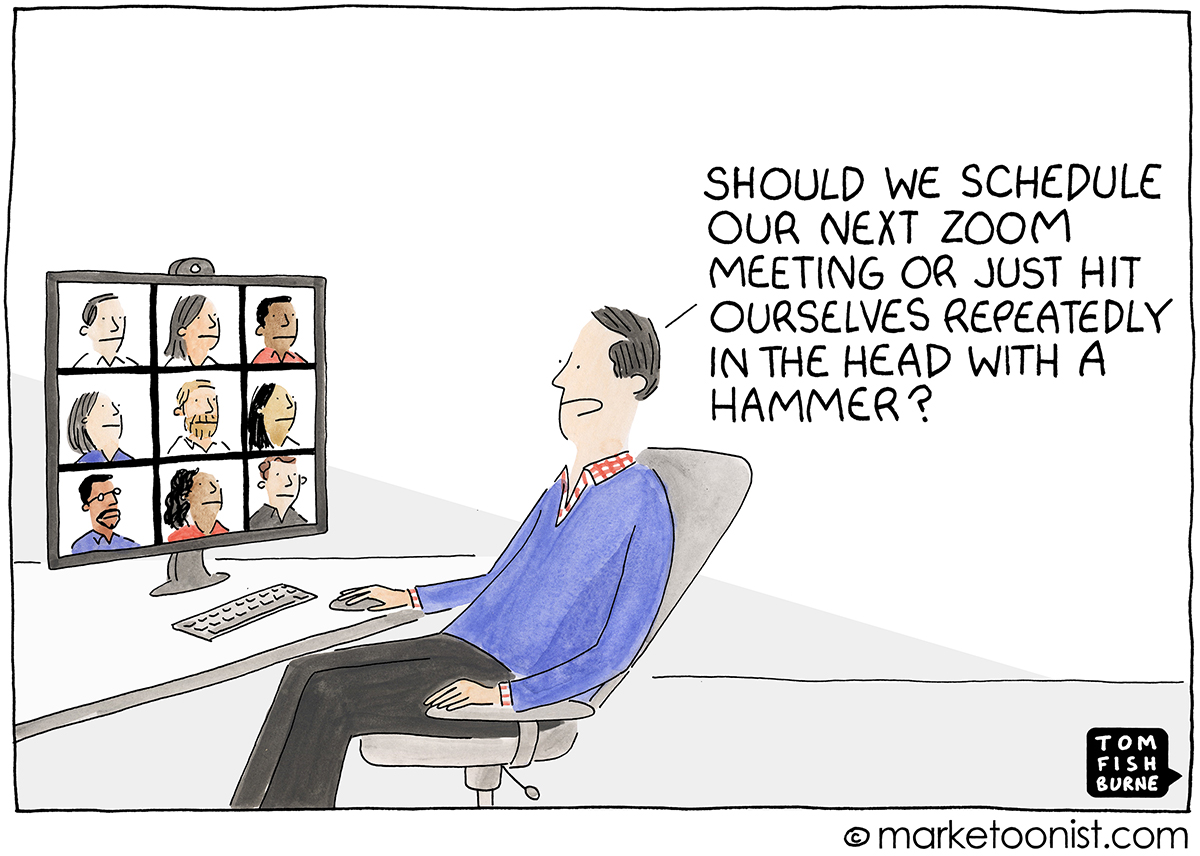
Most readers of this blog Zoom for work, birthdays, anniversaries, and sadly, for funerals in these surreal pandemic times. Then there are the millions of students who received instruction on Zoom from preschoolers to high school seniors. Many of those Zoomers, maybe all, are Zoomed out. Not only Zoom but other devices and software stretch the limits of pandemic patience. Whatever devices and software readers use, I have collected cartoons that poke an elbow in the ribs and hope that they will tease out a smile. Enjoy!

Rob Tornoe’s coronavirus cartoon for Friday, May 15.

WATCH VIDEO: Fauci puts priority on getting teachers vaccinated and a return to in-person classes | EdSource

Fauci puts priority on getting teachers vaccinated and a return to in-person classes | EdSource
Fauci puts priority on getting teachers vaccinated and a return to in-person classes
CSU Chancellor Tim White hosts virtual Q&A event with Dr. Anthony Fauci 


hen Dr. Anthony Fauci, the nation’s top infectious disease expert, takes on his new role as President-elect Biden’s chief medical adviser, one of his top priorities will be reopening schools safely and getting teachers vaccinated for the coronavirus.

In a wide-ranging interview with California State University Chancellor Tim White Friday, Fauci expressed optimism for getting most of the United States’ population vaccinated and reopening schools and college campuses to in-person instruction. (Watch the full interview here.)

“The only way we’re going to end this epidemic is if we get a range of 70% to 85% of the population vaccinated,” he said. “We could essentially end this outbreak in this country … It would be tragic to think that now that we have in our hands vaccines that are 94% to 95% effective, and we don’t get as many people as we possibly can to utilize that.”

Fauci predicted that just about anyone can get vaccinated later this spring once vaccines are given to essential workers, people with underlying conditions and the elderly between now and March. By April, “I would call that more like open season, where anyone, even those who don’t have underlying conditions,” can start getting vaccinated, Fauci said.

Under those conditions, then by the Fall 2021 term, “I think we could be in good shape, and I am cautiously optimistic that we can do that and get back to some form of normality,” he said.

White hosted Fauci at a virtual Q & A event for the 23 campus presidents. The event was live-streamed for the campus community and featured questions from four CSU presidents.

Fauci said teachers must be at the front of the line for the vaccine.

“It’s extremely important to get children back in school and kept in school,” Fauci CONTINUE READING: Fauci puts priority on getting teachers vaccinated and a return to in-person classes | EdSource

Online proctoring services pose privacy concerns for remote learning - Vox

Online proctoring services pose privacy concerns for remote learning - Vox
How teachers [sic] are sacrificing student privacy to stop cheating
Surveillance software for remote learning is drawing criticism from privacy advocates and lawmakers.


As the fall semester began at the University of Nevada, Reno, psychology professor Mark Lescroart faced an increasingly common dilemma for teachers: How to prevent his newly remote students from cheating on the quizzes and exams he’d designed to be taken in class with supervision.

“I have been uncomfortable with the idea that cheating is pretty easy when you’re online,” Lescroart told Recode in October.

One possible solution his university provided was Proctorio, an online proctoring service that uses machine learning. But Lescroart didn’t like the prospect of third-party software recording and analyzing his students in their homes. Ultimately, he decided that violating their privacy was worse than leaving a potential cheater uncaught.

But many teachers around the country have come to a different conclusion. As online education has become the norm in the Covid-19 pandemic, they’ve opted to use services like Proctorio. The services have ignited controversy, too. Privacy advocates hate them, and students have protested, starting petitions and accusing the services of being invasive, discriminatory, and inaccurate.

In December, the Electronic Privacy Information Center (EPIC) accused five online test proctoring services, including Proctorio, of unfair and deceptive trade practices in a complaint filed with the Office of the Attorney General of the District of Columbia. EPIC also informed the five companies that it is preparing to file a lawsuit unless they change their practices. Several US senators have also recently written to the companies producing these tools to request more information about privacy, bias, and accessibility concerns raised by their tools.

Some educators have spoken out against this tech or, like Lescroart, have opted not to use it. But for the most part, the schools that use the software haven’t budged, citing the importance of maintaining academic integrity.

“All these things are kind of predicated on a relationship where academic dishonesty is CONTINUE READING: Online proctoring services pose privacy concerns for remote learning - Vox

Teacher Tom: The Technology of Speaking With Children So They Can Think

Teacher Tom: The Technology of Speaking With Children So They Can Think
The Technology of Speaking With Children So They Can Think


It was in one of Tom Drummond's classes more than 20 years ago that I first heard about the "technology" of speaking with children so they could think. Tom was explaining the ultimate ineffectiveness of "directive" statements. You know the kind -- "Sit over here," "Stand there," "Pick that up" -- the sorts of adult communications with which most of our childhoods were filled. He then gave us an assignment, which was to simply keep track of the number of directive statements to children we made during a single classroom day. This assignment was simply about ourselves, about listening to our words, practicing using this new technology, not being burdened with the complications of having to make judgments about how the children were responding, just focusing on ourselves and the words we were using, but it was impossible to not notice the immediate impact that it had on my relationship with the young children in my life.

Although, this was my first formal exposure to the "technology" of treating children like fully formed human beings, I'd previously been exposed to this technology "in the wild," so to speak, via our daughter's preschool teacher, with whom I'd been working as a cooperative classroom parent for a couple of years. But, as technology often does for the uninitiated, it had just looked like magic, something Teacher Chris was able to do because she was Teacher Chris. 

One of the goals our classwork was to replace our directive statements with informative ones and it was awkward and unnatural at first. For instance, instead of saying, "Pick up that block," I would try to make the more cumbersome informative statement, "I see a block on the floor and it's clean up time." One of the basic ideas, Tom explained, was that unlike directive statements which tend to shut things down, informative statements create a space in which the kids get to do their own thinking, make their own decisions about their own behavior, instead of merely engaging in the power struggle that inevitably emerges from being bossed around. It made sense to me even while it felt strange and artificial. It was true, I couldn't help but notice, that when I took the time to be informative, children were far less likely to push back, and instead take a beat (which, I've learned means they are taking a moment to process the information you've given them) then pick up that block and put it away. 

I discovered, on my own, the truth of Tom's assertion that the ultimate weakness of relying upon directive statements is CONTINUE READING: Teacher Tom: The Technology of Speaking With Children So They Can Think


John Thompson on Ta-Nehisi Coates and Bruce Springsteen | Diane Ravitch's blog

John Thompson on Ta-Nehisi Coates and Bruce Springsteen | Diane Ravitch's blog
John Thompson on Ta-Nehisi Coates and Bruce Springsteen


John Thompson, historian and retired teacher in Oklahoma, shares ideas about teaching in difficult times.

My high school and GED students always loved wrestling with the ideas presented by Ta-Nehisi Coates and Bruce Springsteen. I’m sure they would now agree that America needs both – Coates’ Between the World and Me, centered around Coates’ letter to 15-year-old son, and the 71-year-old Springsteen’s Letter to You. Actually we need both masterpieces and Kamilah Forbes’ HBO adaptation of Coates’ advice on how to “become conscious citizens of this beautiful and terrible world.”

Coates’ Between the World and Me tackles “the question of my life,” which is “how one should live within a black body, within a country lost in the Dream.” It focuses on the fatal police shooting of his fellow Howard University student, Prince Jones. It illustrates how “the plunder of black life was drilled into this country in its infancy and reinforced across its history, so that plunder has become an heirloom, an intelligence, a sentience, a default setting to which, likely to the end of our days, we must invariably return.”

But as Michiko Kakutani observed in his New York Times CONTINUE READING: John Thompson on Ta-Nehisi Coates and Bruce Springsteen | Diane Ravitch's blog

Just an EdD from a State University – radical eyes for equity

Just an EdD from a State University – radical eyes for equity
Just an EdD from a State University


Several years ago I was on a panel for a public forum held on my university’s campus. At the Q&A ending the panel talk, a colleague from another discipline asked a detailed question grounded in their discipline.

I watched their face and eyes as I navigated not only the arcane and somewhat navel-gazing elements of the question (we academics love to hold forth with questions that are thinly veiled opportunities to hear ourselves talk) but also that this conversation between the two of us was almost entirely alienating for 75% of the audience, which included several of my students.

Referencing key scholars from my colleague’s field, I did a bit better than hold my own—although I just have an EdD from a state university.

Because of the lingering Jill Biden controversy—using “Dr.” with people holding doctorates and working as professors—the public has been exposed to the ugliness surrounding and within the academy that includes classism (one detractor of Jill Biden clearly also disrespects community college students), sexism (the original swipe at Jill Biden that isn’t even thinly veiled misogyny), and degree stigmas (even in this excellent rebuttal of all the nonsense tossed at Jill Biden, the EdD is framed as a lesser degree).

My journey to academia and an advanced, terminal degree (EdD in Curriculum and Instruction) began in junior college after I left high school an avid math/science student set on majoring in physics (one of the most prestigious CONTINUE READING: Just an EdD from a State University – radical eyes for equity

Christmas Past | Teacher in a strange land

Christmas Past | Teacher in a strange land
Christmas Past


If you watched Stephen Colbert’s show-length interview with Joe and Jill Biden last week, you heard Joe, acting like the nation’s corny but well-meaning grandpa, describing his annual habit of spreading fake snow, made with Ivory Snow flakes, on the branches of the family Christmas tree.

Joe really got into it, adding a lot of detail about placement of single strands of tinsel, and how this was a midnight tradition handed down from his father. The future first lady was bravely smiling, in political wife fashion, but she had that look women get when they want their husbands to stop rambling on.

But personally—I was charmed. It was geezer talk, all right, but it’s refreshing to hear the next Leader of the Free World get all nostalgic about past Christmases and his father. Joe Biden is an unabashedly sentimental empath—and an empath is what we need when there are monsters lurking.

When Joe Biden started getting specific about tinsel, I flashed to my mom. My mother was a post-war bride who saved tinsel, year to year, tied with ribbon. When the newspapers (remember them?) published stories about the high lead content in old-style tinsel, she phased it out, but prior to that she was a single-strand person, CONTINUE READING: Christmas Past | Teacher in a strange land

What the Congressional Deal Means for Education | Diane Ravitch's blog

What the Congressional Deal Means for Education | Diane Ravitch's blog
What the Congressional Deal Means for Education


Phyllis W. Jordan of Future-Ed, a D.C. think tank, explains here what the latest Congressional agreement on COVID aid means for education and compares it to last spring’s CARES Act as well as to the HEROES Act passed in May by the House of Representatives. The agreement does not include any aid for cities or states. President-Elect Joe Biden has pledged another relief package after he takes office.

She writes:


The $900 billion package builds on a $908 billion stimulus bill introduced Dec. 14 and would include stimulus checks, small business relief, unemployment benefits, and support for vaccine distribution, among other things. The measure includes $82 billion for education, with $2.7 billion specifically for private and parochial schools. A detailed proposal has not been publicly released yet, but the Dec. 14 bill included the $82 billion figure and broke it down like this:

  • $54 billion of that for K-12 schools, largely delivered through Title I funding. That’s about four times what schools received in the CARES Act approved in March.
  • $20 billion for higher education with dollars set aside for minority-serving institutions
  • $7.5 billion for governors to spend at their discretion, including on private schools.

School meal programs and child care. and expand the CONTINUE READING: What the Congressional Deal Means for Education | Diane Ravitch's blog

2020 Review: The Year That Changed Everything | Exceptional Delaware

2020 Review: The Year That Changed Everything | Exceptional Delaware
2020 Review: The Year That Changed Everything


Christmas is in a few days which means the end of the year is fast approaching. 2020 was one for the record books. Between Covid-19, the election, and all that came before, between, and after, it was a year no one will ever forget.

Personally I went through so many changes, at such a rapid pace, that I’m still absorbing it all. The entire year was filled with endings and beginnings, sometimes doing so with the tenacity of a spider on it’s web. 2020 began as a year of fear and ended on the promise of hope.

We all suffered in some way this year. We couldn’t escape it. As news got out about a virus in China that was killing people, the gnawing itch of curiosity quickly morphed into the realization that you could be next. We put on masks and stockpiled toilet paper and paper towels. We bought tons of food we would normally never eat just because there were only 2-3 items left CONTINUE READING: 2020 Review: The Year That Changed Everything | Exceptional Delaware

Louisiana Educator: Science vs Superstition and Stupid Politics

Louisiana Educator: Science vs Superstition and Stupid Politics
Science vs Superstition and Stupid Politics


More than 40 years ago the brilliant musician Stevie Wonder released an interesting and highly relevant song called: "Superstition". Part of the lyrics to the song are as follows: 

When you believe in things
That you don't understand,
Then you suffer,
Superstition ain't the way
Stevie Wonder's song is amazingly relevant today when people refuse to wear masks or practice social distancing because they believe that the whole Covid-19 pandemic is not real. They have chosen to believe crazy political conspiracy theories that the virus is not really dangerous as thousands of people die in overwhelmed ICU wards. Some of the victims of Covid-19, just a few days before they die of the disease continue to spout denial that the disease that has caused them to be hospitalized is not real. So they are actually dying of this crazy political superstition. Note: I wrote this post in early April about the dangers of this disease that so many still refuse to recognize.
Millions of Americans today actively seek out biased "news" sources that somehow claim that the whole pandemic situation we are in today is really not a dangerous disease but a plot by political enemies of the president to help steal the presidential election. This is political superstition that is being maliciously spread by irresponsible individuals who have figured out that many Americans rather believe crazy conspiracy theories instead of the solid advice coming from infectious disease scientists like Dr Fauci, about the dangers of this disease. "When you believe in things that you don't understand, Then you suffer".
Superstitious political beliefs is why more Americans die in one day than the total number of people in Vietnam, Korea, or New Zealand  that CONTINUE READING: Louisiana Educator: Science vs Superstition and Stupid Politics

A VERY BUSY DAY Larry Ferlazzo's Websites of the Day... The latest news and resources in education since 2007

 Larry Ferlazzo's Websites of the Day... | The latest news and resources in education since 2007


My Most Popular Tweets Of The Year
PhotoMIX-Company / Pixabay Here’s one of my final “Best” of 2020 posts…. The first post is my most popular one, and it goes from there. I’m adding this post to ALL END-OF-YEAR “BEST” LISTS FOR 2020 IN ONE PLACE!: I get frustrated when I see school boards who continue to meet in Zoom vote to open schools, journalists who continue to work from home demand that schools open & college professors who
“12 Strategies for Encouraging Students to Want to Revise Their Writing”
12 Strategies for Encouraging Students to Want to Revise Their Writing is the headline of my latest Education Week Teacher column. Four educators share suggestions for creating the classroom conditions in which students want to make revisions to their writing. Here are some excerpts:
A Look Back: KQED Interviews Me About Saul Alinsky & His Connection To Teaching
I thought that new – and veteran – readers might find it interesting if I began sharing my best posts from over the years. You can see the entire collection here . This post originally appeared in 2016. Two days after Ben Carson suggested that Saul Alinsky was, and Hillary Clinton is, a devil worshiper , the KQED Mindshift blog published an interview with me about how I apply his work in the clas
Recommendations For Who To Follow On Twitter In 2021
joshborup / Pixabay Here’s the latest addition to ALL END-OF-YEAR “BEST” LISTS FOR 2020 IN ONE PLACE!: Off-and-on over the next few days I'll be sharing recommendations for people & organizations to follow here on Twitter. I'll collect them all in one post on my blog. — Larry Ferlazzo (@Larryferlazzo) December 20, 2020 If you are interested in getting the latest education news, journalists to fol
Congress Agrees On New Stimulus Package Including Billions For K-12 Schools
PublicDomainPictures / Pixabay Congressional and Trump Administration negotiators just agreed to a deal on a new federal stimulus package . They’ll vote on it Monday. Here are some tweets with the details: I wonder how many schools will be open in 2021. | "The agreement provides $82 billion in funding for colleges and schools, including support for HVAC repair and replacement to mitigate virus tr
CDC Says All Teachers Should Be Able To Be Vaccinated By End Of February – I’ll Believe It When I See It
The NY Times just published Frontline Workers and People Over 74 Should Get Shots Next, CDC Panel Says . It says that teachers are in the next priority group and….. Together, the two groups the committee voted to prioritize on Sunday number about 51 million people; federal health officials have estimated that there should be enough vaccine supply to inoculate all of them before the end of Februar
Personal Reflections On My 2020 Professional Experiences
photosforyou / Pixabay I thought some readers might find it interesting, and I thought it would be a useful reflection exercise for me, if I reflected on my work around education over the past twelve months AND my hopes and concerns for 2021 (those 2021 thoughts will appear in a future post) I’ve 

 Larry Ferlazzo's Websites of the Day... | The latest news and resources in education since 2007