Latest News and Comment from Education

Thursday, January 26, 2017

Rizga’s Mission High Informs | tultican
Rizga’s Mission High Informs | tultican:

Rizga’s Mission High Informs 

Image result for Rizga Mission High Informs

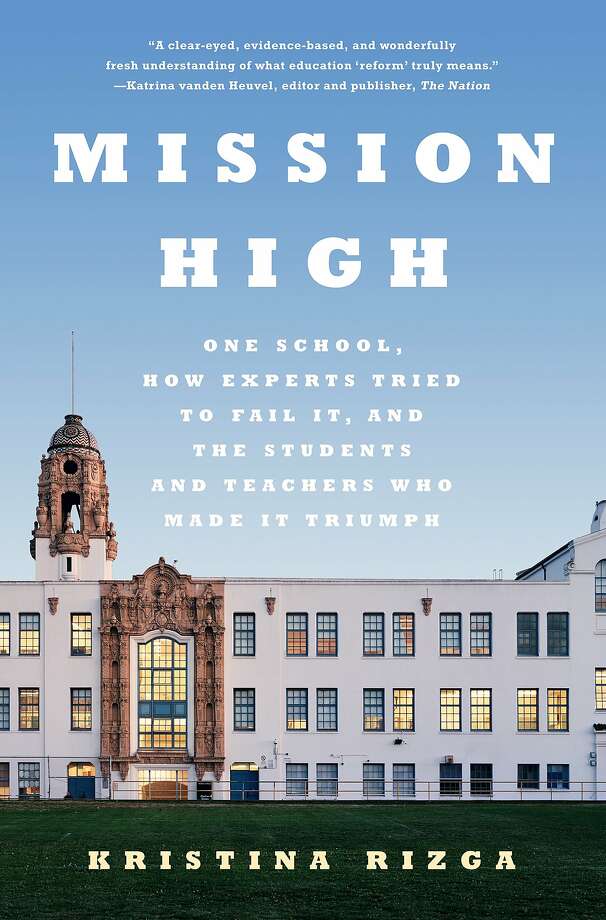
What is authentic quality education? Reading books by teachers like John Thompson and Ciedie Aechs provides significant insight as they take us inside their schools. Kristina Rizga, a journalist who was imbedded within San Francisco’s Mission High, makes another wonderful contribution to this understanding. For four years, she sat in classes, interviewed students, teachers and administrators. At the same time she studied the pedagogical process with the guidance of friends like Larry Cuban. Her book, Mission High, significantly contributes to the comprehension of sound education.
Solutions for Fixing Schools Are Wrong
In the book’s preface, she declares, “The more time I spent in classrooms, the more I began to realize that most remedies that politicians and education reform experts were promoting as solutions for fixing schools were wrong.” For multiple decades, classroom teachers have been awakening to that same realization. This time it was an outsider who spent enough time to see how misguided test and punish education policies are; to see how misguided standardized approaches to education are.
Echoing Rizga’s point, The National Education Policy Center recently published a tome entitled, Learning from the Federal Market-Based Reforms. This following statement is in the introduction.
“Despite this legislative commitment to public schools, our lawmakers have largely eroded ESEA’s [Elementary and Secondary Education Act of 1965] original intent. Moving from assistance to ever increasing regulation, states gravitated toward test-based reforms in the minimum basic skills movement in the 1970s. A watershed event occurred in 1983 with the report, A Nation at Risk, which was predicated on international economic competitiveness and rankings on test scores. The report was succeeded by Goals 2000, the first federal Act to require states to develop standards-based test goals and measure progress toward them. The stringent and reductionist No Child Left Behind (NCLB) Act of 2001 then followed on its heels. At each step, our educational policies became more test-based, top-down, prescriptive, narrow and punitive, and federal support to build the most struggling schools’ capacity for improvement faded.”
In the author’s notes, Kristina reveals what being imbedded meant, how she worked and the kind of relationships she developed.
“In 2010 I started sitting in on the classrooms of Robert Roth, the first teacher I picked, observing him and his interactions with students. I spent about two years coming regularly to Roth’s classes, sometimes going to every class for weeks. Then I spent one year, on and off, in Hsu’s class and about six months, on and off, in McKamey’s and Anders’s classes. The classes were so intellectually engaging – more than most of the courses I Rizga’s Mission High Informs | tultican:


This Is What The Resistance Looks Like: Steve Zimmer in LAUSD4 – redqueeninla

This Is What The Resistance Looks Like: Steve Zimmer in LAUSD4 – redqueeninla:

This Is What The Resistance Looks Like: Steve Zimmer in LAUSD4


Trump’s been working overtime to enroll anti-cabinet members, a sort of Through-The-Looking-Glass collection of zombie-apocalypse advisors whose prerequisite qualification seems to be whatever their predecessors were not. Anti-intellectual, antithetical; an anti-professional Barbarian horde of ideological battering rams, poised for imminent despoiling of the public purse, and the public purpose.
Everyone knows the drill, it has been well-commented on already. What’s flummoxing us all still is the question:  how to beat back these privateers?
“Resist” is the catch-phrase du-jour, but it is a description, not a formula: Resist what, who/m, how??
Well, Steve Zimmer is clearly the anti-Trump choice of LAUSD 4.

An angry swamp of beauty
To resist Trump’s rogue cabinet of government deconstructivists, we must stand against those who would rebrand the public as private, who would catalyze the transformation of public Commons into private holdings.
We must stare down that ideology which would privatize social security, privatize postal service, privatize our public park service and lands, privatize corrections facilities and military operations, forsake public health to a profiteering, insurance-industrial complex, and deny science and public broadcasting the assurance of unbiased funding altogether.
And in insisting on that which is rightfully public, and accountable to us, we must likewise desist in denying the alchemy of public district schools transformed into public charter ones. Operating outside of the public eye, without public input and absent public accountability, these schools are public only in the narrow sense that they siphon funds which are public. They are the ideological stepsister of privatization. But their champions are This Is What The Resistance Looks Like: Steve Zimmer in LAUSD4 – redqueeninla:


New Study: Are Charters beacons of opportunity for Special Needs Students? – Cloaking Inequity

New Study: Are Charters beacons of opportunity for Special Needs Students? – Cloaking Inequity:

New Study: Are Charters beacons of opportunity for Special Needs Students?

Image result for ulysses sirens


The extent to which special student populations (ELL, Special Education and Economically Disadvantaged) gain access to charter schools is understudied. The new study Separate and Unequal?: The Problematic Segregation of Special Populations in Charter Schools Relative to Traditional Public Schools utilizes state, district, and local level data to understand the enrollment of high-need special populations in charter schools compared with non-charter public schools.
Vasquez Heilig, J. Holme, J., LeClair, A. V., Redd, L., & Ward, D. (in press). Separate and Unequal?: The Problematic Segregation of Special Populations in Charter Schools Relative to Traditional Public Schools. Stanford Law & Policy Review27(2), 251-293.

In this article, we examine the extent to which charters in the state of Texas are serving high needs populations (English Language Learners, Special Education, and low-income students) at the same rates as traditional public schools. We first conduct statewide analyses to compare charter school and traditional public district demographics by locality. We also compare levels of segregation of those populations between traditional public schools by locality and charter status. We then conduct a local-level analyses to understand high-need students demographic patterns within the footprint of a large urban district to evaluate the extent to which students with greater than average instructional needs are served by charter schools in equal proportion to the neighboring public schools. We then conclude by descriptively examining the access and enrollment of high-need students in several popular “exemplar” charters.
Summary of Findings
We find that while Texas charters appear to be demographically similar to traditional public schools at the aggregate, the granularity provided by geospatial analyses demonstrate that charters under-enroll ELL students and special education students relative to nearby non-charter schools. State-level dissimilarity analyses show only modest disparities in segregation and access of high-need students within the Texas charter system compared to traditional public schools. However, local-level descriptive and geospatial analyses of charters in a large metropolitan area shows that there are large disparities in the enrollment of high-need students relative to traditional public schools nearby. (Please click on the article links above for more detailed findings)
Policy Implications
We conclude by discussing implications and recommendations for law and policy. The policy implications that logically emerge from the geographic granularity of these data could either be first-order incremental or second-order substantial. On the one hand, a set of first-order changes to educational policy related to charter schools would seek to take what is in place and make incremental adjustments to policy that aim to better regulate public charter schooling. On the other hand, a second-order change would be an approach that is a substantial departure that would purposefully curtail growth that charters have exhibited over the past two decades.
Second-Order Substantial Approach
One example of a second-order change that sought to challenge charters existentially came through litigation in the state of Washington. In 2015, the Washington Supreme Court in League of Women Voters of Wash. v. State, noting that charters resulted in “the loss of local control and local accountability,” found that charters were not “common” public schools under the Washington Constitution and thus could not be constitutionally funded as such.[1]
In 2012, voters in Washington state approved Initiative 1204 (I-1204), often known as the Charter School Act and codified as RCW 28.A.710. The Act established charters in the state of Washington and authorized up to 40 schools in the state. The Charter School Act purposefully labeled charter schools as “common school” allowing them to receive public tax dollars on a per pupil basis.[2] Further, the Act governed charters under a politically appointed board and established that charters were “exempt from all school district policies…all state statutes and rules applicable to school districts” beyond those specifically identified within the Act.[3]
The Washington Supreme Court ruled in League of Women Voters of Wash. v. State that charter schools were not common schools as defined in Article IX, section 2 of the Washington Constitution and voided the Charter School Act.[4] The decision upheld and relied upon the 1909 ruling in School District No. 20 v. Bryan that established that common schools must be under the control of voters and uniform for every child.[5] This aspect of the decision upheld the ruling of the lower court. The Washington Supreme Court, however, overturned the lower court ruling that the act was severable because the Act’s unconstitutional funding source was “so intertwined with the remainder of the Act and so fundamental to the Act’s efficacy” as to render the Act inviable as a whole.
The Court explained that I-1204 clearly indicated that charters were “to be funded on the same basis as common schools” but that such funds are restricted to use for “common schools,” which charters are not. Because the Act unconstitutionally diverted funds from common schools to charters, the court found the Charter School Act unconstitutional in its entirety. The Supreme Court decision also declared that legislatures could not just fund charters from the general fund either. The courts explained that because property taxes that in-part fund common schools were not segregated and could not be sorted from the general fund, they could not be used.
Bringing challenges to charter policy through constitutional litigation presents challenges that are highly context dependent. The variety of state constitutional provisions and language means that an approach that may have legs in one state would be nonsensical in another, particularly given the variations in how each states’ constitutional provisions have been interpreted over the years. Each states’ constitutional provisions have a rich history of being interpreted as they relate to the public schooling system in that state, and a variety of innovative litigation strategies directed at school employment, school funding, or the like have likely created a rich and idiosyncratic foundation of doctrine that would need to be evaluated on a case-by-case, state-by-state basis. This is not to say that litigation is not an important tool for achieving desirable and equitable ends, but the approach depends heavily on the specifics of each state’s constitutional doctrine surrounding schools, any applicable education clause, or other potentially appropriate clauses. Given the unique nature of courts and their limited ability to fashion a policy-oriented remedy, a strategy advancing any particular policy aim may be better suited for the political branches.
First-Order Incremental Approaches
Given the increasingly accepted role that charters play in the public education landscape, first-order incremental policy changes present a set of approaches to foment accountable charter schools that serve all student populations equitably.[6] The data in this paper suggest that claims by charter operators of comparable levels of enrollment of high needs students should be regarded with some suspicion. These findings also indicate that policymakers and the courts should find ways to hold charters accountable for serving high-needs students at the same rates as nearby schools so that charters don’t become an engine of stratification, draining the “easier to serve” students from strained nearby non-charter public schools. To address these challenges, a variety of policy recommendations are already gaining wide-spread acceptance among other scholars looking at the emerging research around charter schools.


Enrollment and retention. Just last year, the Annenberg Institute for School Reform New Study: Are Charters beacons of opportunity for Special Needs Students? – Cloaking Inequity:

Parents’ CHOICE: A strong public school for every child (no to DeVos!) | Parents Across America

Parents’ CHOICE: A strong public school for every child (no to DeVos!) | Parents Across America:

Parents’ CHOICE: A strong public school for every child (no to DeVos!)


PAA faxed the following to every U.S. Senator today:
Parent Voices Education Fax
January 26, 2017
Parents’ CHOICE is a strong public school for every child:
Please vote “No” on DeVos nomination
We write to ask you to vote “no” on the appointment of Betsy DeVos for US Secretary of Education. Our request is based in large part on clear differences between her education agenda and what Parents Across America believes our children and schools actually need to succeed.* We also base our opposition on the insights into Mrs. DeVos’s agenda and activities in Michigan shared by our local affiliate which raise an alarm and deserve your attention prior to any vote on her nomination.
Our affiliate, Michigan Parents for Schools, reports that Mrs. DeVos successfully opposed efforts to hold charter schools accountable, despite the well-reported financial and other problems that have plagued Michigan’s chaotic charter school system.**
Mrs. DeVos’s opposition to charter school accountability calls into serious question
her commitment to the responsible stewardship of public education funds.
MIPFS reports that Mrs. DeVos believes K-12 education should be provided by private entities, because “government” cannot be trusted. We disagree, believing that the communities which built and have supported our local public schools over generations (i.e. local government) should have the authority over and be held accountable for running those schools in the best interests of the community. Mrs. DeVos has lobbied for vouchers for years, including unsuccessful efforts to convince Michigan voters to lift the state constitutional ban on use of public education funds to benefit private and religious schools.
Mrs. DeVos’s relentless promotion of school vouchers and privatization call into serious question
her commitment to public education and the critical role it plays in our democracy.
Please listen to the experience of Michigan parents and to the concerns and wisdom of active public school parents around the nation, who urge you to vote “no” on the Betsy DeVos nomination for U.S. Secretary of Education.
Please see our position paper, “What is a Quality Education?”: http://parentsacrossamerica.org/wp-content/uploads/2015/01/QualityEdfinal12-2014.pdf
** See, for example, “Michigan spends $1B on charter schools but fails to hold them accountable,” Detroit Free Press, 6/22/16.
Parents Across America is a national network of grass-roots parents from all backgrounds across the U.S. who support quality public education for every child.

Parents’ CHOICE: A strong public school for every child (no to DeVos!) | Parents Across America:

Real Parent Choice: a “Choice Week” position paper


originally posted January 27, 2015
Polls and surveys show that the first choice of most parents is to send their child to a high-quality neighborhood school with adequate resources. Parents know by now that students in charter schools and voucher programs have not shown better academic progress than students in traditional schools. Parents do not want to have to shop around for a good school; consumerism is not the kind of “empowerment” that parents want.
PAA does support the kind of empowerment which involves parents authentically at the ground level and in district-, state-, and nationwide policy discussions about the best strategies for strengthening and supporting schools. These strategies might include smaller classes, more parent involvement, community schools, or other reforms that have been proven to work and are aligned with the individual needs of the school and its students.
The best model for the kind of meaningful, effective parent empowerment that parents actually want is the Chicago local school council (LSC). You can read more about LSCs and PAA’s endorsement of this system at http://tinyurl.com/nyvyydx.
PAA’s position on charter schools and voucher programs: PAA opposes efforts to privatize public education through the expansion of charters, vouchers or other privately-run programs at the expense of regular public schools. Over the years, PAA has shared our concerns that:
  • Overall, students in charter schools and voucher programs have not shown better academic progress than students in traditional schools.
  • Charter school and voucher “choice” too often lies with the charter or private school and not the families, according to growing reports of their selective enrollment, skimming and push-out practices.
  • Some franchises like Kipp and Chicago’s Noble Network use degrading discipline measures and expel students at many times the district rate.
  • Charter schools historically enroll fewer students with disabilities or English language learners.
PAA’s recommendations:
  • We believe in improving the schools we have, rather than shutting schools down in order to expand charter schools.
  • All charter schools should have neighborhood boundaries and accept all children from within those boundaries whose parents choose to enroll their child at the charter school. Charter school enrollment processes should be consistent with and as simple as those of neighborhood public schools.
  • Charter schools should not require fees, charge financial penalties, or otherwise create a financial barrier for students to be in school.
  • Charter schools and all other schools receiving public funds must be equally transparent and accountable to the public.

Real Parent Choice: a “Choice Week” position paper