Latest News and Comment from Education

Sunday, January 22, 2017

Kellyanne Conway’s Use of “Alternative Facts” Causes a Spike on Merriam-Webster Website | deutsch29

Kellyanne Conway’s Use of “Alternative Facts” Causes a Spike on Merriam-Webster Website | deutsch29:

Kellyanne Conway’s Use of “Alternative Facts” Causes a Spike on Merriam-Webster Website


As a high school English teacher, I often find myself consulting the dictionary to make sure I am precise in my usage of obscure words.
“Fact” and “falsehood” are not on my obscure word list.
In a January 22, 2017, exchange with Chuck Todd of NBC’s Meet the Press, Trump whisperer Kellyanne Conway tries to shift usage of the word “falsehood” to her newly-spun term, “alternative facts” in reference to Trump Press Secretary Sean Spicer’s first press conference.
One of Spicer’s “alternative facts” lies involved his stating the following:
This was the largest audience, ever, to witness an inauguration, period.
Here is the exchange between Todd and Conway:
Conway: “You’re saying it’s [Spicer’s statement about inauguration crowd size is] a falsehood, and Sean Spicer, our press secretary is giving alternative facts to that.”
Todd: “Wait a minute, alternative facts? Alternative facts — four of the five facts he uttered, the one that he got right was Zeke Miller, four of the five facts he uttered are not true. Alternative facts are not facts — they’re falsehoods.”

CURMUDGUCATION: Foggy College Readiness

CURMUDGUCATION: Foggy College Readiness:

Foggy College Readiness


Chester "Checker" Finn is concerned. The former head of the Thomas B. Fordham Institute and current Maryland State Board of Education VP thinks that our students and families are enveloped in a giant bank of foggy lies, lies about their college readiness and their future prospects and the quality of their K-12 education.

National Affairs includes Finn in their Winter 2017 issue with "The Fog of 'College Readiness'." It's a piece that wants to set off some alarms, but actually has some serious fog problems of its own.


Finn opens by saying that maybe more than half of graduating high school students are not ready for college-- according to "some estimates." This is a problem because the "vast majority" of high school students plan to attend college. This is a very foggy place to start; I teach a Pretty Large Number (to use Finn's style of metrics here) of students who are the future welders, auto mechanics, body repair experts, home health care aids, and heavy equipment operators of America. None of them intend to go to college, and none of them need to (and in my English class, my goal is not to prepare them for college). So to summarize our starting point-- some number of students aren't ready to go to college, and some number of those students actually want to go to college.

So how does Finn think we arrived at this foggily-delineated problem?

The source of this gap between belief and reality is the K-12 education system. Our schools create a fog when it comes to academic preparation for college success. Concerned more with inclusiveness, validation, and graduation than with college preparedness, administrators encourage teachers to, for instance, consider pupil effort in their grading, and push students to take advanced courses for 
CURMUDGUCATION: Foggy College Readiness:


#DearBetsy - Living in Dialogue

#DearBetsy - Living in Dialogue:

#DearBetsy

Wendy Davis on holding Betsy DeVos accountable for the needs of sexual assault survivors and all students.
Image result for DearBetsy


 #DearBetsy - Living in Dialogue:

WHY TRUMPLANDIA ALTERNATIVE FACTS ARE BETTER THAN THE TRUTH (A SCIENTIFIC COMPARISON)


WHY TRUMPLANDIA ALTERNATIVE FACTS  ARE BETTER THAN THE TRUTH (A SCIENTIFIC COMPARISON)


I. Credibility 
All ALTERNATIVE FACTS are designed to seem true. The expert liar carefully uses elements that seem probable and logical and are therefore easy to believe. On the other hand, The Truth is often illogical, wildly improbable and hard to explain.
ALTERNATIVE FACTS are more believable than The Truth. 

II. Reliability 
The Truth is spontaneous, accidental and unpredictable. ALTERNATIVE FACTS, however, can be planned in detail long in advance and are thus guaranteed to turn out as predicted. 
ALTERNATIVE FACTS are more dependable than The Truth. 

III. Economy 
To be The Truth, an account of a given event must be completely accurate. This requires painstaking resourcefulness, expensive research, time-consuming attention to detail, complex logistics and thoroughness. In spite of all that, some people will believe it and others will not. ALTERNATIVE FACTS will produce identical results without all the fuss and bother. 
ALTERNATIVE FACTS are simpler than Truth; ALTERNATIVE FACTS cost less than Truth in time, money and effort. 

IV. Value 
The Truth can be found anywhere; it belongs to anybody who finds it, absolutely free. ALTERNATIVE FACTS are custom-made! often by experts, and the best ones are highly polished works of art. 
ALTERNATIVE FACTS are worth more money than Truth. Have you ever heard of anybody
bribing a witness to tell The Truth? 

V. Respectability
A. Great fortunes have been made by selling ALTERNATIVE FACTS to the public. The people who sell these ALTERNATIVE FACTS are often grateful to the gullible consumers, so they endow libraries and universities and cultural centers.

B. Nobody ever made a fortune selling The Truth. First of all, as already stated, 
The Truth is free. The only people who will pay money for The Truth are people who are
being blackmailed-and they are only buying The Truth so they can hide it before anybody else sees it.  ALTERNATIVE FACTS lead to libraries and universities, while The Truth leads to black- mail. 

VI. Stability
A. Take one thousand parts Truth, add one part ALTERNATIVE FACTS. Result: ALTERNATIVE FACTS

B. Take one-thousandth part ALTERNATIVE FACTS, add one part Truth. Result: again,  ALTERNATIVE FACTS

C. Note that you can make  ALTERNATIVE FACTS out of The Truth, but you
can't make The Truth out of  ALTERNATIVE FACTS
ALTERNATIVE FACTS are stronger and last longer than The Truth. 

VII. Imagination 
In reporting The Truth, a person must research the precise facts and stick to them exactly as they occurred. The liar can report the same incident without doing any research, merely saying what ever comes to his mind and filling in "details" according to his fancy.  
ALTERNATIVE FACTS are more creative than Truth. 

VIII. Recognizability
People are accustomed to hearing ALTERNATIVE FACTS all the time. If you tell The Truth, people will think you are lying. If you convince them you are telling The Truth, they will become suspicious. Why is he suddenly telling The Truth? What's going on? 

IX. Supply and Demand 
A. In describing any given incident, only one version can possibly be The Truth, whereas the number of ALTERNATIVE FACTS possible is unlimited. Obviously ALTERNATIVE FACTS are in far greater supply than Truth. 
B. There is a great demand for ALTERNATIVE FACTS if they are flattering, if they build up one's hopes, if they help one escape reality or if they promise health, wealth, power or potency. Nobody is very anxious to hear The Truth. The only people who demand The Truth are those who are investigating something (lawyers, etc.)-and they only want The Truth to prove somebody is lying. 

ALTERNATIVE FACTS are the acceptable medium of exchange in our society. They are in good supply and the demand for them remains strong. The Truth is in extremely short supply, but even this tiny supply far exceeds the demand. Thus, in our society, Truth occupies a position identical to that of dinosaur shit. 

Conclusions:

ALTERNATIVE FACTS are superior to Truth in numerous ways. 
ALTERNATIVE FACTS are more ingenious; ALTERNATIVE FACTS make the world seem more pleasant; 

ALTERNATIVE FACTS are less embarrassing than Truth, and less frightening. Furthermore, in fields such as diplomacy, statesmanship, merchandising, advertising, public relations and bookeeping, The Truth is an out-and-out handicap. In friendship, Truth is harmful; in love, it is disastrous. 

My prediction is that The Truth will be phased out of our society, almost unnoticed, in less than a generation. It will become a curio like the two-dollar bill. Probably there will be museums where samples of The Truth will be displayed for the benefit of curious children who want to know what it was like. One can only hope that the curators of these Truth Museums will have the good taste not to fake the exhibits. 

The Truth is that The Truth has become old-fashioned. It's full of odd-shaped little nooks and crannies, like so many old fashioned things, some people find them fascinating, but most people find them a pain in the neck. For those who care, it is a wonderful feeling to hold The Truth in your possession, to keep it and cherish it, never to misuse it, then to pass it along freely to anyone who wants it, giving it to them undamaged, unpainted, un added to and unsubstracted from and every bit as glowingly alive as ever. To find all those joys in the handling of The Truth is a labor of love, but most of us in today's society have no time for such things. 


Excerpts from:
Image result for The Rape of the A*P*E*
The Rape of the A*P*E* is a book by Allan Sherman, published in September 1973 by the Putnam Publishing Group,[1] regarding sex and its historical repression and resurgence in the United States.[2][3] The "A.P.E." on the title is a play on the words "ape" and the "American Puritan Ethic".
The book was the subject of much publicity, when it appeared, due to both its subject and author. Despite his ill health at the time, Sherman went on a two-week media tour to promote The Rape and appeared on many radio shows.[3] He died on November 20, 1973, just two months after the book was published.


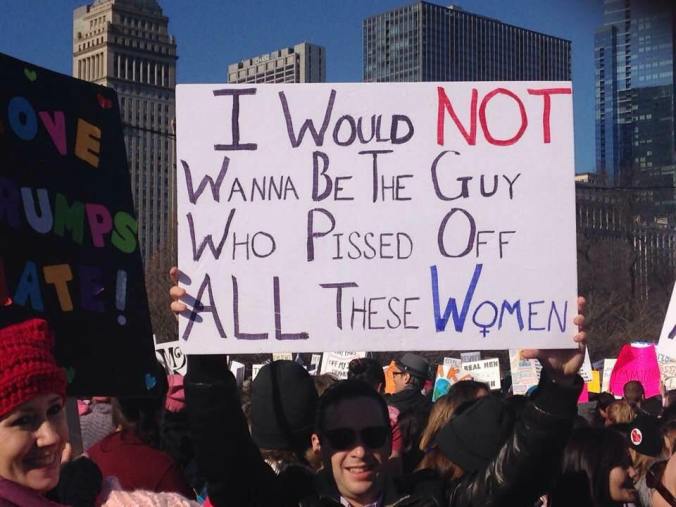
On Saturday four million in the streets made America great. | Fred Klonsky

On Saturday four million in the streets made America great. | Fred Klonsky:

On Saturday four million in the streets made America great.

16265819_10208413813363699_7282886579381125943_n

“The Democratic Party has got to make it very clear that they are prepared to stand up to powerful special interests like the pharmaceutical industry and like Wall Street, and they’re not going to win elections and they’re not going to be doing the right thing for the American people unless they have the guts to do that,” said Sanders, the leader of outreach efforts for Senate Democrats. USA Today

.
16195169_10211489037962807_1559629229553289974_n
Cleveland coach Greg Popovich on Trump and the Women’s March (low sound).
Continue Reading: On Saturday four million in the streets made America great. | Fred Klonsky:

Testing has elevated assessment above curriculum and pedagogy

Testing has elevated assessment above curriculum and pedagogy:

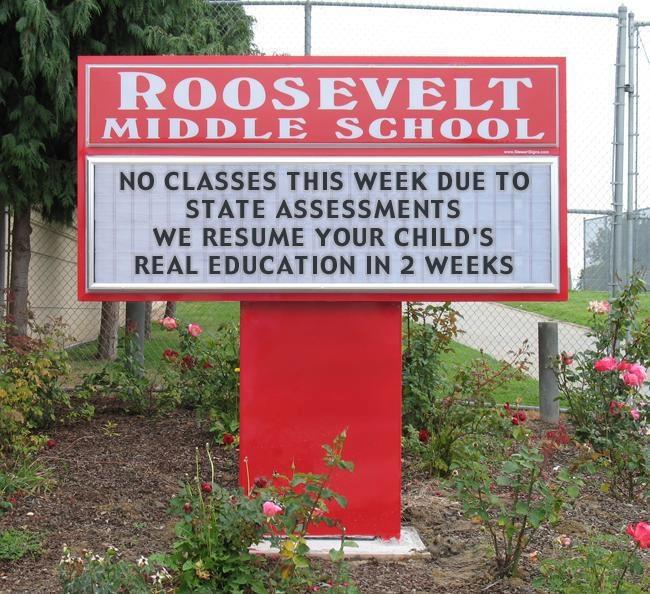
'Whether students take too many tests misses the point: testing has elevated assessment above pedagogy'

Image result for 'Whether students take too many tests misses the point: testing has elevated assessment above pedagogy'
The quantitative amount of testing is not the issue; the point is the effect of testing on education: over-testing has bent teaching out of shape, writes one leading educationist
Amanda Spielman, Ofsted’s new chief inspector, says it is a myth that children in England are overtested, pointing to international comparative studies from Cambridge Assessment.
The same claim has been made by the Organisation for Economic Cooperation and Development’s (OECD) Andreas Schleicher with reference to testing in the US.
In using the word "myth", both seek to rebut a "widely held but false idea".
However, the idea that we overtest our students cannot be rebutted simply by appeal to other children in other places, if they are being over-tested as well.
It may be that our students are no more tested than those in, say, the United States. But what help is that when the debate about testing is, if anything, even more heated there than in England?
Diane Ravitch has called standardised testing “the monster that ate American education”, and urges parents and states to boycott them.
Pasi Sahlberg is quite clear on the narrowing effects of standardised testing in the US. ED Hirsch – not exactly a cheerleader for progressive education – has shown how “invalid” tests have bent teaching and learning out of shape.
A better definition of "myth" is the more technical anthropological one of a "a traditional story, concerning the history of a people or explaining a natural or social phenomenon, and typically involving supernatural beings or events."
Through this prism, the quantitative amount of testing is not the point; the point is the effect of the testing on education, which depends on context and on how the tests are perceived.
In England, the prevalence of high-stakes testing linked to school status, teacher accountability and Testing has elevated assessment above curriculum and pedagogy:


CURMUDGUCATION: The Most Troubling Lie

CURMUDGUCATION: The Most Troubling Lie:

The Most Troubling Lie


Sure, we know that Trump has a tendency to tell whoppers, stretch the facts, and just make shit up. But his insistence yesterday that his inauguration crowd was not smaller than Obama's 2009 inauguration crowd-- well, this one I find extra troubling. Here's why.


It's so transparent. It's not like you can look at the photos, squint, and say, yeah, I can see how if you're really a fan of Trump, you would interpret his crowd as larger. This lie is literally "Who are you going to believe. Me, or your own eyes?" The "they were slowed down by the security" lasted five minutes until the Secret Service said, "No, we weren't doing that."

It's unnecessary. Trump's crew could have spun this any number of ways. They could have said that of course, 2009 was a large crowd, because it was an historic occasion with the installation of the first black President ever. They could have plead weather-- on Friday, it sucked. They could have used any number of spins to explain away the difference in crowd sizes-- but, no. They could have just pulled out a picture from Obama's second inauguration, or either Bush. But no-- they had to just deny reality.

It's pointless. Sure, our leaders often lie to us, but generally it's in the service of some policy goal, because politicians often succumb to "the end justifies the means" logic. So they do things like tell 
CURMUDGUCATION: The Most Troubling Lie:


Big Education Ape: New White House Press Secretary Sean Spicer Statement: Size Matters - http://bigeducationape.blogspot.com/2017/01/new-white-house-press-secretary-sean.html

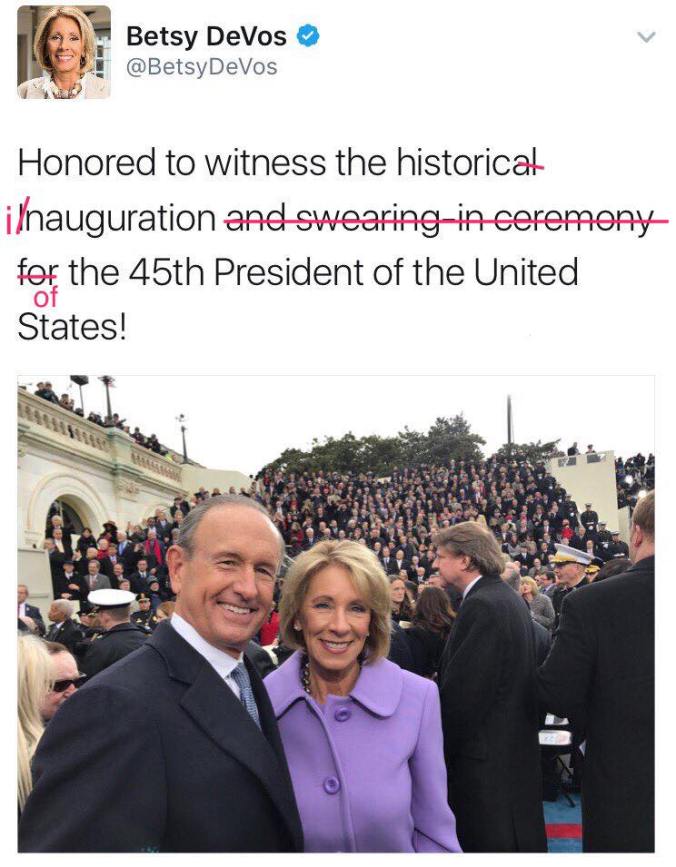
What Trump said when he signed the executive order on Betsy DeVos, his education nominee - The Washington Post

What Trump said when he signed the executive order on Betsy DeVos, his education nominee - The Washington Post:

What Trump said when he signed the executive order on Betsy DeVos, his education nominee

Shortly after Donald Trump took the oath of office and become the 45th president of the United States on Jan. 20, he signed a series of executive orders, many of them formal nominations for his Cabinet and other positions.
One after one, Trump signed nomination papers, frequently — thought not always — making a comment about the person he had tapped for a specific job.
For Nikki Haley, the South Carolina governor tapped by Trump to be the U.S. ambassador to the United Nations, he said while signing, “I think Nikki is going to do a good job. A great job…”
For Rick Perry, the former Texas governor he picked to run the Energy Department, he said, “He did very well yesterday,” referring to Perry’s confirmation hearing before a Senate panel.
For Terry Branstad, a former Iowa governor who will serve as Trump’s ambassador to China, he said, among other things, “China loves him, and he loves China. Good man.” And he noted more than once that Branstad was the longest-serving governor in American history.
Trump said that Tom Price, a surgeon picked to head the Department of Health and Human Services, was going to do “a terrific job.”
For Betsy DeVos, the Michigan billionaire he chose for education secretary (who had a contentious hearing on Jan. 17 before the Senate education committee), he said, while looking around: “Ah, Betsy. Education. Right?”

Valerie Strauss covers education and runs The Answer Sheet blog.
  Follow @valeriestrauss
Answer Sheet newsletter
Education questions and answers, in your inbox weekly.

CURMUDGUCATION: ICYMI: Let's Not Talk About Trump Edition (1/22)

CURMUDGUCATION: ICYMI: Let's Not Talk About Trump Edition (1/22):

ICYMI: Let's Not Talk About Trump Edition (1/22)


The problem with living through big moments in history is that everybody has to talk about them constantly while they're happening. Remember when the interwebs were all about cute cat pictures? Boy, those were the days.

Meanwhile, remember to post and pass on things that speak to you. 

Reading Is Knowledge

Horatio Speaks offers some words about the importance of content in reading (as opposed to the reformy idea that reading is just some free-floating skills).

How Did the Department of Defense End up in My Child's Classroom

Another good big-picture look at the continuing push to digitize student information and machine-ify education.

The Fight- Falling in Love

This week I realized that Amy Tan was not on my blogroll (that list of blogs to the right that you should be checking out) and I'm happy to correct that oversight with this great piece about how to pick up and regain focus.

Don't Raise Teacher Pay (To Be Nice)

A great rebuttal to one of my favorite bad arguments in favor of teacher pay increases.

How the Pioneers of the MOOC Got It Wrong

I did write about this piece this week, but if you missed that, read this article about how the launchers of MOOCery screwed up some pretty basic fundamentals

Little Nesting Doll 

A new-to-me blog by an American mother raising four kids in Great Britain. Interesting and different perspective.

Building Bridges Beats Building Walls

Russ Walsh with some important reminders about what sort of structures best serve us all.

Democrats Reject Her But They Helped Pave the Road to Betsy DeVos

Valerie Strauss offers some perspective on why leading Democrats don't get to pretend that Betsy DeVos is a shocking departure from the proper educational path

Educational Justice in the Next Four Years

The Annenberg Institute offers a whole big series of interviews about how to approach the next four years of education with an eye on justice and equity. I found this because one of the interviewees is Jose Vilson, but there are a great thought-provoking bunch of pieces here.


 CURMUDGUCATION: ICYMI: Let's Not Talk About Trump Edition (1/22):


Big Education Ape: Catch up with CURMUDGUCATION: Meanwhile In Switzerland... + Confessions of a Trumpistan Teacher - http://bigeducationape.blogspot.com/2017/01/catch-up-with-curmudgucation.html

Russ on Reading: No, Betsy, School Choice Is Not a Good Thing

Russ on Reading: No, Betsy, School Choice Is Not a Good Thing:

No, Betsy, School Choice Is Not a Good Thing


With choice champion, Betsy DeVos, under consideration for Secretary of Education, I thought it would be a good time to revisit what school choice really means. This post is adapted from my book, A Parent's Guide to Public Education in the 21st Century, published by Garn Press.

What could be more American than choice? The country was founded on the principle of freedom of choice in speech, in religion, in the press, in assembly. Corporate education reformers tap into this most American of values by stating that parents, who after all pay for their child’s education through taxes, should have choice in where they send their children to school. If a school is not performing well, and for the reformers this means the school is achieving low test scores, parents should have the right to choose a different school. As reformers are often heard to say, “zip code should not be destiny.” In other words, where you go to school and the quality of the school you go to should not be determined by where you live. 

For wealthy Americans, choice has always been available. Affluent parents have the option of sending their children to a private school of their choosing – a school that offers the type of curriculum and academic and social environment the parents find desirable. Less affluent middle-class families often exercise their choice by where they choose to live. I was once on a lengthy flight out of Newark, New Jersey’s Liberty Airport, seated next to an Indian-American man who lived in northern New Jersey. We got into a conversation where I learned that he had two young children and I happened to mention the school district I worked in. The man said, “Oh yes, I know the district well, my wife and I are saving to move there because we have heard the schools are so good.”

This story is repeated over and over throughout the country daily and real estate agents are sure to include the quality of the schools in their sales pitch when the schools have a good reputation. Of course, a reputation for high quality Russ on Reading: No, Betsy, School Choice Is Not a Good Thing:

Image result for No, Betsy, School Choice Is Not a Good Thing

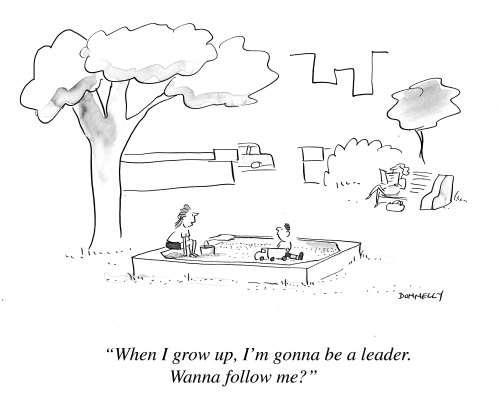
Cartoons on Leaders | Larry Cuban on School Reform and Classroom Practice

Cartoons on Leaders | Larry Cuban on School Reform and Classroom Practice:

Cartoons on Leaders


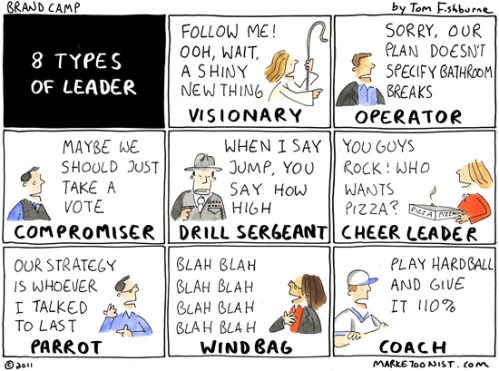
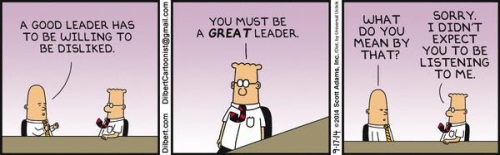
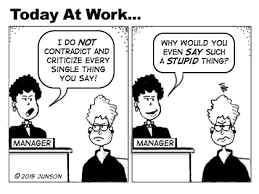
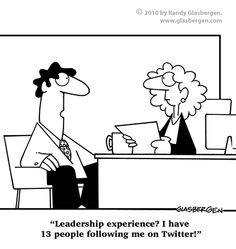
This month I hope you will enjoy a dozen or so ways of picturing leaders in and out of school. If they get you to smile, let me know.
images.jpg
111024.leader.jpg
Dilbert2.jpg
images.png
f391992c0a119b0ef54bf9c5f3833d46.jpg
gonna-be-a-leader.jpg


 More Cartoons on Leaders Cartoons on Leaders | Larry Cuban on School Reform and Classroom Practice:

Learn the Facts. Stop School Privatization. - Network For Public Education

Learn the Facts. Stop School Privatization. - Network For Public Education:

Learn the Facts. Stop School Privatization.


Help the Network for Public Education stop Betsy DeVos and her “School Choice” movement.

Letter Writing Campaign to Congress

We understand that “choice” is no more than a smokescreen to allow privatizers to takeover our public schools. That is why we’ve launched a letter writing campaign to Congress, asking them to support our democratically governed, neighborhood public schools. You’ll find that letter campaign here. Please contact your representatives, and share the action on Facebook, Twitter and email by posting this link:
85% of our nation’s children attend their neighborhood public schools – it’s up to us to ensure those schools are not undermined by “school choice”.

NPE’s “School Choice Fact Check” Twitter Chats

This Wednesday, January 25th, from 7-8pm EST  join NPE’s School Choice Fact Check twitter chat with NPE President Diane Ravitch.
On Thursday, the 26th, from 7-8pm EST join Professor Julian Vasquez Heilig who will chat about Civil Rights and school takeover.
 Use the #ChoiceFactCheck hashtag to join in and learn why school choice is no choice at all. Get the Facts!

Tweet Donald Trump, Betsy DeVos and the HELP Committee: Stop the takeover of our public schools.

We’ll use the #ChoiceFactCheck hashtag all week to educate Donald Trump, Betsy DeVos and the HELP Committee about the real cost of  “School Choice.” You can send the tweets below with just a couple clicks – let them know that you support our public schools, and that you understand that the “school choice” movement’s purpose is to defund and close our neighborhood schools . We won’t be fooled!


Contact your mayor and tell them to celebrate Public Schools this week

Join this important  campaign sponsored by the BATs. You can find out how here.

 The Battle over Betsy DeVos Continues

Betsy DeVos, who is a major funder of  the “school choice” movement, had her vote in the HELP committee delayed until January 31. Keep the pressure up! Call members of the HELP committee–if you called before, call again.