Latest News and Comment from Education

Monday, November 28, 2016

Schools Matter: Understanding KIPP Model Charter Schools: Part 14

Schools Matter: Understanding KIPP Model Charter Schools: Part 14:

Understanding KIPP Model Charter Schools: Part 14

Get 20% Off w/code: RLEGEN16

Below is Part 14 from my book, Work Hard, Be Hard: Journeys through "Excuses" Teaching.  

Earlier parts can be found at this blog by searching on the title of the blog entry, followed by the part number.


Chapter 14
A Model Whose Time Has Past

Since its beginning in 1994, the KIPP Model has focused on getting economically disadvantaged students to and through college.  As the first KIPP schools were grades 5-8, the long-term goal of college makes some sense as a motivator, even though higher education means high school for most fifth graders, KIPP or no KIPP.  Most often college remains a distant dream for children whose poverty levels have excluded them and their families from that experience in the past. 
With KIPP now expanding its reach into early elementary grades and even Pre-K, the focus on college may make for attractive classroom posters, but the value of college can hardly be viewed as a realistic motivator for children in these early grades.  In fact, KIPP’s insistence of the singular goal of attaining a college education in some “remote future” (Dewey, 1897) serves to distract from the integration of young children’s experiences or the healthy development of empathetic understanding. Working to make children’s schooling more in tune requirements for working and playing together may have a greater moral force than any of the “performance character” regimen designed by “positive” psychologists in search of interventions to alter children’s neural landscapes to fit the compliance requirements of the KIPP Model.  
The festooning of KIPP Model school hallways with university pennants and the labeling of classrooms with college names may serve to motivate adults in the school, but elementary age children are less likely to be affected by these memorabilia, as Dewey (1897) astutely noted over a century ago:
. . .much of present education. . . conceives the school as a place where certain information is to be given, where certain lessons are to be learned, or where certain habits are to be formed. The value of these is conceived as lying largely in the remote future; the child must do these things for the sake Schools Matter: Understanding KIPP Model Charter Schools: Part 14:


Mike Klonsky's SmallTalk Blog: Why did Antwan Wilson leave Oakland for D.C.?

Mike Klonsky's SmallTalk Blog: Why did Antwan Wilson leave Oakland for D.C.?:

Why did Antwan Wilson leave Oakland for D.C.?


Oakland former Supt. Antwan Wilson seems nonplussed by parent/community protest. 
A friend in D.C. asked me why I thought Oakland Supt. Antwan Wilson would leave his $400K/year job to take the job in his town. Here's what I told him:

I'll tell you why he's leaving. Oakland (like the A's) is the farm team to the major leagues. They sent us Tony Smith to IL to do Gov. Rauner's bidding. DC is a plum job for pay and visibility (Wilson did ok in Oakland, pulling down a tidy $400K/yr. Look for him to make about the same in D.C.). Heartbeat away from the DOE and Ed Sec job (if Dems make a comeback). Oakland’s schools have been led by 8 people in the past 16 years — some named by the school board and others appointed amid state takeover. It's the Broad Academy MO. Make a quick hit, chop Mike Klonsky's SmallTalk Blog: Why did Antwan Wilson leave Oakland for D.C.?:
Image result for big education ape eli recycle bin

Back to (our) Future - Education Advocacy in the Time of Trump

Back to (our) Future:

Education Advocacy in the Time of Trump


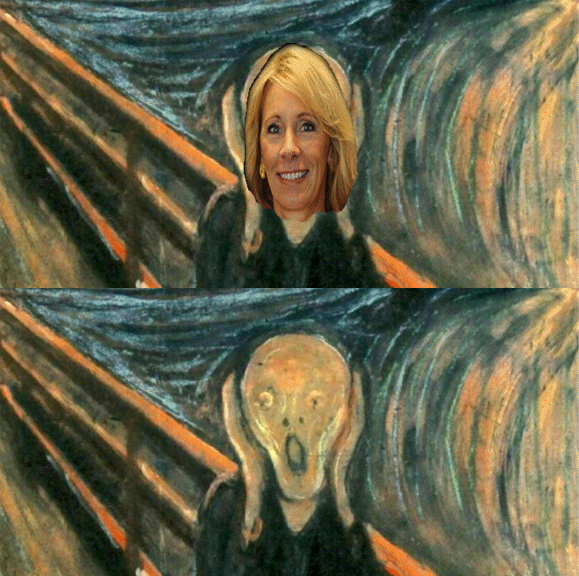
At the count of three, SCREAM.”
That’s what John Jackson suggested public education advocates do in response to the surprise election of Donald Trump.
Jackson, president and CEO of the Schott Foundation for Public Education was one of the headliners at an event in Boston celebrating the organization’s twenty-fifth anniversary. The event included a panel discussion titled, “Addressing Racism— Strategies for Systemic Change: A Post-Election Analysis.”
This was the nation’s first prominent event addressing the election outcome from an education justice perspective, and few, if any, of the panel participants had anticipated a discussion about the incoming Trump administration. (Disclosure: Schott is a partner of the Education Opportunity Network, which I direct.)
Opposition to Trump from students in K-12 public schools and on college campuses has broken out across the country. Thousands of students walked out of classrooms and filled streets with blocks-long protest marches. Their messages, as reported in mainstream mediaand prominent news outlets, reflects resistance to discrimination against immigrants, women, people of color, and LGBTQ individuals.
Those themes were on the minds of the panelists at the Schott event, who sought to place the election results in the context of historical struggles for education justice and civil rights.
Ted Shaw, a law professor and director of the Center for Civil Rights at the University of North Carolina Chapel Hill suggested that Trump is likely “worse than Reagan,” but argued that the history and demographics of the United States are on the side of progressives.
“This is not the only president we’ve elected who exhibits racism and sexism,” Jackson reminded the audience.
Jackson suggested the audience take heart in the recent victories in Massachusetts and Georgia where well-funded ballot initiatives to expand school privatization efforts were shot down by grassroots organizing and street-level voter engagement.
Also, election victories for eight women to the U.S. House of Representatives and four to the Senate were positive notes, Jackson mentioned.
“The march toward justice has never been linear,” Jackson explained. “We’re only doing better today than we were fifty years ago because there were leaders who stood in the gaps” between progress and prejudice.
“People need to be in the streets,” was the consensus among panelists, and a frequent refrain Back to (our) Future:

Poor students may not have worse teachers, despite Vergara lawsuit claim | 89.3 KPCC

Poor students may not have worse teachers, despite Vergara lawsuit claim | 89.3 KPCC:

Poor students may not have worse teachers, despite Vergara lawsuit claim


As their case wound through the courts, plaintiffs in the Vergara v. California case returned over and over again to a central claim: poor and minority students are markedly more likely to have the lowest-quality teachers.


The Vergara plaintiffs hoped a court would strike down state laws that protect teachers' jobs, which they blamed for this inequity. Even when a state appellate court finally ruled against them, the plaintiffs noted the justices didn't dispute the evidence at the heart of their claim: a study by a Harvard economist, for instance, that found Latino students in the Los Angeles Unified School District were 68 percent more likely than their white peers to be taught by a "grossly ineffective" teacher.
So do poor kids truly have worse teachers? A newly-released national study suggests that finding from L.A. Unified may be an exception, not the rule.
A team of researchers studied the impact teachers had on their students' standardized test scores over five years in 26 school districts nationwide and found very little — if any — overall difference in the effectiveness of teachers in poor schools compared with their counterparts in rich schools.
"We found that both high and low-income students are … just as likely to have one of the very best teachers, just as likely to have one of the very worst teachers, and just as likely to have a teacher in the middle," said Eric Isenberg, a senior researcher at Mathematica Policy Research and the study's principal investigator.
The researchers did find some poor students would benefit substantially from higher-quality teaching in math, but only in three of the 26 districts they identified. They found black students have only marginally less effective teachers than their white peers in math, but in English language arts, their teachers are just as good.
There's no significant difference between the instruction white and Latino students are getting in either subject, Isenberg's team found.
The researchers also found only limited evidence of harm from the revolving door of teachers entering and exiting the profession or transferring between rich and poor schools. Vergara plaintiffs argued this churn — they called it the "dance of the lemons" — ends up leaving poor and minority kids saddled with the least effective teachers.
But Isenberg said, at least when it comes to a teachers' impact on students' test scores, most of the effects of this churn came out in the wash: teachers who left the profession tended to be less effective than average and newly-hired teachers tended to improve quickly. Overall, Isenberg's team concluded this churn did only slightly more harm to poor schools than it did to rich ones.
"I wouldn’t say we have evidence that 'lemons' are accumulating in high-poverty schools," Isenberg said.
Isenberg's team measured teacher effectiveness using basically the same statistical method behind the most controversial evidence in Vergara: a "value added model," which attempts to filter out factors beyond a teacher's control — a student's socioeconomic status, for example — to isolate what impact a teacher himself had on a student's scores.
The takeaway isn't necessarily that the research Vergara plaintiffs cited was wrong, but rather that what's true in one district — like in L.A. Unified, where Harvard economist Thomas Kane found an African-American student was 43 percent more likely to have a grossly ineffective teacher than a white student — isn't always true in another.
After all, the demographic profile of the 26 districts Isenberg's team studied is different from that of L.A. Unified — the student body in the districts Isenberg studied was 42 percent Latino; L.A. Unified is nearly three-quarters Latino.
In some of these 26 districts, the most effective teachers were somewhat more concentrated in lower-income schools. In others, effective teaching was more concentrated in richer buildings.
Isenberg said teacher quality ought to remain an important topic for researchers and lawmakers.
But as a matter of public policy, his team found that if poor students and rich students were taught by equally-effective teachers, the effect on the "achievement gap" in their test scores would be minimal.
"It does suggest," Isenberg said, "that a full-throated focus in all districts on equalizing access to effective teachers may not get the kind of results that putting our effort into a different set "Poor students may not have worse teachers, despite Vergara lawsuit claim | 89.3 KPCC:


Will “school choice on steroids” get a boost under a Trump administration? - The Hechinger Report

Will “school choice on steroids” get a boost under a Trump administration? - The Hechinger Report:

Will “school choice on steroids” get a boost under a Trump administration?

A policy that Betsy DeVos, a voucher and charter advocate, might favor as education secretary

Image result for school choice on steroids


 e signature issue for Betsy DeVos, nominated to be the next U.S. Secretary of Education, is giving parents freedom of choice, either to choose charter schools or to use vouchers to buy an education at any school they like, public or private.  The logical extension of such policies – permitting students to take individual courses wherever they wish, by using online options – has already begun to take root in about a dozen states.

It’s called “Course Access” or “Course Choice.” Under such plans, the funding for a course taken by an individual student goes to the school or online company offering the course, often away from the student’s local district. In Nevada, in fact, parents can spend state education dollars any way they please — on private, public, online, part-time and full-time schools, on tutoring and extra books — through education savings accounts, which an advocate for them calls “the purest form of educational freedom.”
As they have emerged in some states, these programs have been assisted by conservative groups such as Jeb Bush’s Chiefs for Change and the Koch Industries-backed American Legislative Exchange Council (ALEC). It remains to be seen whether a Trump Administration will boost them further, using federal policy.
The growth of “Course Choice” initiatives in various states was chronicled in depth by The Hechinger Report last year, in this story from our archives.
— The editors
Chatfield High School in Minnesota doesn’t offer sociology (or German, or criminology, for that matter), but when senior Keagan Clarke, 18, finished a fall semester class in psychology, his teacher suggested he try sociology.
Thanks to a relatively new state policy, all spring Clarke went to the school library during second period for an online sociology class.
“It was very cool,” said Clarke, noting it lived up to his psychology teacher’s description: “It was a very interesting topic with some things that will tie back to psychology.”
This initiative, often called “Course Choice” or “Course Access,” is, as one proponent described it, like “school choice on steroids.”
Proponents count at least 10 states that have adopted a collection of policies they began promoting as Course Access — policies that allow students to take classes part-time online (and sometimes in other off-campus classrooms) by choosing from a variety of providers, including charter schools and other districts, instead of being limited to their local course offerings or to one state virtual school. And the Course Access movement is gaining momentum as it expands across the country, with eight states adopting or considering such laws in just the last four years, according to a comprehensive report on Course Access sponsored by the conservative group the Foundation for Excellence in Education and the lobbying firm EducationCounsel.
For Clarke and other students, online schools mean options, but for school district officials, they can mean less revenue, as education dollars flow toward charter schools or other districts that offer the Will “school choice on steroids” get a boost under a Trump administration? - The Hechinger Report:

On #GivingTuesday, support these grassroots education justice organizers! | Schott Foundation for Public Education

On #GivingTuesday, support these grassroots education justice organizers! | Schott Foundation for Public Education:

Giving Tuesday
Tomorrow is #GivingTuesday, a global day of giving fueled by social media and collaboration, and, for the past few weeks, the Schott Foundation has been highlighting the work of some of our grantees across the country. These organizations are on the front lines, advocating for equitable and excellent opportunities to learn for all children, regardless of race, gender or zip code.
In case you’ve missed our Spotlight series (or just need a refresher), the blog posts are linked below.  These five grantee partners are all participating in this year’s #GivingTuesday campaign, and we encourage you to consider supporting them in these next 24 hours.
We’re so thankful for the work they do!
“We see grassroots fundraising as an important organizing skill and try to bring everyone – youth, staff, board members and other supporters – into the process.”
WHO: Kids Rethink New Orleans Schools
WHERE: New Orleans, LA
WHAT: Education, Youth Organizing
THEIR FICTIONAL CHARACTER OF CHOICE: The Mongoose from West Indian folklore – witty, resourceful, and always finding ways to outsmart the other animals that are meant to depict colonizers.
Learn more and donate >

“We have a saying that we aren’t here for ‘tomorrow’s leaders,’ because LGBTQ youth are already leading, today.”
WHO: Boston Alliance of Gay Lesbian Bisexual and Transgender Youth (BAGLY)
WHERE: Boston, MA
WHAT: LGBTQ Youth Leadership
THEIR FICTIONAL CHARACTER OF CHOICE: “I would have to characterize BAGLY as a unicorn. Together we are strong, magical, and beautiful.”
Learn more and donate >
“Seeing the impact of our policy wins on Pennsylvania’s children is the most fulfilling part of our work.”
WHO: Education Voters of Pennsylvania (EVPA)
WHERE: Pennsylvania
WHAT: Pro-public education
THEIR FICTIONAL CHARACTER OF CHOICE: The Little Engine That Could
Learn more and donate >

“They want their children to leave high school ready for success in higher education and careers, but also as whole, healthy people who are proud of their community and prepared to be leaders for social justice and a better world.”
WHO: NYC Coalition for Educational Justice (CEJ)
WHERE: New York City
WHAT: Education, parent and youth organizing
THEIR FICTIONAL CHARACTER OF CHOICE: Voltron, giant lion-robot
Learn more and donate >

“Bringing youth and older people together in the same training and work spaces ensures that younger people become part of the evolving leadership process.”
WHO: Southern Echo
WHERE: Jackson, Mississippi
WHAT: Parent/youth organizing
THEIR FICTIONAL CHARACTER OF CHOICE: The one and only Luke Cage, Marvel hero
Learn more and donate >
Share on FacebookTweet This
On #GivingTuesday, support these grassroots education justice organizers! | Schott Foundation for Public Education:


Joshua Leibner: The California Charter School Association is a Rightwing Menace to Society | Diane Ravitch's blog

Joshua Leibner: The California Charter School Association is a Rightwing Menace to Society | Diane Ravitch's blog:

Joshua Leibner: The California Charter School Association is a Rightwing Menace to Society


Joshua Leibner is a National Board Certified Teacher in Los Angeles. He wrote this post.
The elephant in the room of School Reform, is, the Elephant.
When Republican Donald Trump announced his choice of Betsy DeVos to serve as his Education Secretary, The California Charter Schools Association wrote: [We] congratulate Betsy DeVos, a longtime supporter of charter schools, on her appointment as Secretary of Education. Mrs. DeVos has long demonstrated a commitment to providing families with improved public school options and we look forward to working with the administration on proposals allowing all students in California to access their right to a high quality public education.
If you have one ounce of Progressivism in your blood, that mealy-mouthed congratulations would create a lethal dose of moral leukemia. This disgusting endorsement of DeVos, a person who is one of the most hateful, gay demolishing, anti-child, free market embracing, Big Business darling, reveals clearly to Californians who CCSA is and who they put their faith in.
I’ll leave it to other columns to specifically go through all her contemptible sins in the world of education. Those yucky particulars are not the concern of this column: Betsy DeVos as emblematic of the entire Reform Education movement is my focus.
DeVos is the rich and ignorant School Reform Education Secretary that the entire School Reform movement and CCSA have pined for. Yes, they also got the President they implicitly yearned for–but more importantly, they now have the education ideology that is their entire raison d’etre and central to their cause.
In President-Elect Donald Trump (and especially in Vice President Mike Pence), they see the opportunity to have their public policy way on the federal level and translate it to local jurisdictions nationwide.
The bottom line here in California? Our Democrat candidates can no longer accept CCSA money pretending that this organization doesn’t represent America’s most heinous politics.
To be clear, there is zero degrees of separation between CCSA and the Koch Brothers.
The one great truth that Donald Trump did reveal was in the first GOP debate. There he honestly said that he “bought” politicians because he was a businessman and that’s what he is supposed to do.
CCSA is a business. A huge multi-billion dollar business.
CCSA plays both sides of the fence. It has bought the Democrats for Education Reform as well as a veritable Who’s Who of the most evil Republicans in the game today.
CCSA knows full well the disgusting, hateful, chauvinistic, anti-women, anti-immigrant, pro-life, pro-unregulated firearms, pro-rich corporate giveaways platforms of MANY of the people who support their and give it its lifeblood. They have endorsed some terrible Republicans who make life miserable for so many Californians in other economic, judicial and quality-of-life portions of their lives.
CCSA and its dark money allies give to Reform candidates across our state.
If the Democrats insist that Trump repudiate the Neo-Nazi’s and White Supremacist groups who have embraced his cause, the Democrats of California need to strongly repudiate the vile money, support and Joshua Leibner: The California Charter School Association is a Rightwing Menace to Society | Diane Ravitch's blog:


The ignored issue that will destroy Public Education. | DCGEducator: Doing The Right Thing

The ignored issue that will destroy Public Education. | DCGEducator: Doing The Right Thing:

The ignored issue that will destroy Public Education.

untitled4

I have been silent for months on the issue of education. I haven’t even said anything about the election in weeks. But a Lo-Hud article about the plummeting of teacher candidate enrollments in NYS colleges and Universities revived my sensibilities. The reason public education will fall to the appointees, corporations, Eva Moskowitz’s etc. is simple. It isn’t testing. It isn’t Common Core. It isn’t whoever is Secretary of Education. It is simply this: a lack of good quality devoted teachers.
For decades the numbers of teaching candidates has dwindled. For years people have been writing about the “lowering of standards” in many schools of education. For years people like me who went into teaching have disappeared as the calling to even higher paid, more prestigious positions have stolen the best and brightest from the profession. Economics, supply, and demand have reared their ugly heads to create an atmosphere where teaching, even for the most dedicated is a terrible choice for a lifetime profession.
For years some of us have fought against this and the rise of TFA and its cooperating charter schools. We have fought against Common Core, and Standardized Tests, yet we have failed to see the bigger, long-term picture. The end result of these abominations has been to greatly decrease the number of candidates for teaching regardless of the lower pay and prestige. These abominations have created such terrible working conditions that, not only do fewer want to teach to use their talents and honed skills, but more and more experienced teachers want out because they have lost the working conditions that allow them to do what they do best…TEACH!
The net result? More vacancies, fewer qualified and expert candidates to fill them, more teacher shortages, more “trumped up” reasons to say that schools are failing. Of course there is a wealth-based sliding scale in this The ignored issue that will destroy Public Education. | DCGEducator: Doing The Right Thing:


Stop CC in MI respectfully request President-elect Trump to "drain the swamp" and pull the plug on Betsy DeVos | Stop Common Core in Michigan

Stop CC in MI respectfully request President-elect Trump to "drain the swamp" and pull the plug on Betsy DeVos | Stop Common Core in Michigan:

Stop CC in MI respectfully request President-elect Trump to “drain the swamp” and pull the plug on Betsy DeVos


We, the leadership team at Stop Common Core in Michigan, respectfully ask President-elect Donald Trump to immediately remove Betsy DeVos’s name from consideration as Secretary of the Department of Education.  We do not make this request lightly but with considerable knowledge regarding her negative influence in Michigan as a proponent of Common Core.
Michigan turned red for Trump for the first time since the 1980’s.  A large number of voters in Michigan were attracted to the Trump campaign because of his emphatic message against Common Core.  Michigan voters know that most Republicans in our state say they are against Common Core but do nothing to stop it.  We believed Trump would be a different kind of Republican and “drain the swamp” in education.  We believed that until the nomination of Betsy DeVos.  DeVos is part of  “the swamp” in Michigan.  She represents both a special interest AND as an influential Republican fought EVERY effort to stop Common Core in Michigan with her money and political influence. 
We respectfully submit that Betsy DeVos’s recent claim that she is against Common Core is not an accurate representation of her actions regarding  Common Core or the competency-based centralized education system the standards help build from prenatal to career.  We have done our “homework” as she encouraged; we support our claim with the following reasons:
1.  Betsy DeVos funds and serves on the board of the Great Lakes Education Project (GLEP).
DeVos founded GLEP in 2001 and served as chair until 2008; she currently serves as a board member.  GLEP is a special-interest education political action committee.  One of the stated priorities of GLEP is “implementing” and “maintaining” Common Core “high standards” reform.  The GLEP document “The Conservative Case for Common Core” clearly articulates their support of Common Core.  No retraction has been issued.  Only after President-elect Trump nominated DeVos for Secretary did she attempt to distance herself from the pro-Common Core position of organizations such as GLEP.   She wrote on her very new web page Q & A,
 “Have organizations that I have been a part of supported Common Core? Of course. But that’s not my position,”
DeVos cannot distance herself from GLEP and their position that easily.  As a founder and major donor, DeVos’s mission IS GLEP’s mission.   Now that the standards are implemented in Michigan, GLEP’s mission is to maintain the so called “high standards” and build the assessment and accountability framework around them.
2.  Betsy DeVos and GLEP are lobbyists for Common Core. Picture 22
DeVos is a business woman who advocates for education reform in Michigan.   DeVos and GLEP lobbied the Michigan legislature to implement and maintain Common Core and related reforms.   Former MI State Representative, now State School Board member-elect,  Tom McMillin recently spoke to our team about DeVos and her claim that she is against Common Core.  McMillin, a strong opponent of Common Core, recalled that in 2013 DeVos specifically told him she was for Common Core during the very contentious legislative debate to stop implementation.  With the help of DeVos and GLEP,  resolution (HR-11) was abruptly passed through the Senate on a voice vote.  The hasty vote allowed Common Core to continue.  GLEP publicly applauded the resolution and the continued implementation of Common Core.
3.  DeVos and GLEP seek to influence elections in order to continue implementation of a Common Core aligned Stop CC in MI respectfully request President-elect Trump to "drain the swamp" and pull the plug on Betsy DeVos | Stop Common Core in Michigan:


Mike Klonsky's SmallTalk Blog: WEEKEND QUOTABLES ... No chances for Trump

Mike Klonsky's SmallTalk Blog: WEEKEND QUOTABLES ... No chances for Trump:

 WEEKEND QUOTABLES ... No chances for Trump


DFER Pres. Shavar Jeffries

“DFER congratulates Betsy DeVos on her appointment as Secretary of Education, and we applaud Mrs. DeVos’s commitment to growing the number of high-quality public charter schools. -- Press Release
Lee Saunders, chairman of the A.F.L.-C.I.O.’s political committee

"We underestimated the amount of anger and frustration among working people and especially white workers, both male and female, about their economic status."-- New York Times
Donald Trump

 “In addition to winning the Electoral College in a landslide, I won the popular vote if you deduct the millions of people who voted illegally.” -- Washington Post
Frayda Levin, chair of Americans for Prosperity

“In creating the Koch network, I don’t think that we ever envisioned that we would be supplying staffers to this semi-free market, semi-populist president." -- Politico
Stephen Bannon's former co-writer, Julia Jones

 Ms. Jones, the film colleague, said that in their years working together, Mr. Mike Klonsky's SmallTalk Blog: WEEKEND QUOTABLES ... No chances for Trump:

Trump Moves To Destroy Public Education | The Huffington Post

Trump Moves To Destroy Public Education | The Huffington Post:

Trump Moves To Destroy Public Education

In the last two weeks Donald Trump has backtracked, charmed, fudged, modified, and hedged on positions he took during his campaign for president. Some critics, like the New York Times, even start to hope a Trump presidency might not be as bad as they initially feared. Trump will probably never “build the wall” and Hillary seems to be safe from criminal prosecution. But for children and schools in the United States the situation looks worse than expected as Trump quickly moved with plans to tear apart public education in this country. It is going to be a long and difficult fight to try to stop him.
During the campaign, Candidate Trump endorsed a vastly expanded “charter school” system and pledged to divert $20 billion in federal funds away from public schools. It would end up financing Southern segregation academies, religious schools, and private and for-profit ventures. To do this Trump was going to tie federal dollars to individual children, so wherever they went, the dollars would follow.
Trump’s nominee for Secretary of Education could hardly be worse. Right-wing billionaire Elizabeth “Betsy” DeVos has spent decades and millions of dollars in campaigns to privatize, defund, and destroy public education in her home state of Michigan and in the United States. Lily Eskelsen García, President of the National Education Association declared “By nominating Betsy DeVos, the Trump administration has demonstrated just how out of touch it is with what works best for students, parents, educators, and communities.”
DeVos is a product of Christian education and she and her family members are involved across-the-board in right-wing activities including anti-gay marriage efforts and covert for-profit military operations. DeVos never worked in public education in any capacity and her children all attended Christian academies.
Much of DeVos’ money comes via her husband who inherited the Amway health and beauty products company. DeVos personally was chairwoman of the board of Alliance for School Choice and is head of the the All Children Matter political action Trump Moves To Destroy Public Education | The Huffington Post:


Special Education: Vouchers and Betsy DeVos

Special Education: Vouchers and Betsy DeVos:

Special Education: Vouchers and Betsy DeVos

Special Education concept. Magnifying Glass on Old Paper with Red Vertical Line Background.

What will future Education Secretary Betsy DeVos do with special education? Most voucher programs currently go to students with disabilities. My guess is that there will be increased support with the new Trump administration and DeVos.
The following states have voucher programs for student with disabilities: Florida, Georgia, Indiana, Louisiana, Mississippi, North Carolina, Ohio, Oklahoma, Utah and Wisconsin and Arkansas.
Many other states have been on the verge of passing voucher legislation and usually they start with special education.
Yet, there is no evidence vouchers do better than programs in traditional public schools. In most cases students do worse, and they lose their rights to due process under the Individual with Disabilities Education Act (IDEA).
The McKay Scholarship Program
The McKay Scholarship Program in Florida is one of the better known Special Education: Vouchers and Betsy DeVos:


Fake news site wrestles with a potential Trump conflict of interest - The Washington Post

Another news site wrestles with a potential Trump conflict of interest - The Washington Post:

Another news site wrestles with a potential Trump conflict of interest


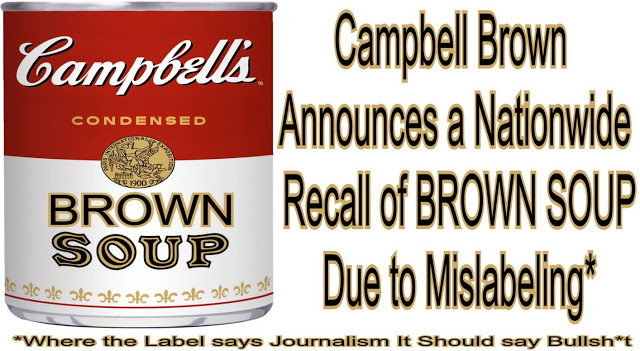
Former network TV anchor Campbell Brown has always said she wanted her education-news site, The74, to be perceived as a nonpartisan source for improving the nation’s primary and secondary school education.
But Donald Trump may have just dumped a major conflict of interest right into Brown’s, and The74’s, lap.
By naming billionaire philanthropist Betsy DeVos as his pick for secretary of education on last week, Trump put Brown in the awkward position of covering one of her closest allies.
A foundation headed by DeVos was among the wealthy school-reform advocates that funded Brown’s website when it launched last year. DeVos and Brown — formerly an NBC News anchor and the host of a prime-time show on CNN — are also on the board of the American Federation for Children (AFC), an organization that promotes charter school and government-funded vouchers to subsidize private education. The AFC and The74 co-sponsored a forum involving Republican presidential candidates last year.
All of which means The74 would be covering the policy pronouncements and initiatives of one of the people to which it owes its existence.
News organizations sometimes wrestle with subjects and people that are close to their own interests. The Washington Post, for example, is owned by Amazon founder Jeffrey P. Bezos, whose company and activities are occasionally the subject of Post stories and editorials. In such cases, the connection between the paper and its owner is disclosed within the story.
But in DeVos’s case, The74’s interests are more direct, overlapping and constant. As a site seeking to lead “an honest, fact-based conversation” free of “misinformation and political spin” about America’s 74 million children under 18, its coverage of DeVos and her advocacy of school vouchers and charter schools will be inherent in almost everything it publishes.
DeVos’s appointment appears to place the site, which is named for the 74 million school-age children in America, in much the same position as Breitbart News, the conservative-news digital operation. Breitbart’s executive chairman, Stephen K. Bannon, has been named Trump’s chief White House strategist, raising questions about Breitbart’s role in a Trump administration.
Brown referred questions about her operation to a spokesman, Dan Bank, who said the site discloses its funding relationships in a note published with stories in which the relationships are relevant.
In stories about DeVos, the note reads: “The Dick & Betsy DeVos Family Foundation provides funding to The 74 and the site’s editor in chief, Campbell Brown, sits on the American Federation for Children’s board of directors, which is chaired by Betsy DeVos. The American Federation for Children also sponsored The 74’s 2015 New Hampshire education summit.”
That’s not enough, say those who oppose DeVos and the “reform” agenda.
“Given the fact that Betsy DeVos is a funder of The 74, it is hard to see how the publication can cover her appointment fairly,” says education historian Diane Ravitch, who has clashed with Brown and DeVos on policy matters before. In view of the close “personal and financial ties” between DeVos and Brown, Ravitch said, the site “should not cover the U.S. Department of Education for the next four years.”
Brown has previously recused herself from making editorial decisions for her site about the AFC and Success Academy, a charter-school network, because she sits on the board of both Another news site wrestles with a potential Trump conflict of interest - The Washington Post: