Latest News and Comment from Education

Saturday, June 25, 2016

The stunning lack of diversity in America's school teachers

The stunning lack of diversity in America's school teachers:

The stunning lack of diversity in America's school teachers

 2024, students who are racial minorities will make up more than half of U.S. classrooms. But minority teachers, if hiring continues at its current pace, will make up only 20.5 percent of the educator workforce. Even 100 years from now, if trends persist, teachers and students in this country will not have comparable levels of diversity.
This gloomy future was estimated based on recent data from the U.S. Department of Education report, "The State of Racial Diversity In the Educator Workforce."
According to the report, the percentage of teachers of color in public elementary and secondary schools only grew five percentage points in 24 years; they were 13 percent of the workforce in 1988 and 18 percent in 2012. This translates into an annual growth rate of 0.2 percent.
If this trend continues, there would be only four teachers of color for every 10 in 2116.
The percentage of students of color in elementary and secondary public schools is growing at a much faster rate. The number of Latino, African American, and Asian students is is estimated to rise to 54 percent by 2024, according to the National Center for Education Statistics.
Broadly speaking, many studies point to the benefits of diversity to companies' performance. A study by McKinsey in 2012 of 180 publicly traded companies in France, Germany, the U.K., and the U.S. found that companies with more diverse executive teams consistently achieved better financial performance.
In terms of education, studies showed that diversity in the teaching workforce can create significant benefits to students and help to narrow the academic achievement gap between majority and minority students.Research conducted by the University of Arkansas and the University of Colorado examined data from more than 2.9 million Florida students from the 2001-02 school year through 2008-09 school year.
"We find small but significant positive effects when black and white students are assigned to teachers of their own race/ethnicity in reading and when black, white, and Asian/Pacific Islander students are assigned to teachers of their own race/ethnicity in math," the authors write.
Teachers of the same race or ethnicity as their students can serve as positive role models and may be more inclined to hold high expectations for a student's potential. The study recommends aggressive recruiting of minority teachers to help improve the performance of minority students.
So one way of closing the gap is to rapidly increase the supply of teachers of color, but the Department of Education's report paints another bleak picture: There was a lower percentage of non-white students who pursue education-related undergraduate degrees than those who choose other fields of study. This means that even if higher education becomes more diverse, the pool of teachers won't necessarily follow suit.
Students of color were 38 percent of undergraduate campuses in 2012, but The stunning lack of diversity in America's school teachers:


Former Government Watchdog Struck And Killed, he investigated Sacramento's mayor, Kevin Johnson

Former Government Watchdog Struck And Killed By Driver On Upper East Side: Gothamist:

Former Government Watchdog Struck And Killed By Driver On Upper East Side


The driver of an SUV struck and killed a former White House-appointed watchdog while he was crossing the street yesterday, police said. Gerald Walpin, 84, was crossing 79th Street at Lexington Avenue at about 11:00 a.m. when a 52-year-old driver made a left turn at the intersection and struck him, according to the investigation. Emergency responders found Walpin lying in the intersection with head trauma, and he was transported to New York Presbyterian hospital, where he succumbed to his injuries.
Walpin, an attorney from New York, had been appointed the inspector general for the federal AmeriCorps program under the George W. Bush administration, the AP reports. In that capacity, he investigated Sacramento's mayor, Kevin Johnson, for the hundreds of thousands of federal dollars that his nonprofit had received from the corporation that runs AmeriCorps—Walpin said that money was spent improperly, occasionally on Johnson's personal expenses. He also alleged that Johnson had engaged in "inappropriate sexual conduct" with three female students who attended charter schools funded by the nonprofit.
But the acting U.S. attorney at the time said that Walpin himself acted improperly in that investigation, in that he excluded evidence from his report that showed some of the money wasspent properly. In 2009, President Obama fired him, though his administration said the firing wasn't because of Walpin's AmeriCorps investigation, but rather because he appeared "disorganized, forgetful, and bizarre," calling into question his competence.
Walpin subsequently sued to get his job back, alleging agism and stating that he had been sick in the meeting where he'd appeared "bizarre," but that shouldn't have been grounds for his firing. He lost that suit in 2010, and since then had been a contributor to publications such as the National Review, the Washington Times, and the Wall Street Journal. He was also a partner with the NYC law firm Katten Muchin and Rosenman LLP for over four decades, according to the AP.
The driver who struck Walpin remained at the scene, and there haven't been any arrests, police said. The investigation is ongoing.Former Government Watchdog Struck And Killed By Driver On Upper East Side: Gothamist:
 Big Education Ape: Report: Kevin Johnson Offered Money to Accuser | News10.net | Sacramento, California | News - http://bigeducationape.blogspot.com/2009/11/report-kevin-johnson-offered-money-to.html


Big Education Ape: As Mayor Johnson's Scandals Grow, Was Obama Admin Wrong to Fire Inspector General? | The Weekly Standard - http://bigeducationape.blogspot.com/2015/07/as-mayor-johnsons-scandals-grow-was.html


Big Education Ape: GOP Inquiry Fails To Show Obama's Firing Of AmeriCorps IG Was Politicized | TPMMuckraker - http://bigeducationape.blogspot.com/2009/11/gop-inquiry-fails-to-show-obamas-firing.html


Inspector general wants hearing with fair judge - http://www.wnd.com/?p=64597

Paying for success in education: Comparing opportunities in the United States and globally | Brookings Institution

Paying for success in education: Comparing opportunities in the United States and globally | Brookings Institution:

Paying for success in education: Comparing opportunities in the United States and globally


“This is about governments using data for performance rather than compliance” was a resounding message coming out of the U.S. Department of Education’s conference on June 10 on the use of Pay for Success contracts in education. These contracts, known globally as social impact bonds, continue to be at the forefront of global conversations about results-based financing mechanisms, and have garnered significant momentum this week with passage of the Social Impact Partnerships for Pay for Results Act in the U.S. While limitations certainly exist, their potential to revolutionize the way we fund social projects is tremendous.
A social impact bond (SIB) is a set of contracts where a government agency agrees to pay for service outputs or outcomes, rather than funding defined service inputs, and an investor provides upfront risk capital to the service provider. The investor is potentially repaid principal and interest contingent on the achievement of the predetermined outputs or outcomes.
In our research on impact bonds at the Center for Universal Education, we have analyzed the use of SIBs for education in the U.S., other high-income countries, and low- and middle-income countries. Practitioners in each of these contexts are having far more similar conversations than they may realize—all are united in their emphasis on using SIBs to build data systems for performance. There is tremendous potential for lessons learned across these experiences and across the broader discussions of results-based financing mechanisms for education globally.
Current SIBs for education globally
There are currently five SIBs for education worldwide: two in the U.S. for preschool education, one in Portugal for computer science classes in primary school, and one each in Canada and Israel for higher education. In addition, a number of countries have used the SIB model to finance interventions to promote both education and employment outcomes for teens—there are 21 such SIBs in the U.K., three in the Netherlands, and one in Germany. There is also a Development Impact Bond (DIB), where a donor rather than government agency serves as the outcome funder, for girls’ education in India. The Center for Universal Education will host a webinar to present the enrollment and learning outcomes of the first year of the DIB on July 5 (register to join here).
U.S. activities to facilitate the use of SIBs for education
At the June 10 conference at the Department of Education, the secretary of education and the deputy assistant to the president for education said that they saw the greatest potential Paying for success in education: Comparing opportunities in the United States and globally | Brookings Institution:
 Big Education Ape: CURMUDGUCATION: Social Impact Bonds for Dummies - http://bigeducationape.blogspot.com/2015/11/curmudgucation-social-impact-bonds-for.html


Big Education Ape: Step-by-step Privatization and Profit: ESSA Delivers Schools to Wall Street with a Bow on Top - http://bigeducationape.blogspot.com/2016/06/step-by-step-privatization-and-profit.html


Grand jury report: better management needed of Oakland's charter schools - San Jose Mercury News

Grand jury report: better management needed of Oakland's charter schools - San Jose Mercury News:

Grand jury report: better management needed of Oakland's charter schools


OAKLAND -- Although charter schools were intended to be an educational antidote to the city's struggling traditional public schools, many of the city's charter schools aren't outperforming their district-run counterparts, and on average, performed worse last year in statewide results, according to an Alameda County grand jury report released this week.
The grand jury, which looked into Oakland Unified School District's oversight of the city's 37 charter schools, found that 19 scored below district averages for both charter and traditional schools in mathematics in statewide test results. And 17 charter schools scored below the district average in English. The panel reported that 15 charters scored below the district averages in both categories.
Measured against the state, the results are more troubling: 62 percent, or 23 of the city's charter schools, scored below state averages in math, and 65 percent, 24 schools, scored below the state averages in English, according to results from the 2015 California Assessment of Student Performance and Progress, which replaced the API scores of previous years. Many of the schools performed similarly on past API tests, the report stated.
For that reason and a host of others, the panel recommended that Oakland Unified adopt a more rigorous oversight and approval process when authorizing and reauthorizing charter schools in the city. It also urged the district to increase its staffing at the Office of Charter Schools and to increase the number of on-site visits to charter schools and their board meetings to ensure stronger accountability, including fiscal and governance oversight, since they are funded on the taxpayer's dime.
While acknowledging that other measures, such as school culture and support, must be taken into consideration alongside state test results to measure a school's success, "it's a concern that some charters are not achieving expected results and yet may still be reauthorized," the panel stated in its report.
The district also should do more to ensure charter school buildings' safety when they are located on nondistrict sites, since they don't need to conform with higher earthquake-resistance standards, the report noted.
The district is reviewing the report and will file an official response within the 90-day deadline, said district spokeswoman Valerie Goode.
"The district remains committed to ensuring all students have access to a high-quality Grand jury report: better management needed of Oakland's charter schools - San Jose Mercury News:


Politicians say they care about education. Now public school advocates are putting them to the test. - The Washington Post

Politicians say they care about education. Now public school advocates are putting them to the test. - The Washington Post:

Politicians say they care about education. Now public school advocates are putting them to the test.


 A Gallup poll taken early this year about what issues are most important to Americans found that 90 percent of Democrats view education as important while 67 percent of Republicans do. Yet education was barely raised by candidates running for the GOP and Democratic presidential candidates — and there’s no indication that it will be a big issue in the expected match-up between Hillary Clinton and Donald Trump in the fall.

Now public school advocates opposed to corporate school reform are trying to get the attention of Democrats and Republicans, asking that both parties include five key principles in their party platforms that will be approved by their respective conventions this summer. If either party listens, it is more likely to be the Democrats, who traditionally are strong supporters of public education — even though the Obama administration embraced many aspects of the  reform movement.
Trump has said very little about education policy other than to repeatedly declare that he would kill the Common Core State Standards — apparently not understanding that the U.S. president doesn’t have the power to do this. Given Trump’s anointment of Ben Carson, the neurosurgeon who unsuccessfully ran in the GOP primaries, as an important education adviser, it is safe to assume that a serious effort to work toward ending educational inequity and improve public schools would not be forthcoming in a Trump presidency. Carson’s own education platform wasriddled with errors (and it’s worth remembering that he doesn’t believe in evolution, the central principle in modern biology that modern scientists agree is indisputably true).
On the campaign trail,  Clinton has spoken about public education, charter schools, the Common Core and other education subjects more than any of the other candidates — including Bernie Sanders, who often railed about billionaires controlling the political process but not Politicians say they care about education. Now public school advocates are putting them to the test. - The Washington Post:

Friday, June 24, 2016

Karen Wolfe: In smoothing over co-locations, did LAUSD give away the farm? — PS connect

In smoothing over co-locations, did LAUSD give away the farm? — PS connect:

In smoothing over co-locations, did LAUSD give away the farm?

The LAUSD Board voted late on Tuesday to direct the Superintendent to either more transparently assist privately operated charters in the takeover of district-owned, public facilities, or to create a fairer process, depending on what is to be believed.

George McKenna and Scott Schmerelson, both retired principals, voted against the motion, which was brought by PUC charter founder Ref Rodriguez and fellow charter champion Monica Garcia. 

Garcia’s opponent in the upcoming school board election, parent Carl Petersen of Change the LAUSD, spoke up on behalf of neighborhood schools, calling Rodriguez’s bluff in the motion’s claim that Prop 39 presents an opportunity for district and charter schools to collaborate.

“I’ve never heard a parent say, ‘Gee, I really hope a charter co-locates on our campus next year.”

He said the situation reminded him of a song lyric from his youth: “You say it’s raining, but you’re pissing down my back.”
Petersen represented parents throughout the district whose children attend co-located schools when he called on LAUSD’s charter division to look for alternatives that put protecting neighborhood public schools ahead of accommodating charters.

But with the exception of McKenna, none of the board members seemed to view the measure in the context of the threat by the charter groups to privatize the school district. Although they reassured each other that the polcy would remain in their hands, not the superintendent's. In discussion, Monica Ratliff acted like a mediator, trying to find a way to get unanimous approval for a measure she said lays out a 
In smoothing over co-locations, did LAUSD give away the farm? — PS connect:


CURMUDGUCATION: Do Interim Tests Help?

CURMUDGUCATION: Do Interim Tests Help?:

Do Interim Tests Help?

You know the drill. We have to take the Big Standardized Tests in the spring, so in the fall and winter, maybe multiple times, we're going to take the pre-test, or practice test, or interim test, or testing test test.


The plan is that this will get the students ready for the BS Test (because it is such an artificial, inauthentic task that it doesn't resemble any other activity except taking similar inauthentic pre-test practice interim testy test tests). Even more importantly, in some schools, it will let us target the students based on how likely they are to make us look bad come test time.

Procedures vary by school, but a popular approach is to sort students into three categories: Don't Have To Worry About Them, Hopeless, and Maybe If We Really Hammer These Kids We Can Get Them To Squeak Through. The first two groups get little or no attention, and the third group gets "extra attention" which may take the form of anything form extra drill in math and language class all the way up to being pulled out of non-test classes so that their whole day can be devoted to test prep.

There is a cottage industry in pre-test practice interim testing tests. My district used to use the 4sight tests, until we noticed that their ability to predict BS Test results was only slightly better than reading the bumps on a dancing toad under a full moon. These days we're dabbling in NWEA voodoo, so we'll see.

Well, maybe we'll see. After a decade of interim testing, plenty of teachers have an opinion about 
CURMUDGUCATION: Do Interim Tests Help?:


With A Brooklyn Accent: Misplaced Priorities in Bronx Schools

With A Brooklyn Accent: Misplaced Priorities in Bronx Schools:

Misplaced Priorities in Bronx Schools


I am not an expert on pedagogy. I am not an expert on curriculum. I am not conversant with standards, testing, or graduation requirements.
However, as product of the New York City public schools, from kindergarten through 12th grade, and as someone who has interviewed more than 100 people about their experience in Bronx schools from the 1940's through the 1960's I know this- school teams, school bands and orchestras, school newspapers, theater programs and arts programs change lives, especially for young people coming from poor and working class families.
Programs like this not only inspire young people in and of themselves, and create strong relationships among students, and between students and teachers, they build confidence and make everything else that goes on in school more tolerable.
Given this observation, why is it that so many schools in the Bronx today look upon teams and arts programs as extraneous to the "real business" of school, which is getting students to acquire basic skills and pass tests? Don't they realize that eliminating creative outlets for students will ultimately undermine their quest to improve test results? That it will drive up drop out rates? Make students disillusioned with formal education?
There is something really destructive taking place right now, especially when it comes to sports. During the past five years, I With A Brooklyn Accent: Misplaced Priorities in Bronx Schools:


John Lewis was the hero of the House sit-in. This comic book tells his origin story. - Vox

John Lewis was the hero of the House sit-in. This comic book tells his origin story. - Vox:

John Lewis was the hero of the House sit-in. This comic book tells his origin story.


On Wednesday, Georgia Rep. John Lewis led his fellow Democrats in a dramatic sit-in on the floor of the US House to demand they be allowed to vote on gun control legislation. It felt a little like the climax of a superhero movie: At long last, someone came along with the moral fiber and purity of vision to demand action (even if that action might not make a meaningful dent in the problem). And although the sit-in wrapped on Thursday afternoon without achieving a vote, it provided an important symbol of Democrats’ willingness to close the gun control enthusiasm gap, in part because of the legitimacy provided by civil rights superhero John Lewis.
And like all superheroes, Lewis has a comic book backstory.
March is a series of graphic memoirs written by Lewis and his staffer Andrew Aydin, illustrated by the award-winning graphic artist Nate Powell. Books one and two were released in 2013 and 2015, and the third volume will come out on August 2.
March chronicles Lewis’s long history in the civil rights movement, detailing how he became one of its so-called Big Six leaders. But it starts early. In book one, set in the 1950s, we meet young Lewis, the son of share-croppers, dreaming of preaching the social gospel like Martin Luther King and practicing baptisms on his parents’ chickens.
Lewis went to college in Nashville, where he began to attend Jim Lawson’s workshops on nonviolent protest. In March, the workshops look harrowing: Participants alternate screaming racial slurs and threats at one another, their shadowy faces dominating the John Lewis was the hero of the House sit-in. This comic book tells his origin story. - Vox:
 

[Sponsored Message] Five Signs Of A Privatized Charter School

[Sponsored Message] Five Signs Of A Privatized Charter School:

Five Signs Of A Privatized Charter School


MOST CHARTER SCHOOLS are governed private boards – in many cases, these private boards set their own rules and by-laws with no direct public oversight whatsoever.


In 2009, Kevin O’Shea and Rosemary DiLacqua were charged with defrauding the Philadelphia Academy Charter School (“PACS”). DiLacqua, as PACS’ board president, authorized the quick rise of O’Shea, who had no educational qualifications, from facilities manager for the school, to its CEO, earning $200,000. The malfeasance included using approximately $710,000 to buy a building with the aim of reselling it to another charter school for a $1 million profit; demanding kickbacks from PACS vendors; using approximately $145,000 to outfit offices for themselves with posh amenities including at-screen televisions, executive bathrooms and granite countertops; submitting for reimbursement at least $40,000 in fraudulent invoices for personal meals, entertainment, home improvements, and gas and telephone bills; billing approximately $50,000 worth of home repairs to PACS; collecting approximately $34,000 in rent from entities using PACS facilities, attempting to destroy computer evidence to obstruct the investigation against them, and ling a false tax return.


MANY CHARTER SCHOOL BOARDS further hire distant school management companies that are either for-profit or not-for-profit corporations.


In Ohio, dozens of charter school boards turn about 96 percent of their taxpayer funding over to White Hat Management Company, a for-profit EMO. White Hat takes in more than $60 million in public funding annually for its charter school management services, yet refused to comply with requests from the governing boards [Sponsored Message] Five Signs Of A Privatized Charter School:


Seattle Schools Community Forum: Is This What We Want for Children at School?

Seattle Schools Community Forum: Is This What We Want for Children at School?:

Is This What We Want for Children at School?


From a mom in Michigan (via Facebook, bold mine):
 
I took this picture because initially I thought it was funny. I was going to send it to my husband to show what our mischievous little three-year-old was up to. However, The moment she told me what she was doing I broke down. She was practicing for a lockdown drill at her preschool and what you should do if you are stuck in a bathroom. At that moment all innocence of what I thought my three-year-old possessed was gone.

Politicians - take a look. This is your child, your children, your grandchildren, your great grand children and future generations to come. They will live their lives and grow up in this world based on your decisions. They are barely 3 and they will hide in bathroom stalls standing on top of toilet seats. I do not know what will be harder for them? Trying to remain quiet for an extended amount of time or trying to keep their balance without letting a foot slip below the stall door? No one thinks gun control will be 100% crime control. But maybe, just maybe, it helps 1% or 2% or 50%? Who knows unless we try? Why on earth are there not universal background checks? Where is a universal registration database? Why are high capacity magazines ever permitted to be sold to anyone other than direct to the military? Is that really necessary to protect yourself or hunt for that matter? What about smart guns, where are they? C’mon techies! 
 
The 2nd Amendment is a beast to battle and wiping out the right to bear arms is not on the table. Does anyone really think that will be accomplished? Because it won’t. Amended to some extent? Maybe. But how many decades will that take? Where’s the evolution of our so called “living document” for this subject matter? A document that originally allowed slavery and prevented women from voting? NRA, are you even trying? Let’s talk mental health. Where is the $500 million that the Obama administration put into the budget for approval…did it go through? Is it being implemented or just sitting there? Where is the access to care for those struggling with mental illness? Politicians, I ask you...how can I help?

Banning together, signing petitions, rallying to get your voice heard is good, but is it actually doing anything or just making us feel better about the current 
Seattle Schools Community Forum: Is This What We Want for Children at School?:


High Test Scores At A Nationally Lauded Charter Network, But At What Cost? : NPR Ed : NPR

High Test Scores At A Nationally Lauded Charter Network, But At What Cost? : NPR Ed : NPR:

High Test Scores At A Nationally Lauded Charter Network, But At What Cost?


Since its inception nearly a decade ago in Silicon Valley, Rocketship has been among the most nationally applauded charter networks, hailed as an innovative model of blended learning.
Founder John Danner, who made a fortune in Internet advertising, originally envisioned enrolling 1 million students by 2020, relying on the strength of three pillars — "personalized learning" with software, excellent teachers and parent involvement — to raise the achievement of underserved students.
Today there are 13 Rocketship schools, with 6,000 students, in the San Francisco Bay Area, Nashville, Tenn., and Milwaukee, with one scheduled to open in Washington, D.C., this fall. The students, largely low-income and Hispanic, outperform their peers on state tests.
The school has impressed parents like Letty Gomez, who grew up in East San Jose and whose first-grader attends Rocketship Fuerza Community Prep there.
She says from her very first visit, what she saw was, "Every single teacher and administrator ... motivated the students. They were encouraging the students. I have never seen that on any other campus [where] I myself went to school or that my children had attended." The company says that 91 percent of families return each year.
Students and teachers at Fuerza Community Prep dance during their daily morning assembly.
Preston Gannaway for NPR
Yet despite its successes, as Rocketship has pushed to expand, some parents, teachers and community members have objected in public meetings, raising concerns about the school's tech-heavy instruction model, student-teacher ratio, and student health and safety.
In interviews over the past two months, current and former employees at Rocketship Schools emphasized the pressures on employees and students. They recounted High Test Scores At A Nationally Lauded Charter Network, But At What Cost? : NPR Ed : NPR:
 

Fisher II got it right on Race and Affirmative Action – Cloaking Inequity

Fisher II got it right on Race and Affirmative Action – Cloaking Inequity:

Fisher II got it right on Race and Affirmative Action


As a nation, we are fortunate that the Supreme Court ruled that the University of Texas admission plan “clearly reconciled the pursuit of diversity with the constitutional promise of equal treatment and dignity.”
In Fisher v. University of Texas, the court considered the case of Abigail Fisher, who claims she didn’t get in to UT because the school preferred non-white candidates. Critics of affirmative action in admissions often frame the matter like that: as a rule that says when two exactly equal candidates apply for a spot in a university, the minority candidate is chosen each time. This is a gross and purposeful simplification of what actually occurs.
In their ruling Thursday, the justices didn’t buy Fisher’s argument. “Drawing all reasonable inferences in her favor,” Justice Kennedy wrote in the majority opinion, “petitioner has not shown by a preponderance of the evidence that she was denied equal treatment at the time her application was rejected.”
At UT-Austin, the Top Ten Percent plan has filled about 75 percent of the places in the freshman class. However, recent adjustments by the Texas Legislature has meant that to be admitted under this category, a student must actually finish in the top seven or eight percent of his or her class.
After the admissions from the Top Ten Percent Plan are finished, UT-Austin adopts an approach similar to the one used by the University of Michigan Law School (and affirmed in the Grutter case). For the remaining 25 percent or so of an incoming class at UT-Austin, Kennedy wrote, race is only a “factor of a factor of a factor.”
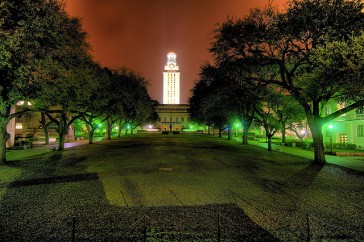
towerIn essence, the secondary admission process is a “holistic-review calculus” of many factors. The majority opinion that the consideration of race at UT-Austin “is contextual and does not operate as a mechanical plus factor for underrepresented minorities.”

Not discussed in the current ruling, but I believe relevant, is that Fisher did not fall below a bright line by which Whites were rejected and minorities admitted. As reported in The Nation, UT-Austin offered admission “to some students with lower test scores and grades than Fisher. Five of those students were Black or Latino. Forty-two Fisher II got it right on Race and Affirmative Action – Cloaking Inequity:


State Says Los Angeles Schools Must Spend More on Poor Students and English Learners | janresseger

State Says Los Angeles Schools Must Spend More on Poor Students and English Learners | janresseger:

State Says Los Angeles Schools Must Spend More on Poor Students and English Learners

Telecommunications manufacturer David Welch and his organization, Students Matter, the group that brought the original anti-teacher-tenure lawsuit Vergara v. California, and Campbell Brown, the former CNN anchor whose Partnership for Educational Justice has been bringing copycat anti-tenure lawsuits across the country, allege that schools are failing to serve their poorest students because tenure is protecting tired, old, lazy teachers and assigning such teachers to the schools that serve children in poor neighborhoods.  Never mind that what seems to be happening instead is that very poor children are being assigned the least experienced teachers.  And never mind that a shortage of dollars in big city school districts really does seem to be a primary problem.
year-old report from Bruce Fuller and other researchers at the University of California at Berkeley explains that in Los Angeles,  “Sacramento cut spending on K-12 education by one-fifth statewide in the years following 2008—in the wake of the Great Recession.  The impact on LAUSD (the Los Angeles Unified School District)…  was immense, losing approximately $2.7 billion between 2009 and 2013.  But the state has instituted a new Local Control Funding Formula for the purpose of supporting the education of poor children and children learning English.  And it turns out there are serious questions about how the new money is being spent by the Los Angeles Unified School District, which needs to address years’ of unmet needs.
The California Department of Education just sided with Public Advocates, a California public interest law firm, which had filed a complaint against LAUSD on behalf of the Community Coalition of South Los Angeles, a complaint charging that the school district is not investing, as required by the new state funding formula, enough new dollars in the education of very poor children and English learners.  The complaint says the district has claimed to be increasing spending on vulnerable students while it has instead been counting special education State Says Los Angeles Schools Must Spend More on Poor Students and English Learners | janresseger:
This shows the distribution of high-need students, defined under the formula as low-income children, students learning English and foster youths, by county. They are most heavily concentrated in Imperial, Monterey and Yolo counties and counties in the Central Valley. Disparities between high-need and wealthy schools within districts are most prevalent  in the Bay Area and Orange County.
 

Malloy’s blindness and lack of leadership leads to chaos at UConn - Wait What?

Malloy’s blindness and lack of leadership leads to chaos at UConn - Wait What?:

Malloy’s blindness and lack of leadership leads to chaos at UConn


Although Governor Dannel Malloy has consistently ducked his responsibility as the statutory President of the University of Connecticut Board of Trustees, the buck actually does stop on his desk…. Even while he pretends it doesn’t
Back in January 27, 2016, the UConn’s Board of Trustees voted to approve a new Collective Bargaining Agreement between the University of Connecticut and the University of Connecticut Professional Employees Association (UCPEA), the non-teaching professional staff at UConn.
No member of the UConn Board of Trustees voted against the contract.  All voted yes, except for one of the two alumni representatives, who abstained.
Then, as the concerns were raised about the contract by the Connecticut General Assembly, Governor Dannel Malloy suddenly become critical of the agreement – despite the fact that, by law, Malloy is the President of the UConn Board of Trustees, Malloy appoints the majority of the members of the Board and Malloy’s own personal representative on the Board had missed 12 of the last 15 monthly meetings, including the Trustee meeting in January when the contract was approved.
Malloy’s personal representative has missed every meeting since then, having now missed 15 of the last 18 UConn Trustee meetings.
Malloy pretended like it all occurred on someone else’s watch and demanded the contract Malloy’s blindness and lack of leadership leads to chaos at UConn - Wait What?:


North Carolina Teachers Arrested After 20-Mile March To Governor's Office

North Carolina Teachers Arrested After 20-Mile March To Governor's Office:

North Carolina Teachers Arrested After 20-Mile March To Governor’s Office

This is the state of our public education system. Students deserve more


Students Deserve More.
Over 100 North Carolina teachers, public school workers, and parents tried to present to Governor Pat McCrory at the end of their 20-mile march to his office on June 14 and 15. After a decade of budget cuts and a general lack of resources, the teachers and parents have had enough.
The group, formed by Organize 2020, a NC Public Schools grassroots organization, wanted to address a few points with McCrory. Namely, that he expand Medicaid, spend the budget surplus on students, and repeal HB2. 
Although McCrory knew of the requested meeting in advance, the Capitol building was shut down early and he refused to meet with the group citing a “previous engagement.” The group, demanding to be heard, took to the streets. When the police came and threatened arrests, everyone dispersed to the sidewalks except for 14 teachers who linked arms and formed a line across the road. 
The 14 were eventually arrested and released. Many of the arrested teachers wrote their own perspectives on why they refused to give up the line, which I encourage you to read. These stories are moving, powerful, and may just be one of the most important things you read all day. This is the state of our public education system from the soldiers on the front lines.
“I used to look at the daily mug shot reports in the online versions of the local paper, but I had to stop because seeing my [students] photos every day became less grounding and sobering and more depressing and angering.” 
-Bryan Proffitt, President of the Durham Association of Educators
 North Carolina Teachers Arrested After 20-Mile March To Governor's Office:

Dear schools: Here's how not to body shame girls next year

Dear schools: Here's how not to body shame girls next year:

Hey schools: Stop body shaming girls

Https%3a%2f%2fblueprint-api-production.s3.amazonaws.com%2fuploads%2fcard%2fimage%2f125881%2fschooldressshame_thumb
Hey, school administrators and teachers, we have to talk about something.
You uphold antiquated, strident, unbalanced and frankly sexist standards when it comes to female students and how they dress at school. That's a problem.
It's time to stop body shaming your female students (and hey, even some of your male students) over their fashion choices.
Don't get us wrong, there are certain things that may be too risqué for the classroom. Students have to also choose to be respectful and professional around peers and colleagues while expressing their individual style. And that's okay.
But what we're talking about here is when a female student wears perfectly normal outfits to school and is told to cover up or go home. It affects their own academic standing as well as makes them feel personally embarrassed or attacked.
We're talking about Aniya Wolf's dapper prom suit.
We're talking about Kaitlyn Juvik, the braless warrior
We're talking about Amy Steverson's lacy, yet respectable, prom gown.
None of these girls were wearing their shorts too short, their shirts too cropped or walking around topless. Instead they were shamed for not conforming to gender norms, dressing comfortably and not having stick-thin bodies. The same is likely true for other girls whose stories didn't go viral.
If you're still confused as to why these young women should not have been body shamed, here are some helpful tips on making your female students feel safe and comfortable in your school.


1. Accept that these students have bodies — large, small, pear-shaped, hour glass, etc. And they can't change that.
Embrace the body positivity movement, starting with not making comments about a student who is overweight. You do not know how much they exercise, how much they eat, or how high their blood pressure, blood sugar or any other health marker is. Look beyond their weight and remember that overweight people can be healthy.
On the flip side, if a student noticeably loses weight or maintains a low weight — it's not your business to comment on it as a school administrator unless you truly feel the student is causing harm to themself. Calling attention to weight loss, even if it's to say they look great, can put anDear schools: Here's how not to body shame girls next year: