Latest News and Comment from Education

Monday, February 23, 2015

A Walmart Fortune, Spreading Charter Schools - NYTimes.com

A Walmart Fortune, Spreading Charter Schools - NYTimes.com:


A Walmart Fortune, Spreading Charter Schools


WASHINGTON — DC Prep operates four charter schools here with 1,200 students in preschool through eighth grade. The schools, whose students are mostly poor and black, are among the highest performing in Washington. Last year, DC Prep’s flagship middle school earned the best test scores among local charter schools, far outperforming the average of the city’s traditional neighborhood schools as well.

Another, less trumpeted, distinction for DC Prep is the extent to which it — as well as many other charter schools in the city — relies on the Walton Family Foundation, a philanthropic group governed by the family that founded Walmart.

Since 2002, the charter network has received close to $1.2 million from Walton in direct grants. A Walton-funded nonprofit helped DC Prep find building space when it moved its first two schools from a chapel basement into former warehouses that now have large classrooms and wide, art-filled hallways.

One-third of DC Prep’s teachers are alumni of Teach for America, whose largest private donor is Walton. A Walton-funded advocacy group fights for more public funding and autonomy for charter schools in the city. Even the local board that regulates charter schools receives funding from the Walton Family Foundation.

In effect, Walton has subsidized an entire charter school system in the nation’s capital, helping to fuel enrollment growth so that close to half of all public school students in the city now attend charters, which receive taxpayer dollars but are privately operated.

Walton’s investments here are a microcosm of its spending across the country. The foundation has awarded more than $1 billion in grants nationally to educational efforts since 2000, making it one of the largest private contributors to education in the country. It is one of a handful of foundations with strong interests in education, including those belonging to Bill and Melinda Gates of Microsoft; Eli Broad, a Los Angeles insurance billionaire; and Susan and Michael Dell, who made their money in computers. The groups have many overlapping interests, but analysts often describe Walton as following a distinct ideological path.
In addition to giving grants to right-leaning think tanks like the Thomas BA Walmart Fortune, Spreading Charter Schools - NYTimes.com:

These Are The States That Suspend Students At The Highest Rates

These Are The States That Suspend Students At The Highest Rates:


These Are The States That Suspend Students At The Highest Rates


 Schools in the Sunshine State may not rank at the top as far as SAT scores or high school graduation rates, but they did suspend students at the highest rate in the country during the 2011-2012 school year, according to a report released Monday by UCLA's Center for Civil Rights Remedies.

Using the latest data from the U.S. Department of Education's Office for Civil Rights, the report and an accompanying research tool analyzes which states and school districts handed out the most out-of-school suspensions and whom these suspensions most affected.
Overall, while suspension rates for black, white and Latino students were similar in 2011-2012 to suspension rates in the early and mid-2000s, they were still significantly higher than they were in the early 1970s, when the federal government began collecting such data. Black students, Latino students and students with disabilities are still significantly more likely to face this type of punishment.
"The question we're asking here is, 'Are we closing the school discipline gap?'" Daniel J. Losen, the director of the Center for Civil Rights Remedies, said in a press release. "For the first time, we can answer that question in a really meaningful way. And the answer is, 'A lot of school districts are closing the gap in a profound way, but not enough to swing the national numbers.'"
Florida posted the highest suspension rate in the country for elementary and secondary school students. At the elementary school level, Florida suspended 5.1 percent of young students overall, as shown in the map below. The average national suspension rate for elementary school students, on the other hand, was only 2.6 percent, according to the report. Notably, state-level data were not presented for New York and Hawaii because of errors in how data was reported by school districts in the states.
Florida suspended 19 percent of its secondary school students -- a category that includes middle, junior high and high schoolers -- during this time period. Alabama, Mississippi and South Carolina suspended 16 percent of those students. North Dakota, at the opposite end of the spectrum, suspended only 3 percent of its secondary school students.
School suspensions put students at greater risk for dropping out and contribute to the so-called school-to-prison pipeline, which pushes students away from school and into the criminal justice system, research shows. Representatives for the Florida Department of Education did not respond to requests for comment regarding the state's high suspension rates.
Racial disparities in suspension were especially present in Missouri -- a trend that is notable given recent, racially charged protests in the state. At the elementary school level, Missouri had the highest gap in school suspension rates between black and white students. At the middle school, junior high and high school level, Missouri landed in the top five in terms of suspension disparities.
Two of the 10 school districts with the highest secondary school suspension rates in the country were located in the greater Ferguson, Missouri area, including the school district attended by black teen Michael Brown. At age 18, Brown was fatally shot by white Ferguson Police Officer Darren Wilson in August. His death set off weeks of unrest in the area.
"The Normandy school district in Missouri, where Michael Brown attended, is among the highest suspending districts in the entire nation with an overall suspension rate These Are The States That Suspend Students At The Highest Rates:


Knowledge Isn’t Power - NYTimes.com

Knowledge Isn’t Power - NYTimes.com:



Knowledge Isn’t Power


Regular readers know that I sometimes mock “very serious people” — politicians and pundits who solemnly repeat conventional wisdom that sounds tough-minded and realistic. The trouble is that sounding serious and being serious are by no means the same thing, and some of those seemingly tough-minded positions are actually ways to dodge the truly hard issues.

The prime example of recent years was, of course, Bowles-Simpsonism — the diversion of elite discourse away from the ongoing tragedy of high unemployment and into the supposedly crucial issue of how, exactly, we will pay for social insurance programs a couple of decades from now. That particular obsession, I’m happy to say, seems to be on the wane. But my sense is that there’s a new form of issue-dodging packaged as seriousness on the rise. This time, the evasion involves trying to divert our national discourse about inequality into a discussion of alleged problems with education.

And the reason this is an evasion is that whatever serious people may want to believe, soaring inequality isn’t about education; it’s about power.

Just to be clear: I’m in favor of better education. Education is a friend of mine. And it should be available and affordable for all. But what I keep seeing is people insisting that educational failings are at the root of still-weak job creation, stagnating wages and rising inequality. This sounds serious and thoughtful. But it’s actually a view very much at odds with the evidence, not to mention a way to hide from the real, unavoidably partisan debate.

The education-centric story of our problems runs like this: We live in a period of unprecedented technological change, and too many American workers lack the skills to cope with that change. This “skills gap” is holding back growth, because businesses can’t find the workers they need. It also feeds inequality, as wages soar for workers with the right skills but stagnate or decline for the less educated. So what we need is more and better education.

My guess is that this sounds familiar — it’s what you hear from the talking heads on Sunday morning TV, in opinion articles from business leaders like Jamie Dimon of JPMorgan Chase, in “framing papers” from the Brookings Institution’s centrist Hamilton Project. It’s repeated so widely that many people probably assume it’s unquestionably true. But it isn’t.
For one thing, is the pace of technological change really that fast? “We wanted flying cars, instead we got 140 characters,” the venture capitalistPeter Thiel has snarked. Productivity growth, which surged briefly after 1995, seems to have slowed sharply.
Furthermore, there’s no evidence that a skills gap is holding back employment. After all, if businesses were desperate for workers with Knowledge Isn’t Power - NYTimes.com:

Schooling in the Ownership Society: Bogus 'Parent Trigger' petition rejected by Anaheim board

Schooling in the Ownership Society: Bogus 'Parent Trigger' petition rejected by Anaheim board:


Bogus 'Parent Trigger' petition rejected by Anaheim board


Last month I wrote about an attempt in Anaheim, CA to privatize the management of another public school, using the so-called Parent Trigger law.


The law, which turns parent against parent in a community, gives a temporary majority, who are willing (often cajoled) to sign a petition, the power to hand their public school over to a private company. That company can then fire the principal and all the teachers as well as abrogate the district's collective bargaining agreement. It doesn't matter if next week, or next year, the majority shifts. The school can be privatized and there's little district parents and taxpayers can do about it.


Well, there is something they can do and they did it Thursday in Anaheim when the school board found that the petition submitted by a group of Palm Lane Elementary School parents failed to collect enough valid signatures to privatize the school.

Opting out of state tests has costs for Ohio students, schools | The Columbus Dispatch

Opting out of state tests has costs for Ohio students, schools | The Columbus Dispatch:


Opting out of state tests has costs for Ohio students, schools


 Parent groups have sprouted throughout the state — and central Ohio — to protest the new state exams aligned with Common Core standards.

But parents say there has been a lot of confusion about whether they can keep their kids from taking the tests.
Here’s the rub: Students and their parents can opt out of state testing, but there are consequences for their teachers and for some students if they do.
Lisa Riegel recently held a meeting with Olentangy schools officials and 30 other parents after a Facebook exchange on the subject generated more than 200 comments, many of which included misinformation.
“There was a lot of half-fiction and half-truths,” she said.
Also at the meeting were an Ohio Education Association representative and state Rep. Andrew Brenner of Powell, who introduced a bill on Thursday that would limit end-of-course exams to no more than three hours beginning next school year. It also calls for the state to identify alternatives to the high-school end-of-course exams next year.
Brenner, a Republican, also co-sponsored a bill that would limit testing time beginning next school year to no more than four hours per subject.
Several districts, including Columbus, Upper Arlington and Worthington, have reported that parents excused a total of dozens of students from state testing.
>>  PARCC practice test  << 


Parents echo many of the concerns raised by school leaders and Opting out of state tests has costs for Ohio students, schools | The Columbus Dispatch:


Parents Can Opt Out - United Opt Out National

Click Here to go to United Opt Out National: 


Click Here to go to the WebsiteUnited Opt Out Team

No Child Left Behind: how to end 'teaching to the test' - LA Times

No Child Left Behind: how to end 'teaching to the test' - LA Times:


Editorial 

No Child Left Behind: how to end 'teaching to the test'


When U.S. Education Secretary Arne Duncan said last year that the incessant focus on testing was “sucking the oxygen” out of public school classrooms, his statement seemed like a pointed criticism of the federal No Child Left Behind Act and of his own long-standing policies. For the last 14 years, the law has pressured public schools to raise scores in math and reading; that in turn has led schools to “teach to the test” — and to administer increasing numbers of interim tests throughout the year, as schools and individual teachers have tried to determine whether students are on track to score well on the all-important year-end exams.


But it turned out that Duncan wasn't saying what critics of No Child Left Behind had hoped: that there should be fewer standardized tests, which are taken annually in grades three through eight and once in high school. Instead, Duncan proposed giving states incentives to get rid of other “redundant and low-quality” exams. The problem is that as long as there are annual high-stakes tests, schools are going to prepare for them with their own tests.


Duncan is right when he says the annual tests provide important information about schools. They should remain a component of the law, along with high standards for what students should learn. The better way to ensure that test prep doesn't replace
creative, stimulating lessons in class is to relax the law's rigid reliance on scores as a measure of school and teacher performance, and to tone down its harshly punitive elements.


For one thing, the Obama administration should drop its insistence that the test scores be used as a major measure in teacher evaluations. That is now the rule in the 43 states — California isn't one of them — that received waivers from No Child Left Behind, and the administration clearly wants to make it a requirement for all states if the law is reauthorized this year. But the value of this approach has not yet been proved, and as long as states show academic progress, the federal government shouldn't interfere in how they go about it.

No Child Left Behind: how to end 'teaching to the test' - LA Times:

Positive School Reform: Reimagining ESEA - Education Week

Positive School Reform: Reimagining ESEA - Education Week:


Positive School Reform: Reimagining ESEA


 Teachers and other advocates for public education know what they oppose. Too much student testing. Too much emphasis on charter schools. Too much negative news about the schools. And not enough coverage of what is going right. Those are the common complaints—and they are accurate.

While we know what educators oppose, though, it is much more difficult to know what they are for. What would make the schools better for all children in the opinions of those whose job it is to educate? Further, what does research tell us would be most effective in improving education?
I raise this issue because I have learned from nearly a half-century of involvement in education policy that if your agenda is not being carried out, then you are working to implement someone else's ideas. For decades, this is exactly what has happened. People from outside the field have been setting the agenda.
To be precise, business leaders, think tanks, state governors, and other political leaders have had much more influence in fashioning school reforms than have the people whose careers are in education. The No Child Left Behind Act, teacher evaluations based on inappropriately used state tests, and a tremendous emphasis on charter schools are prime examples of recent policies that were imposed on most educators.
In Presidents, Congress, and the Public Schools (to be published next month by Harvard Education Press), I examine the long history of externally imposed reforms, finding that they have seldom, if ever, had the success promised when first laid on the schools. This is not to say that there were no good results from these efforts, but nothing on the order of what our schools need to prepare students for the challenges of the future.
—Kali Ciesemier for Education Week
I reached my conclusions despite the fact that I had spent an entire career creating many of these reforms, and, once they were enacted, arguing for their continuation. Reflection while writing this book has led me to support a far different approach today.
Fundamental rethinking of school reform is not happening as the new Congress tries to piece together legislation that will extend the No Child Left Behind Act. That 2002 law, the most recent reauthorization of the Elementary and Secondary Education Act of 1965, expired in 2008, and has since been extended by Congress on a yearly basis Positive School Reform: Reimagining ESEA - Education Week:
Big Education Ape: Tell Congress: Vote NO on H.R. 5 – The Student Success Act http://bit.ly/1JwDIz3

Blogs Are Critical to Re-establishing Public Schools

Blogs Are Critical to Re-establishing Public Schools:


BLOGS ARE CRITICAL TO RE-ESTABLISHING PUBLIC SCHOOLS

charter school oklahoma city
What was once Harding High School in Okla. City Public Schools is now Harding Charter Preparatory High School, authorized by the district.


Over the last ten years, bloggers have kept the issues of who controls schools at the forefront when so many big money interests want desperately to have us look the other way.
One advantage that school raiders have in taking public schools away from the public and turning them over to investor-owned charters is that the traditional news sources are hobbled from reporting accurately and fully.
On the other hand, in Oklahoma, blogs have been the spine of exposing the lies and game plan of school raiders who have used big money from investors to attack public schools and promote charter and voucher schemes.
Let’s look at the differences in blogs and the traditional, mainstream “press” or “media” when it comes to reporting about education.
Ownership
The Oklahoman and the Tulsa WorldOklahoma’s two biggest metro dailies that have circulations that spread throughout the state, are each owned by fabulously wealthy individuals who live in other states and never have had any family ties to Oklahoma.
On the Forbes 400 list of the wealthiest people in the U.S. for 2014,Warren Buffet, whose firm Berkshire Hathaway owns the Tulsa World, is #2, and The Oklahoman’s owner, Philip Anschutz of Colorado is #42.
Forbes lists Buffet as being worth $67 billion and Anschutz as being worth a measly $42 billion.
These quite smart individuals have been purchasing large newspapers for a reason: Those companies have the potential for a good return on investment if they are operated in an efficient manner. In this case, “efficient” means that more advertising dollars are coming in than expenses that are incurred.
Anschutz, however, has been buying up a string of radio stations and newspapers and has been actively pushing his right-wing ideology through them, even though not blatantly. The Oklahomangives appearances of being a neutral organ, but is too often caughtmisusing information in news stories to push a particular editorial viewpoint against public schools.
It is no secret that Anschutz is pushing corporate charter schools Blogs Are Critical to Re-establishing Public Schools:


Sunday, February 22, 2015

It Ain't the Oscars: 2015 Broadie Winners: The Annual Corporate Education Reform Awards


2015 Broadie Winners: 
The Annual Corporate Education Reform Awards


BEST PICTURE
Malice in Wonderland Starring Campbell Brown with Michele Rhee, Bill Gates and Arne Duncan  

ACTOR
in a Leading Role
Arne Duncan starring in No Waiver for You

ACTRESS
in a Leading Role
Eva Moskowitz in The Rent is Too Damn High


ACTOR
in a Supporting Role
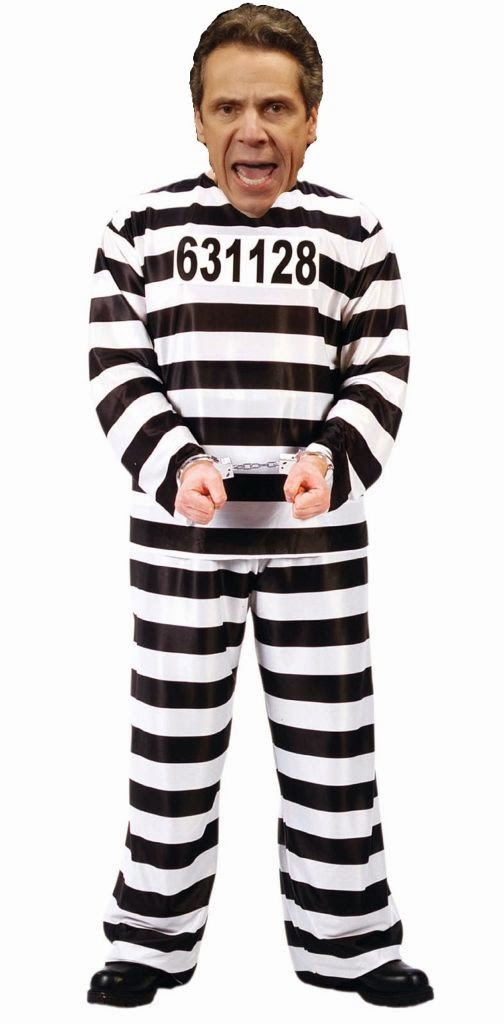
Andy Cuomo in I Took Charter School Money

ACTRESS
in a Supporting Role
Gloria Romero in Little Bo Peep and Her Corporate Sheep


LIFETIME ACHIEVEMENT AWARD
Arne Duncan Eli Broad Bill Gate
Jacking Your Public Schools


Teachers across America are fighting for their students – Where the hell are CT’s teacher unions - Wait What?

Teachers across America are fighting for their students – Where the hell are CT’s teacher unions - Wait What?:


Teachers across America are fighting for their students – Where the hell are CT’s teacher unions


Governor Malloy has made it painfully clear – he intends to stay the course on the discriminatory, unfair and inappropriate Common Core Smarter Balanced Assessment Consortium (SBAC).
This from the Governor who said he didn’t mind teachers teaching to the test as long as the test scores went up.
The truth is that Common Core SBAC Test is rigged to ensure that the majority of Connecticut students are deemed failures.
Furthermore, the outrageous and absurd Common Core Test is particularly unfair for children of color, children who aren’t fluent in the English Language and children who require special educations services.
Despite these facts, Malloy’s Commissioner of Education voted to set the pass/fail mark at a level that as many as 7 in 10 students will fail and the State Department of Education continues to instruct local superintendents to mislead parents into believing that they do not have the fundamental right to protect their children by opting them out of this dangerous testing scheme.
But of course, parents have the fundamental right to protect their children and there is absolutely no federal or state law, regulation or policy that allows the state or local school districts to punish children whose parents refuse to allow their children to be abused by this Common Core testing system.
In state’s across the nation, public teachers are stepping forward and risking their jobs to say enough is enough and that the massive and inappropriate Common Core Testing Teachers across America are fighting for their students – Where the hell are CT’s teacher unions - Wait What?:

“All politics is local,” Will Governor Cuomo Listen to the Folks in the Provinces? | Ed In The Apple

“All politics is local,” Will Governor Cuomo Listen to the Folks in the Provinces? | Ed In The Apple:


“All politics is local,” Will Governor Cuomo Listen to the Folks in the Provinces?


“All politics is local,” Tip O’Neill, Speaker of the House (1977-87)
Presidents, senators, speakers of the house, governors, political parties and the hordes who spin fight for the hearts and minds of the American people, well, at least the less than half of the American people who bother to vote.
The election cycle never ends.
Obama’s Executive Actions on Immigration, response to the Russians in the Ukraine, fighting ISIS, and on and on, each side tries to “win” the intellectual and visceral fight, from Fox on the right, to CNN to MSNBC on the left; however, networks and cable stations no longer have the influence they once had.
Newspaper sales decline every year, cyberspace is the battlefield. Americans get their “news” from websites, from Facebook, and, increasingly from Twitter.Hashtags rule.
Slowly and inexorably the fight over education appears to be tilting against the Obama/Duncan/Cuomo agenda.
Rubin Diaz is the Borough President of the Bronx, an anachronistic elected position, with the demise of the Board of Estimate in 1990 the borough president has no vote and no control over legislation or budgets, the borough president is the cheerleader for their borough. Diaz is highly popular and dependent on the governor, the state legislature, the mayor and the council to fund projects. In his sixth State of the Borough address, a long list of job creation achievements, new housing and economic development projects, he added the line, “Children shouldn’t be defined by one test.” The line was greeted with applause from the “All politics is local,” Will Governor Cuomo Listen to the Folks in the Provinces? | Ed In The Apple:

Are You Willing? Badass Teachers Association

Badass Teachers Association:


Are You Willing?


By: Larry Proffitt


 Today was a usual snow day for this educator. I visited the General Assembly to discuss education bills proposed and policies in our state. It isn't a hardship; it is my profession. If I am not willing to do everything in my power to secure good public schools, then I don't consider myself vested. It is the charge we take as educators. We prepare for our classrooms daily and teach our students about the curriculum and ideas that will lead them into the future, or do we? I think it is our intent, but policies over an extended period of time have moved the needle of our calibration methods. It has been moved in favor of almost complete dependency on test scores. What does it mean? I'll tell you my opinion. It means a tremendous amount of time is spent RACING to a test instead of delving into curriculum. What is the compromise? How about the next generation? I truly believe that is what is at stake.


I sat with a state representative today and discussed the sacrifice being made by poorly designed and thought out education policy. His question to me, "What is the end result?" It came to me clearly without a moment of thought. The next generation of our citizens will be excellent test takers, but they will fail poorly at solving the problems necessary to carry us into the future in a great democracy. Time spent on test preparation has grown exponentially over the past five years alone. It is a race, a contest or a competition. Who's school has the best scores? Is it a failing school? Are the students failing, or more importantly, in the bottom five percent? Students, teachers and schools are judged upon those scores, so we push and push. Faster paths through curriculum and standards to cover all we can is the task at hand. Creativity is sacrificed and our path ultimately becomes skewed.


How do we correct our path and stave off the test-crazed push for perfect scores? We get involved. One of the most effective teaching strategies is modeling, so we model. We talk to our board members, commission members and legislators. We sit and do not complain, but we state problems and offer solutions. It is what educators do. It is what we must do. "I just want to teach!" Yes, I've Badass Teachers Association:

Kamenetz on The Test: Can What We Measure What We Truly Value? - Living in Dialogue

Kamenetz on The Test: Can What We Measure What We Truly Value? - Living in Dialogue:


Kamenetz on The Test: Can What We Measure What We Truly Value?


 By John Thompson.

Anya Kamenetz’s The Test comes from the conversation she’s had again and again with parents. She and they have “seen how high-stakes standardized tests are stunting children’s spirits, adding stress to family life, demoralizing teachers, undermining schools, paralyzing the education debate, and gutting our country’s future competitiveness.” Like so many Gen X and Gen Y parents, Kamenetz sees how “the test obsession is making public schools … into unhappy places.”
Kamenetz covers ten arguments against testing, starting with “We’re testing the wrong things,” and ending with “The next generation of tests will make things even worse.” I’d say the second most destructive of the reasons is #4 “They are making teachers hate teaching.” The most awful is #3 “They are making students hate school and turning parents into preppers.”
The second half of Kamenetz’s great work starts with the Opt Out movement, the grassroots parent revolt. She recalls the disgusting practices that drive families to opt out. Under-the-gun schools have resorted to “petty intimidation” of eight-year-olds, even forcing a nine-year opt-outer old to watch test takers rewarded with ice cream and candy, and requiring student opt-outers to sit and stare without books or diversions for hours while classmates take tests.
Kamenetz then presents alternative approaches to high-stakes testing. She explores four different types of assessments that could replace standardized testing. In doing so, she reminds us that “…education’s purpose in the twenty-first century is to prepare students to excel at the very tasks that computers can’t master …”
We already have three alternative approaches to testing that would not require test, sort, and punish:
Team Robot tests conventional subjects (math, reading, writing) in unconventional ways (invisible, integrated, electronic).
Team Monkey tests unconventional qualities (mindset, grit) in conventional ways (multiple –choice surveys).
Team Butterfly, which Kamenetz would use as the basis for a new system, integrates learning with assessment and covers twenty-first-century skills without quantifying the outcomes in a way that’s familiar or easily comparable …
A fourth, Team Unicorn, which is still emerging, relies heavily on video games. She offers an intriguing Kamenetz on The Test: Can What We Measure What We Truly Value? - Living in Dialogue:

Partners for Corporatiziing Schools: Naming Names(Susan Ohanian Speaks Out)

Data Command Force (Susan Ohanian Speaks Out):


    Partners for Corporatiziing Schools: Naming Names


    information gathered by Susan Ohanian 

    News Item 

    HISD spent $60 million on Apollo 20, created by Harvard EdLabs'Roland Fryer. Billed as a turnaround plan for troubled schools, it was largely a test-prep program. The results were sharp declines in AP (Advanced Placement) scores, as shown by HISD's own figures; no sustained STAAR gains; and 25 percent enrollment declines in many Apollo schools. Even with such poor results, the HISD board subsequently approved another contract with EdLabs for a similar program, Leverage Leadership.-- Houston Chronicle, Feb.17, 2015

    Summary of Leverage Leadership provided by Houston Chronicle

    Leverage Leadership mandates a dramatic expansion of benchmark testing.

    • Students take four district-based assessments in the first 13 weeks of school with four more scheduled for the spring.
    • These tests are district-created with minimal teacher input and vetted by Harvard EdLabs. They often cover content not yet taught and differ substantively from the original teacher version.
    • Administrators are required to observe teachers (20 min/wk) and discuss data (30 min/wk) with each teacher. For a 15 teacher load, this translates to 2.3 hrs/day. This is more than 25% of a workday and is not inclusive of evaluation.

    LL is demoralizing students.
    • Children do not see connections between their instruction and their assessments.
    • Many schools assign students test grades for snapshots.
    • Students are discouraged by assessments that test them over content they have not yet learned.
    • The snapshots derail instruction the week prior to the snapshot as teachers only receive snapshots one week ahead of district-mandated testing windows.
    • Students from pre-K through high school are taking benchmarks.
    Leverage Leadership damages our schools.
    • Requiring administrators to spend 25% of their day on LL activities means less time for creating and monitoring a safe school environment, facilities management, and building relationships with students, faculty, staff and community.
    • This program is modeled after EdLab’s Apollo program, which saw no significant change in ELA scores, no sustained math gains, a precipitous drop in student enrollment and massive teacher turnover.

    LL is a dangerous diversion of time, energy, and resources from meaningful instruction and evaluation.

    • HISD will pay $1.25 million over two years for LL assessments and coaching.
    • Benchmarking reduces
    Data Command Force (Susan Ohanian Speaks Out):

HR 5: Student Success Act: Some Thoughts on the Testing | deutsch29

HR 5: Student Success Act: Some Thoughts on the Testing | deutsch29:


HR 5: Student Success Act: Some Thoughts on the Testing


In this post, I offer some commentary on HR 5, known as the Student Success Act (SSA), a massive piece of legislation for the reauthorization of the Elementary and Secondary Education Act (ESEA), that has been approved by the House Education Committee and is headed to the House for a vote possibly as soon as Friday, February 27, 2015.
The full text of the bill (597 pages) can be found here: student_success_act_text.
Specifically, my commentary in this post concerns the mandated standardized testing detailed in the first 52 pages of SSA.
As I read these 52 pages, I did so while thinking like a lawyer.
Here goes:
On page 26, SSA notes that states must select English and math assessments that are to be used to evaluate schools. However, one of the requirements of these assessments– assessments measuring student outcomes– is that such “be used for purposes for which such assessments are valid and reliable.”
Reliability in assessment has no tie to how the assessment it used. An assessment is “reliable” to the degree that it consistently measures something.
The problem for the federal government is that no assessment designed to determine student achievement can be “validly” used to grade a school or ateacher. Thus, states can challenge SSA on this point. The burden of proof then rests with the assessment companies– if they peddle the assessment as one measuring student achievement– even if such is supposedly “aligned” to a set of achievement standards– then to advertise the assessment as useful for measuring schools or teachers is to violate validity.
By the way, I have yet to read an ad from an assessment company to the effect that their standards-aligned assessments are useful for grading schools and teachers. To advertise as much is to become legally liable.
Also regarding assessment as delineated in SSA pages 26 – 31, it is possible for states to administer such assessments without using student names on the HR 5: Student Success Act: Some Thoughts on the Testing | deutsch29:
Big Education Ape: Tell Congress: Vote NO on H.R. 5 – The Student Success Act http://bit.ly/1JwDIz3