Latest News and Comment from Education

Friday, February 20, 2015

PART 4 of a SERIES : “THE MOST SUCCESSFUL TYRANNY” | DCGEducator: Doing The Right Thing
PART 4 of a SERIES : “THE MOST SUCCESSFUL TYRANNY” | DCGEducator: Doing The Right Thing:


DCGEducator: Doing The Right Thing


PART 4 of a SERIES : “THE MOST SUCCESSFUL TYRANNY”


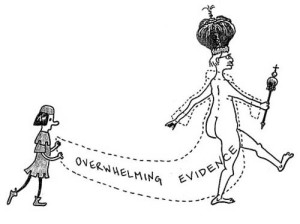
emperor-without-clothes


 Says Allan Bloom, “ The most successful tyranny is the one that removes the awareness of other possibilities.” Now I admit, I was never a fan of Allan Bloom, but in this regard he is certainly right about how our elite sheep education reformers have grasped hold of the media and have controlled “the awareness of other possibilities.” From Wendy Kopp to Arne Duncan to Michelle Rhee, all we have heard is how the American Education System is broken and must be replaced. They have convinced the public that teachers are incompetent, lazy, union slugs. Try to convince people otherwise these days. The tyranny is in place and we must overthrow it.

All of the professional training in the schools our excellent sheep-like leaders has made them single-minded.  Says William Deresiewicz, “Our rush to efficiency, our addiction to methodologies, and ‘metrics’—testing regimes, protocols…spreadsheets, the management mentality in all its incarnations—[the humanity of] humans has been torn from what they do.”
The professions many of our education reformers, leaders, and philanthropists enter too often ignore that. They are trained with specialized efficiency in mind. They plow ahead with that capacity to do what they believe their job is: to recreate education in this country to resemble how they see it: an efficient, metrics based, testing regime with school leadership based on the management mentality, not a “principal teacher” mentality.  It is all they know. It is how they succeeded. Thus, those are the schools and systems they support. Those are the not for profits they support. Those are the charters they support. As much as they believe they are the dissenters, they, in fact are the tyrants who refuse to collaborate with their workers. They refuse to question themselves. They all live in the same “Ghetto of the Mind.” They become the Emperor or Empress with no clothes.
How does all of that effect teaching? These elite leaders who come from the same “Ghetto of the Mind” say that all it takes is to put a great teacher in front of every class and all will be well. Three things are wrong with that. First, most great teachers do not park themselves in front of the room and second, most great teachers don’t fit their concept of greatness. Deresiewicz tells us, “Teaching is not an engineering [STEM] problem. It isn’t a question of transferring a certain quantity of information from one brain to another” and teaching test taking strategies so that test scores rise and all of a sudden a PART 4 of a SERIES : “THE MOST SUCCESSFUL TYRANNY” | DCGEducator: Doing The Right Thing:
Read the series: @Doing The Right Thing http://bit.ly/1Lj93B1

How Gentrification Is Leaving Public Schools Behind - US News

How Gentrification Is Leaving Public Schools Behind - US News:


How Gentrification Is Leaving Public Schools Behind

Urban neighborhoods are diversifying, but traditional schools are not reflecting the changes.


WASHINGTON – Ellington Turner and his mother, Marlece, began to cry.
The seventh-grader had just gotten word that his school, MacFarland Middle School in Washington, D.C.’s fast-gentrifying Petworth neighborhood, would be closed following the 2012-2013 school year.
That year, MacFarland, the only public middle school in Petworth, was one of 15 Washington public schools scheduled to be closed.
For the Turners, and for some of their fellow Petworth residents, the neighborhood school had been a comfort, even though the students’ test scores often lagged behind D.C. averages.
“We didn’t have a voice in the closings of the schools. [The city] said we had a voice, but I think in the long run they knew a year in advance they were closing the schools, and we were blindsided,” Marlece said while recounting her experiences in 2012 on a radio show last May.
Since 2008, about 40 public schools in the District of Columbia have closed or have been targeted for shutdowns, in many cases in favor of charter schools. The chief reason, according to the District, has been low enrollment.
But coinciding with closings, the city’s population has been changing.
Washington, D.C., had been the first American city to have a majority black population. That majority held for more than 50 years before the city’s black population fell below 50 percent in 2011.
Over the past 20 years or so, the nation’s capital, similar to many American cities, experienced the urban phenomenon of gentrification: the movement of largely middle-class, often white Americans back into cities, often choosing areas with low living costs, typically populated with minority residents.
Petworth is one such neighborhood undergoing these changes. Locally owned coffee shops and freshly paved bike lanes dot the landscape, which has seen the percentage of its once heavily black population plummet over the past decade.
One of the least understood impacts of gentrification is its role in a neighborhood’s education system. While proponents of gentrification cite a range of positive impacts, including decreased crime rates and increased property values, the impacts on traditional neighborhood schools are murkier.
“We believe [the school closings] are all part of the bigger picture of what’s happening here in the city and among cities around the country that have high populations of people of color where neighborhoods are rapidly gentrifying,” said Daniel del Pielago, the education organizer for a group called Empower DC that specializes in rallying residents around community causes. “To us, what we’re seeing is that a lot of these schools that are being closed are in areas where gentrification is How Gentrification Is Leaving Public Schools Behind - US News:

These Newark Students Have Been Camping Out At Their School District Headquarters For Days #‎OccupyNPS‬ ‪#‎OurNewark‬

These Newark Students Have Been Camping Out At Their School District Headquarters For Days:


These Newark Students Have Been Camping Out At Their School District Headquarters For Days

CAMI ANDERSON
Cami Anderson, superintendent of Newark Public Schools, speaks during an interview in New York in 2014. A group of students occupied Anderson's office in February 2015 to protest her policies. (Photographer: Chris Goodney/Bloomberg via Getty Images) | Bloomberg via Getty Images


Instead of going to class or eating dinner at home with their parents, a group of New Jersey students has been living inside the headquarters of Newark Public Schools this week.
Since Tuesday evening, eight students have occupied the office suite of NPS Superintendent Cami Anderson. The students -- who belong to a group called the Newark Students Union -- do not intend to leave until Anderson meets with them and hears their concerns about how the district is being run, Thais Marques, a local community organizer who has been staying with the students, told The Huffington Post. The students also want Anderson to agree to go to the next district advisory board meeting. Anderson stopped attending these public community meetings last February, after facing verbal attacks.
The school district has been run by the state since 1995 because of its low test scores. Gov. Christ Christie (R) appointed Anderson as superintendent in 2011.
This year, Anderson's controversial One Newark plan went into effect, which expanded school choice in the district and added charter schools. The Newark Students Union has repeatedly protested One Newark, saying it was developed without sufficient community input.
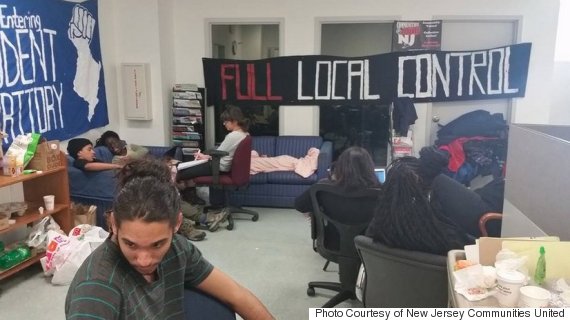
The students have been sleeping in the superintendent suite with Marques and one other community organizer. Both organizers come from New Jersey Communities United, a group that provides organizing space and resources to the Newark Students Union. Some members of the group have been sleeping on the floor or on a miniature couch, and others have been sleeping sitting up, said Marques, who co-founded the student group in 2012 when she was at NPS.
photo1
Students at the NPS headquarters this week. (Photo courtesy of New Jersey Communities United)
Parents and community members have brought the group meals and other resources such as clean clothing. While some students came equipped with basics like deodorant and toothpaste, others are relying on care packages that NJCU organizers are putting together, according to NJCU Executive Director Trina Scordo. They have not showered during the sit-in.
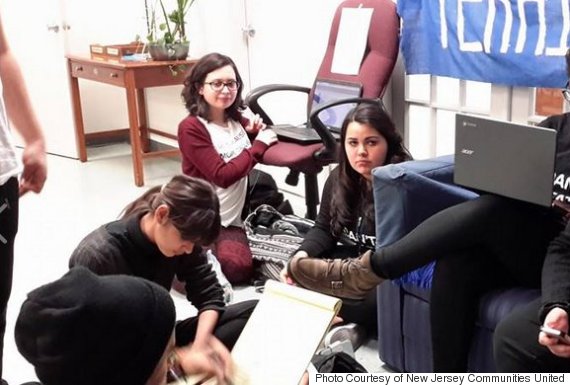
picture2
Members of the Newark Student Union discuss their sit-in strategy. (Photo courtesy of New Jersey Communities United)
Still, spirits are high, high school junior Tanaisa Brown told HuffPost.
"It's all positive vibes and energy. We have everything we do need," said Brown, the secretary of the Newark Students Union. "I got to see my mom and little brother and they ordered food for us. Things are going well."
The group's long-term goal is to see the district returned to local control, says Brown.
"We want to have an open and honest discussions with [Cami Anderson]," said Marques. "She's making decisions completely without engaging the community."
In response to the current sit-in, NPS spokeswoman Brittany Chord Parmley toldNJ.com that student activists have "repeatedly ignored district requests to meet and engage in a constructive dialogue ... while we appreciate their passion, this is not the appropriate forum to engage in productive conversation." The district has also asked the parents of demonstrating students to pick up the teens so that they may return to class.
Anderson has regularly denied claims that she did not solicit community input for the development of One Newark and that the school reorganization plan is negatively affecting families.
HuffPost reached out to NPS for comment and is waiting to speak with the district's 

N.J.'s new standardized test gets F in South Jersey

N.J.'s new standardized test gets F in South Jersey:

N.J.'s new standardized test gets F in South Jersey

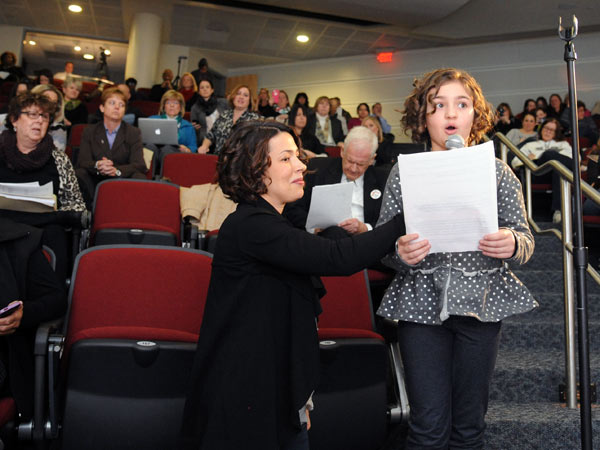
Little Angelina Chila, an 8-year-old third grader at Hurffville Elementary School, addresses the commission at Camden County College in Blackwood on Feb. 19, 2015. Angelina´s mom, Carol, is holding the microphone. They live in Sewell. ( CLEM MURRAY / Staff Photographer )
From a Washington Township third grader to grandparents, educators, and parents, speaker after speaker at a public hearing Thursday rose to voice displeasure - or worse - with New Jersey's emphasis on high-stakes standardized tests.


Most had come to complain about the Partnership for Assessment of Readiness for College and Careers (PARCC), a new and controversial exam aligned with Common Core curriculum standards. It will be given to third through 11th graders statewide starting March 2.

"PARCC is a not-yet validated test that is wasting valuable classroom time for both teachers and students," said Natalia Reyes, an Eastampton mother of three, speaking to a state student assessments study commission at Camden County College in Blackwood, where the hearing was held.

PARCC supporters have said the test is more rigorous than the exams it is replacing and will help students become college- and career-ready.

But opponents like those at the hearing said PARCC is draining money and resources from other subjects and programs.

Angelina Chila, 8, a third grader at Hurffville Elementary School in Washington Township, said students need to learn more skills and take fewer tests.

In the last three weeks, she said, she has taken eight tests, including a PARCC practice test.

"I think everyone would agree that this is way too much testing!" she said.

Ginny Murphy, a Washington Township school board member, said underfunded mandates like the computer and technology improvements required by PARCC and the new teacher evaluation system have cost her district more than $5 million, hardly offset by about $147,000 in additional state aid. Also, she said, preparing for and implementing PARCC drains staff resources, particularly in a district as large as hers.

"Somewhere between the common standards and the Common Core, we lost our common sense," Murphy said.

Several testified that PARCC is developmentally inappropriate and confusing, with content above grade level and computer skills that many of its takers will not have. They said PARCC would disadvantage many children, including those in special education.

Tamara Gross, a special-education teacher in Cinnaminson, suggested that the money spent on testing, such as the $108 million the State of New Jersey has committed to

Read more at http://www.philly.com/philly/education/20150220_N_J__s_new_standardized_test_gets_F_in_South_Jersey.html#qgjHU7mWcFGGY3cH.99

Report: Michigan doesn’t hold charter schools accountable | WOODTV.com

Report: Michigan doesn’t hold charter schools accountable | WOODTV.com:


Report: Michigan doesn’t hold charter schools accountable


 GRAND RAPIDS, Mich. (WOOD) — A report from a nonprofit education organization says that Michigan charter schools and authorizers are lagging behind.

The report, called “Accountability for All: The Need for Real Charter School Authorizer Accountability in Michigan,” claims that the state needs to hold charter school authorizers more accountable, even saying at one point that “charter school authorizers, in particular, are arguably accountable to no one — not even our state’s governor.”
>>Online: The full report
The report was released Thursday by the Education Trust – Midwest, a division of a national nonprofit.
Part of the report gives charter school authorizers letter grades based, it says, on how they decide to open new schools, how they set performance standards and improving the failing schools they have.
In West Michigan, Grand Valley State University got a grade of B as an authorizer for its 63 schools. Grand Rapids Public Schools got an A grade for the one school the district authorizes, the Child Discovery Center (CDC).
The CDC serves kindergarten through 5th-grade students, and though it is authorized by GRPS, it is its own autonomous charter school district.
The report calls CDC a model, stating that GRPS “closely monitors [sic] their schools’ progress, with the goal of high student learning at the forefront.”
“Right now we have a separate and unequal education system between traditional schools and charter schools,” said John Helmholdt, the spokesperson for GRPS. “Our belief, and this is something in our legislative platform, is that we are one public education system and that we need to work together.”
Helmholdt said the district doesn’t look at CDC as competition to the traditional district, but rather an extension of what the district has to offer.
“What are the services as central office that we can provide as this big entity that we can say, ‘Hey, IT, food service, other items, professional development, things like that, that were doing for 50-plus schools we can easily provide as a support service to this charter school,” said Helmholdt.
He applauded the report, stating that there needs to be more accountability for charter schools and their authorizers.
“Anyone who opposes that, it’s really a double standard. There is an expectation that you have that level of Report: Michigan doesn’t hold charter schools accountable | WOODTV.com:


Charter groups top unions in lobbying, campaign spending | Capital New York

Charter groups top unions in lobbying, campaign spending | Capital New York:


Charter groups top unions in lobbying, campaign spending


ALBANY—Supporters and opponents of education reform, primarily charter school expansion, spent more than $30 million combined attempting to influence New York State politics in 2014, a Capital analysis of lobbyist reports and campaign finance data found.
Charter school groups and their supporters spent $16 million on lobbying, campaign contributions to state-level candidates and parties and independent expenditure campaigns last year. Charter schools spent nearly $700,000 on lobbying. Education unions and labor-funded advocates spent $11.77 million, according to the analysis.
Additionally, large school districts and stakeholder groups representing school boards spent $922,193. An advocacy group pushing a generous tax credit that would incentivize donations to schools spent $659,404.
In defending their spending and high-profile backers, education reform leaders have often portrayed teachers’ unions as deep-pocketed behemoths representing special interests. But the spending reality is that in 2014, the pro-charter and reform groups outspent unions by a considerable margin.
In the first three months of 2014, New York City’s charter advocates, with the help of Governor Andrew Cuomo, battled Mayor Bill de Blasio over the future of the city’s growing charter sector. Charter leaders felt their existence threatened under the de Blasio administration, which has had frosty relations with the city’s charter contingent.
But after the continued growth of the charter sector around the state was guaranteed in a sweeping pro-charter bill passed last April, the existential threat to charters became less urgent. In the remaining nine months of 2014, pro-charter groups focused more on strengthening accountability measures for teachers and pushing the state and city to take immediate action to fix failing schools.

Each side was led by a group that accounted for more than half of its cause’s spending. While final lobbying totals for 2014 are not yet available, it is likely Families for Excellent Schools, which spent $9.7 million, and the New York State United Teachers, which spent Charter groups top unions in lobbying, campaign spending | Capital New York:

California task force urges reform of special education funding | EdSource


California task force urges reform of special education funding | EdSource:


California task force urges reform of special education funding

Two women speak at a podium in a meeting room.
CREDIT: JANE MEREDITH ADAMS/ EDSOURCE TODAY
At the podium, Vicki Barber, left, and Maureen O'Leary Burness preview the report on special education. A sign language interpreter is at far left


Federal and state funding rates for special education would be equalized across California and new special education teachers would be authorized to teach general education if draft recommendations from a task force presented on Wednesday are implemented.
In addition, school districts would include in their new three-year planning documents, known as Local Control and Accountability Plans, details about how they are improving outcomes for special education students, according to a preview of a long-awaited report from the Statewide Special Education Task Force, a group funded by foundations to recommend transformative changes in special education in California.
“We believe the time is now,” said Vicki Barber, co-executive director of the Statewide Special Education Task Force.
A draft version of the report was presented at a meeting of the state Advisory Commission on Special Education, which provides recommendations to state legislators and education administrators. The full report will be presented to the State Board of Education in March.
The brainchild of Michael Kirst, president of the State Board of Education, and Linda Darling-Hammond, chairwoman of the California Commission on Teacher Credentialing, the task force is thought by many to have the clout to push for changes long-sought in special education, including a far-reaching integration of special education students, teachers and programs into general education.
The effort is driven by low achievement rates of special education students, 90 percent of whom have no cognitive impairment. Speech and language impairment is the largest category of students in special education, followed by students with learning disabilities.
“This is a commitment to move forward,” said Vicki Barber, co-executive director of the task force, who presented the draft report to the California task force urges reform of special education funding | EdSource:

L.A. teachers union declares impasse in contract talks - LA Times

L.A. teachers union declares impasse in contract talks - LA Times:

L.A. teachers union declares impasse in contract talks
L.A. teachers rally
More than 500 teachers and supporters rally in November at Mariachi Plaza in Boyle Heights to demand raises and changes to work rules and policies in the Los Angeles Unified School District. The union declared an impasse in contract negotiations on Wednesday. (Howard Blume)
The union representing Los Angeles teachers on Wednesday declared an impasse in protracted contract negotiations with the nation's second-largest school system.

Negotiators for the two sides remain far apart.

L.A. Unified has offered a 5% raise retroactive to July 1, 2014. United Teachers Los Angeles is seeking an 8.5% one-year increase.
Teachers have not had a pay raise or cost of living increase in eight years, and agreed to pay cuts through furlough days during the depths of the recent economic recession. Thousands of teachers also were laid off because of budget cuts and shrinking enrollment. Teachers have continued to receive pay boosts based on education credits and experience. 

Pay is not the only issue. The union also is calling for smaller class sizes and increased staffing, among other things.

"UTLA will not accept a piecemeal agreement that addresses only one or two issues, which fails to improve student learning conditions and educator working conditions," the union said in a statement.

The district counters that it has made fair counteroffers affecting teacher evaluations, class sizes and parent involvement.

If the Public Employment Relations Board officially affirms the deadlock in talks, a mediator will step in. If an agreement still cannot be reached, the teachers will be one step closer to calling a strike. 

"We will continue our aggressive organizing campaign through every stage of this process," the union statement said.

District officials said they welcomed mediation.

“I’ve been disappointed and frustrated by the lack of progress toward an agreement,” Supt. Ramon C. Cortines said in a statement. “It’s my hope that the appointment of a mediator will lead to an expeditious settlement that ultimately supports our students and the L.A. teachers union declares impasse in contract talks - LA Times:

Memo To Civil Rights Activists: Testing Isn’t Helping Education Opportunity Network

Education Opportunity Network:

Education Opportunity Network -


Memo To Civil Rights Activists: Testing Isn’t Helping

Is forcing every child to take annual standardized tests in reading and math a civil rights issue? That certainly seems to be one of the questions most in consideration in Washington, DC, since deliberations began on how to rewrite the federal government’s most significant education policy No Child Left Behind. Back in January, when Congressional […]

Why Democrats Must Categorically Reject Bobby Jindal’s Education Plan

My colleague Bill Scher recently called our attention to an opinion piece by Thomas Edsall in The New York Times which revealed “the Republican appropriation of leftist populist rhetoric.” Republicans “plan to bring the fight to the Democrats on their own turf,” according to Edsall. Edsall cites numerous examples of “the Republican appropriation of leftist […]

Is This The End Of Education Austerity?

Don’t get too excited yet, but there are signs we may have finally turned a corner for the better in the war for public school financing. Recently, government officials and politicians – from the Beltway to the heartland – have declared allegiance to do what has been, up until now, the unmentionable: Spend more money […]

Senator Warren Clarifies The Money Matter In Revising NCLB

Where can Democrats find clarity in the current debate over how to rewrite No Child Left Behind legislation? For sure, we appear to be in the midst of is an education policy turmoil where instead of right and left “meeting in the middle,” what we see instead are forces on the right and left coming […]

Democrats Should Listen To What Senator Whitehouse Said About Education Policy

A curious thing happened this week on Capitol Hill: A politician said something about education that made sense. The “something” didn’t come from President Obama. In the president’s annual State of the Union address, “K-12 policy largely took a back seat”, Education Week’s Alyson Klein observed. Indeed, the issue was barely in the car. Although […]

Thursday, February 19, 2015

NJ students refuse to end sit-in protest at superintendent's office | Al Jazeera America #‎OccupyNPS‬ ‪#‎OurNewark‬

Newark Student Union Stages Sit-in | Al Jazeera America:


EDUCATION
JULIO CORTEX / AP PHOTO

NJ students refuse to end sit-in protest at superintendent's office

The young activists want Newark's schools chief to meet with them or resign over a program they say is racially biased

As their sit-in at the office of their schools superintendent went into its third day, student activists in Newark, N.J. are firm in their demands that the superintendent should either speak with them about a controversial new program or resign.
The eight protesters, members of the Newark Student Union (NSU), say they will not leave until Superintendent Cami Anderson meets with them to discuss her One Newark program, which was implemented in September 2014, two and a half years after she was appointed by the state to run Newark’s struggling schools. 
One Newark requires the city's students, from kindergarten through high school, to reapply for acceptance at 100 different Newark schools, including some charter schools and non-traditional public schools. An algorithm decides which schools the students will attend.
Anderson says that the program will increase schooling options for students. The student activists say that the program forces them to attend schools in inconvenient locations and devalues the rights of black and Latino classmates.
The protestors say they will remain in the offices until Anderson agrees to meet with them and attend a meeting of the Newark Public Schools Advisory Board, a parent group. Short of that, they’d like to see her resign.
“The only way we will leave this occupation is if she attends the advisory board meeting or she meets with us, or both. We most likely want both,” said Thais Marques, a community organizer with New Jersey Communities United (NJCU), a local non-profit group that aims to empower low- and middle-income people.
Two members of NJCU have joined the protesters to assist them in their action.
The protesters say that the program puts a heavy burden on disadvantaged black and Latino households that do not have the means to commute to schools far from where they live. They also say the program prevents them them from attending predominantly white schools.
“We definitely find this to be a racial issue,” Marques said. “Newark is one of the most segregated cities in the country, and the One Newark plan only exacerbates this kind of segregation.”
“The algorithm that Cami Anderson uses only separates black and brown students and puts them in worse schools Newark Student Union Stages Sit-in | Al Jazeera America:

When Kids Teach Adults – Lessons from the Newark Student Union Sit-in | #‎OccupyNPS‬ ‪#‎OurNewark‬

When Kids Teach Adults – Lessons from the Newark Student Union Sit-in | gadflyonthewallblog:


When Kids Teach Adults – Lessons from the Newark Student Union Sit-in

Newark-student-walkout-3-9-9-141
If ISIS extremists flew in from the Middle East and took over our public schools, we wouldn’t stand for it.
But if those extremists are from our own state or federal government, we just yawn and change the channel.
Though not for the last three nights.
A handful of plucky Newark school students have demanded our attention, and, Brother, do they have it!
At least six Newark students have staged a sit-in at the offices of SuperintendentCami Anderson demanding she step down and the district be returned to the voters. The district has been under state control for the last two decades.
This could have been handled easily. Anderson could have met with the students to talk about their concerns. After all, she is a public servant and even school kids are members of the public.
But instead she’s abandoned her office, sent threatening letters to the children’s parents and blocked or held up shipments of food to the young protestors.
Undeterred, the youngsters have set up a live feed on youtube to broadcast their When Kids Teach Adults – Lessons from the Newark Student Union Sit-in | gadflyonthewallblog:

9 reasons Finland's schools are so much better than America's - Vox

9 reasons Finland's schools are so much better than America's - Vox:


9 reasons Finland's schools are so much better than America's


 If there's any consensus on education in the US, it could be this: other countries are doing it better. And in the doing-education-better sweepstakes, Finland has long been the cold and snowy standout.

In 2001, the world was stunned when Finland ended up at the top of international rankings after a standardized test administered to students in developed countries. Finland's dominance continued unabated for a decade (although it slipped in 2012). Endless articles, and some books, all have the same basic gist: what can the United States learn from Finland?
Finland might be a popular example because, no matter your general beliefs on education policy, you can find something to back them up. The result turns into a policy wonk buffet — nearly everybody can a policy lesson to learn from Finland's success, or a factor that explains why it isn't replicable in the US. Even if some of those lessons directly contradict each other.
Here are 9 reasons that have been cited to explain Finland's success.

1) Finland's teachers have high status, professional support, and good pay

Teacher
Becoming a teacher in Finland is hard, but they enjoy more autonomy and professional development. (Shutterstock)
Teachers in Finland with 15 years' experience make about as much as the typical college graduate with a bachelor's degree; in the US, they make less than that. And the workload is also less demanding. Teachers in Finland teach about four hours a day, with another two hours of professional development, and they develop their own curriculum based on a set of national guidelines. The leadership ranks of education are also drawn from former teachers. The result, writes Pasi Sahlberg, a Finnish teacher and researcher who has become a one-man promotional machine for the country's schools, is "an inspiring and respectful environment in which teachers work… Parents and authorities regard teachers with the same confidence they do medical doctors. Indeed, Finns trust public schools more than any other public institution, except the police."
American teachers unions point to the high status and professional flexibility for Finnish teachers as something they'd like to have themselves. They also often note that nearly all Finnish teachers are unionized and the unions are relatively powerful. They argue that to improve schools, the US should focus on treating teachers the way Finland does — with more professional support and greater respect — rather than using students' standardized test scores to reward and grade teachers, a trend the Obama administration has encouraged.

2) Finland has more selective and rigorous schools of education

One reason teaching in Finland is prestigious is becoming a teacher isn't easy. Finland, like the US, used to have a large number of teachers' colleges. But in the 1970s, Finland dramatically changed how teachers were trained. Teacher education became the responsibility of the country's eight universities, and teachers are required to earn masters' degrees. It takes five years of teacher education to become a teacher, and only about one in 10 applicants to teacher education programs is accepted. Secondary teachers get a master's degree in the content area they're going to be teaching, and all master's degree recipients have to write a research-based dissertation.
This is the other side of the argument about teaching: education reformers in the US argue that Finnish teachers get more respect because they earn it through a rigorous, selective entry process. The policy lesson they draw isn't that teachers should be treated like they are in Finland — it's that the teacher corps in the US needs to be more like Finland's. Groups like the National Council on Teacher Quality argue that teachers' colleges aren't selective or rigorous enough. About half of all new teachers come from the bottom third of college graduates, as measured by SAT or ACT scores, according to a 2010 McKinsey report.
On the other hand, the fact that Finnish teachers are so intensely trained also appeals toopponents of programs like Teach for America. A popular saying among opponents of the two-year program is that there is no "Teach for Finland," because in Finland, teaching is a lifelong career with a long and rigorous training program.

3) Finland doesn't give standardized tests

standardized test
The most common praise for Finland (pushed by Sahlberg and others) goes something like this: Finland has no national standardized tests and no rewards or punishments for schools that pass or fail them — and yet they still outperform American students on international exams. Students in Finland take one standardized test at the end of high school. The rest of the time, teachers are responsible for setting expectations and evaluating whether students can meet them. The nation doesn't monitor the quality of schools in any way.
Some people argue that the success of Finnish schools without standardized testing means that testing shouldn't be necessary in the United States, either – and that it's possible for the US to improve its educational performance in other ways.

4) Finland emphasizes subjects other than reading and math

Finnish kids get plenty of recess, more than an hour a day; US kids get less than half an hour. Oh, and students do less than an hour of homework per night all the way through the equivalent of American middle school. Arts and crafts are required — both boys and girls learn needlework, embroidery, and metalwork.
It's not clear how much this has to do with the success of the Finnish school system, but Samuel Abrams, a visiting scholar at Columbia University, argued in the New Republic that these subjects allow students to apply science and math skills in the real world. They're also an example of what some parents fear has been lost in the US as teachers spend more time preparing students for standardized tests.

5) Finland has a history of tight oversight for schools

Finland doesn't have a national curriculum now, and Finnish education experts brag about how much autonomy teachers get in the classroom. But that wasn't always the case. In the 1960s and 1970s, Finland totally overhauled its education system. The change to teacher training was part of this, but the country also worked with teachers to develop a mandatory national curriculum and there were national inspections to check on student learning. That tight 9 reasons Finland's schools are so much better than America's - Vox: