Latest News and Comment from Education

Thursday, March 31, 2011

KIPP Statement by KIPP regarding report: “What Makes KIPP Work?” by Dr. Gary Miron and colleagues at Western Michigan University

KIPP Statement by KIPP regarding report: “What Makes KIPP Work?” by Dr. Gary Miron and colleagues at Western Michigan University

Statement by KIPP regarding report: “What Makes KIPP Work?” by Dr. Gary Miron and colleagues at Western Michigan University

Official Statement | March 30, 2011


At KIPP, we welcome any rigorous and objective review of our schools. We have participated on several occasions with outside, independent reviews, such as the 2010 study by Mathematica Policy Research.
Today we received a copy of the report “What Makes KIPP Work? A Study of Student Characteristics, Attrition and School Finance,” by Dr. Gary Miron, Jessica L. Urschel, and Nicholas Saxton at Western Michigan University (WMU). In our quick read of the WMU report we observe significant shortcomings in the methodologies used, and must therefore reject the core conclusions made by Miron, et al. about KIPP.
Click below for the full official statement:


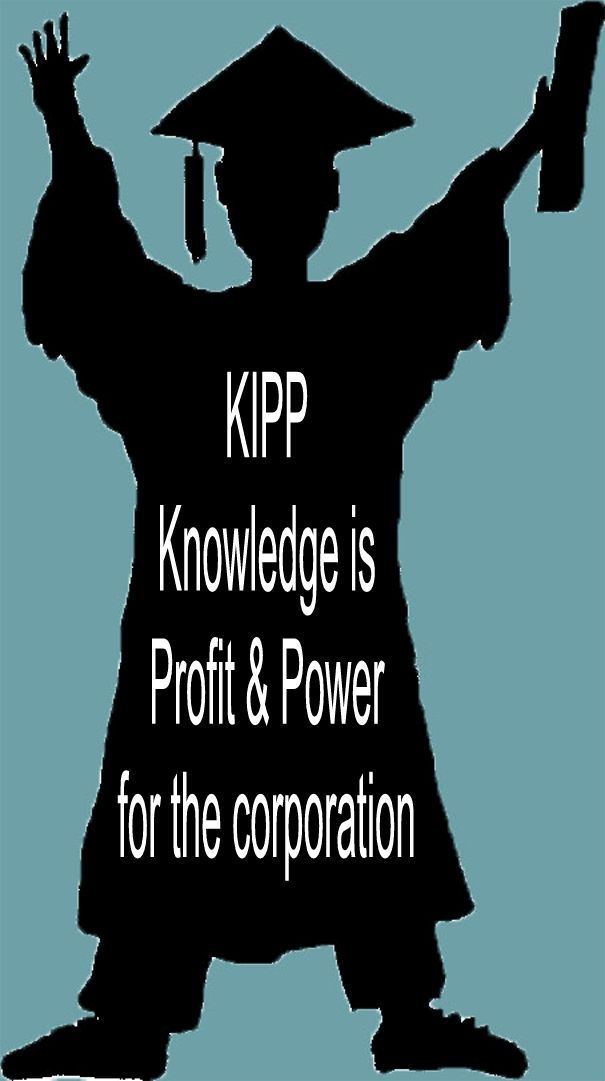
OMG Everything I heard about KIPP is Jacked and True

What Makes KIPP Work?
A Study of Student Characteristics,
Attrition, and School Finance

Gary Miron, Jessica L. Urschel, and Nicholas Saxton
College of Education and Human Development
Western Michigan University
March 2011
Paper Jointly Released by the National Center for the Study of Privatization in Education,
Teachers College, Columbia University and the Study Group on Educational Management
Organizations at Western Michigan University www.wmich.edu/leadership/emo
(contact: gary.miron@wmich.edu)
Key Findings
Student Characteristics: A Cross-Sectional Look at KIPP Schools Relative to Local Districts

• During 2008-09, KIPP enrolled a significantly higher proportion of African American
students (55%) than did the respective local school districts (32%). However, KIPP schools
served a substantially lower proportion of Hispanic students (39%) compared with local
districts (50%). KIPP also enrolled substantially fewer white students (2%) compared with
local districts (11%).
• KIPP schools enrolled a higher percentage of students eligible for free and reduced-price
lunch (77%) than did the local school districts (71%).
• KIPP schools enrolled a lower percentage of students with disabilities (5.9%) than did their
local school districts (12.1%).
• KIPP enrolled a lower percentage of students classified as English Language Learners
(11.5%) than did their local school districts (19.2%).
Distribution of Students Across Grades in 2008
• Although a few of the KIPP schools now serve students at the primary and upper secondary
levels, the overwhelming majority of KIPP’s enrollment is still at the middle school level.
• KIPP schools have experienced a sharp increase in enrollment and in the number of schools,
with enrollment tripling between 2005-06 and 2008-09.

Student Attrition
• KIPP schools have substantially higher levels of attrition than do their local school districts.
Our analysis revealed that on, average, approximately 15% of the students disappear from the
KIPP grade cohorts each year.
• Between grades 6 and 8, the size of the KIPP grade cohorts drop by 30%. The actual attrition
rate is likely to be higher since some of the KIPP schools do fill in some of the vacated
places after grade 6.
• When these figures are further broken out by race and gender, we can see that a full 40% of
the African American male students leave KIPP schools between grades 6 and 8. Overall a
higher proportion of African American students than other ethnic groups leave the KIPP
schools, and girls are much more likely remain in the KIPP schools across all ethnic groups.
• Attrition rates for students qualifying for students eligible for free and reduced-price lunch
are approximately equal for KIPP schools and their host districts.

Analysis of KIPP Revenues and Expenditures

Revenues
Using the federal dataset on school finance (2007-08), we were able to obtain detailed revenue
from 25 KIPP schools and their local districts.
• During the 2007-08 school year, KIPP received more per pupil in combined revenue
($12,731 per student) than any other comparison group: the national average for all schools
($11,937), the national charter average ($9,579), or the average for KIPP schools’ local
school districts ($11,960).
• KIPP received more in per-pupil revenue from federal sources ($1,779) than did any other
comparison group: the national average ($922), the national charter district average ($949),
or KIPP schools’ host districts ($1,332).
• None of the 12 KIPP districts reported any private revenues in the NCES finance survey;
however, a separate analysis of these districts’ 990 tax forms for 2007-08 revealed large
sums of private contributions. Per-pupil contributions for the 11 KIPP districts that we could
include in this analysis equaled an average of $5,760, much more than the $1,000 to $1,500
additional per-pupil revenue KIPP estimates is necessary for their program. Two KIPP
districts or groups received more than $10,000 per pupil in private revenues.
• Combining public and private sources of revenue, KIPP received, on average, $18,491 per
pupil in 2007-08. This is $6,500 more per pupil than what the local school districts received
in revenues.

Expenditures
• As a whole, KIPP districts spend more per pupil in total current expenditures ($10,558) than
do other charter school districts ($8,492), slightly more than their host districts ($10,101) and
more than the national average for all schools ($10,121).
• KIPP spends more on instruction ($5,662) than the average for charter schools ($4,617) but
less than the national average ($6,196) or KIPP host districts ($5,972).
• KIPP’s per-pupil spending on student support services ($460) is comparable to that of charter
schools nationally ($464), but much less than the national average ($1,003) and even less
than KIPP’s host districts ($1,179).
• KIPP’s per-pupil spending on administration ($972) is more than the national average ($746)
or KIPP host districts ($687), but lower than the average for charter schools ($1,336).
• KIPP spends more on operations per pupil in dollars and as a percentage of total current
expenditures than any other comparison group. KIPP’s additional spending in this area is
focused in transportation, food services, and other support services.
• When spending on salaries is examined on a district-by-district basis, 11 of 12 KIPP districts
spend less per pupil on salaries. The same pattern emerges when examining employee
benefits. Eleven of the 12 KIPP districts spend less on employee benefits than do their host
districts. KIPP also spends less per pupil on special education teachers’ salaries than does
any other comparison group. The finding likely reflects the fact that KIPP enrolls fewer
students with disabilities, particularly students with moderate or severe disabilities.
• As noted above, KIPP receives an estimated $6,500 more per pupil in revenues from public
or privates sources of revenues. Our evidence on expenditures, show that KIPP reports
spending $457 more per pupil than local school districts. From publicly available sources of
information, however, we cannot determine whether or how KIPP spends its private sources
of revenues.
Please Read the WAPO Story @

Study: KIPP charter schools have extra edge

A D.I.Y. RA. « Fred Klonsky's blog

A D.I.Y. RA. « Fred Klonsky's blog

A D.I.Y. RA.

I did what I thought I was supposed to do.

I thought that one concrete way that the Illinois Education Association could support our brothers and sisters in Wisconsin, and help ourselves, was to boycott all consumer products that the billionaire brothers Koch make.

At the IEA RA three weeks ago I wrote up a New Business Item. No drama. No battles over the microphone with Ken Swanson. I wore my orange sweater just in case. But I moved its adoption and my colleague seconded my motion.

Another delegate asked if it could be amended to include Wal-Mart and other anti-union corporate funders. I said

KOCH BREAK News | www.kochwatch.org

News | www.kochwatch.org

Was Arne Duncan right on AYP? - The Answer Sheet - The Washington Post

Was Arne Duncan right on AYP? - The Answer Sheet - The Washington Post

Was Arne Duncan right on AYP?

Education Secretary Arne Duncan was accused last month of hyping data by some of his supporters (though, for a change, not by me) fortelling Congress that 82 percent of public schools could be at risk of failing to meet federally required education goals this year, which would be a jump from 37 percent last year.

Well, in Vermont, the Associated Press reported Thursday that new standardized test results released by the state Education Department show that 72 percent of 216 public schools did not meet federal achievement targets under the 2002 No Child Left Behind law this year — up from 31 percent the year before. The tests were given last

Hechinger Report | New study of KIPP says the charter chain pulls in more cash than other schools

Hechinger Report | New study of KIPP says the charter chain pulls in more cash than other schools

New study of KIPP says the charter chain pulls in more cash than other schools

Charter schools that post unusually high academic gains are often accused of having unfair advantages over traditional public schools, including more advantaged students and more private money at their disposal. A new and highly contentious study released today attempts to prove that the Knowledge is Power Program (KIPP), the largest charter-school network in the country, is inundated with both in comparison to its regular public-school counterparts and other charter schools.

The study is likely to give ammunition to charter-school critics as evidence that KIPP’s high test scores can be attributed to extra cash and a population of students that’s easier to educate. But the study’s findings are far from conclusive: The data used in the financial analysis are limited and, according to KIPP, often inaccurate, and the methodology used to examine KIPP students is problematic.

In the national battles over whether to increase the number of charter schools, research has been a weapon wielded aggressively by both sides. (Teachers’ unions and their supporters are typically on the anti-charter side,

THE PERIMETER PRIMATE: A true patriot in charge of Perrin-Whitt CISD

THE PERIMETER PRIMATE: A true patriot in charge of Perrin-Whitt CISD

A true patriot in charge of Perrin-Whitt CISD


John Kuhn, superintendent of Perrin-Whitt Consolodated Independent School District, speaking at the Save Texas Schools rally on March 21, 2011.

@ 3:30

I will never follow the lead of those who exclude the kids who need eduction the most so that my precious scores will rise. I will never line up with those whose idea of reform is a subtle segregation of the poor and desperate. I want no part of the American caste system.

Look around you. Public school teachers, you are the saviours of our society and always have

ThinkProgress » Exclusive: Koch Operative May Have Deceived Officials To Take $2.7M In Taxpayer Money For Governor’s Race #wiunion

ThinkProgress » Exclusive: Koch Operative May Have Deceived Officials To Take $2.7M In Taxpayer Money For Governor’s Race

Exclusive: Koch Operative May Have Deceived Officials To Take $2.7M In Taxpayer Money For Governor’s Race

Our guest blogger is Steve Lebowitz, a researcher and blogger based in Maryland. With additional reporting from Lee Fang.

In 2008, Steve Lonegan, the New Jersey state director for David Koch’s Americans for Prosperity group, announced a campaign to run for governor. Running as a Republican, Lonegan lost to Chris Christie (R-NJ) in the Republican primary, and Christie went on to win the general election later in 2009. But recent tax disclosures examined by ThinkProgress reveal that Lonegan, who used $2.7 million in taxpayer matching funds for his gubernatorial campaign, may have deceived public officials in order to collect the public money used for his campaign.

According to New Jersey state clean election law, recipients of public campaign fundscannot be “involved in any way in the management of” a political advocacy 501(c)(4) organization “unless the organization agrees to disclose the name of each of its contributors and the amount of each contribution and expenditure.” Americans for Prosperity has never disclosed its donors. Lonegan, who has served as the New Jersey Americans for Prosperity executive director for years, said the disclosure la

At Ford Foundation, a harsh critique of urban school closures | Philadelphia Public School Notebook

At Ford Foundation, a harsh critique of urban school closures | Philadelphia Public School Notebook

At Ford Foundation, a harsh critique of urban school closures

by Benjamin Herold on Mar 31 2011 Posted in Latest news
Photo: Benjamin Herold

"This process is illegal and immoral," said Chicago Teachers Union President Karen Lewis during an event Monday at the Ford Foundation in New York City, discussing closed-door plans to shut down or consolidate public schools .

For many, the growing push to close underutilized and chronically low-performing urban schools sounds like a common sense plan.

But not Chicago's Jitu Brown.

“School closings actually harm us in our communities,” said Brown, speaking Monday at the Ford Foundation in New York City.

As a longtime organizer for the Kenwood Oakland Community Organization, Brown was speaking from experience. Between 2001 and 2009, Chicago Public Schools (CPS) closed 44 schools, decisions Brown argued were driven more by real estate prices in the surrounding communities than the educational needs of students. The results, he said, were a spike in school violence, the destabilization of schools receiving displaced

Mike Klonsky's SmallTalk Blog: IN MY MAILBOX

Mike Klonsky's SmallTalk Blog: IN MY MAILBOX

IN MY MAILBOX

We have a great department chair. Here's what she sent us this morning:

Hello EPSR Faculty,

I am forwarding the email below and attached flyer for your information.

Thank you.

Dr. Proweller

Amira Proweller, Ph.D.
Associate Professor and Chair
Department of Educational Policy Studies and Research School

NYC Public School Parents: Update on rally, news from Albany, and video of my encounter with the mayor

NYC Public School Parents: Update on rally, news from Albany, and video of my encounter with the mayor

Update on rally, news from Albany, and video of my encounter with the mayor

Yesterday’s press conference/rally was terrific; here is my account with some photos; more photos are available on our Facebook page. NY1 ran some video of the rally last night, and to my surprise, captured at least part of my unexpected debate with the mayor; I have also now posted that video below.

Erin Einhorn ran a piece on the Daily News blog about our encounter, which the mayor’s spokesperson responded to , as did I; you can see we went back and forth several times.

Thanks again to all who came; and soon we will have petitions you can download from our website to get signatures at your school for your Councilmembers, urging them to oppose the mayor's plan to eliminate 6,000 teaching positions.

One small but important piece of good news: the Legislature did not approve a reduction or cap in building aid for NYC, so the mayor has no excuse to cut back on the number of new seats, as he threatened to do.

Popout

How Far Are We From A Revolution? | Dailycensored.com

How Far Are We From A Revolution? | Dailycensored.com

How Far Are We From A Revolution?

Bahrain, Egypt, and Libya, all have one thing in common. A huge percentage of their population has been oppressed by a minuscule elite. Beyond high unemployment opportunities and low wages, I readily admit to knowing little of their plight. However, if it includes policies that produce prodigious numbers of homeless, reduced or impossible access to education, wanton disregard for their health and well being, and ever increasing food and energy costs then their conditions cannot be much different than what we are facing here at home.

I actually heard a woman call into NPR yesterday, who labeled herself a conservative Republican, who called Social Security a welfare program and said it should be eliminated. That is what the Tea Party wants to do. All of their so called budget cuts will only cut programs that help the poor while making millions more

Questions of Possible Cheating in DCPS :: Frederick M. Hess

Questions of Possible Cheating in DCPS :: Frederick M. Hess

Cheating on the Hard Work of School Reform - TIME

Cheating on the Hard Work of School Reform - TIME

Cheating on the Hard Work of School Reform


Cheating in school became education topic number one this week, except this time it wasn't students cheating on tests — it was adults cheating for them. As part of a series, USA Today published an article strongly suggesting that teachers or administrators goosed student test score gains at an elementary and middle school in Washington, D.C. Since it was a school former D.C. chancellor Michelle Rhee had singled out for praise, the news created yet another battleground for Rhee combatants. The distraction is too bad because the focus on cheating offers — pardon the cliché — a teachable moment for parents and policymakers.

Even assuming that teachers and administrators at the school at the center of this week's controversy didn't do anything improper, too much cheating by adults does go on in too many schools


Read more: http://www.time.com/time/nation/article/0,8599,2062255,00.html#ixzz1IC1CmwMl

Rhee acknowledges possible cheating on school tests - The Washington Post

Rhee acknowledges possible cheating on school tests - The Washington Post

Rhee now concedes students’ test answers may have been erased

Former D.C. schools chancellor Michelle A. Rhee backed away Wednesday from her vehement criticism of aUSA Today story on concerns about standardized tests during her tenure, acknowledging that some cheating may have occurred.

Alan Diaz / AP - Michelle Rhee, shown in January, has become a major national figure in education reform since her resignation last October.

More On This Story

View all Items in this Story

In an interview with Washington Post education columnist Jay Mathews, Rhee said that some of her initial comments were “stupid.”

“You have got to have really strong test-security protocols at the district level and at the state level,” said Rhee, who contacted Mathews. “The vast majority of people will not cheat, but there will be exceptions here and there.”

Rhee, who was chancellor from 2007 to 2010, said the school system should ensure that after students complete D.C. Comprehensive Assessment System tests, answer sheets are not left in school offices where they may be vulnerable to tampering.

The issue emerged Monday when USA Today reported unusually high rates of erasures on answer sheets in more than 100 D.C. public schools from 2008 to 2010. At some schools, wrong answers were replaced by correct ones at rates too high to be random, according to statisticians consulted by the paper.

Rhee said in a statement Monday evening that USA