Latest News and Comment from Education

Showing posts with label PRIVATIZERS. Show all posts

Thursday, May 27, 2021

School Privatizers Restructure State of Iowa to Seize Public Funds | Dissident Voice

School Privatizers Restructure State of Iowa to Seize Public Funds | Dissident Voice
School Privatizers Restructure State of Iowa to Seize Public Funds

School privatizers and their political representatives are relentless in their efforts to restructure the state along neoliberal lines so as to restrict democracy and funnel more public funds into private hands. Privatization is a main mechanism for enriching major owners of capital, eliminating democratic arrangements, and degrading the public interest in the context of a continually failing economy. Privatization allows neoliberals to temporarily avert the law of the falling rate of profit under capitalism.

Recently, the Governor of Iowa, Kim Reynolds, signed a law that significantly increases the ability of major owners of capital to siphon public funds from public schools by creating more charter schools while also eliminating long-standing democratic arrangements, namely local school control over what happens in local school districts.

Under the new law, neoliberals seeking to privately appropriate public money can circumvent local public school boards and apply directly to the State CONTINUE READING: School Privatizers Restructure State of Iowa to Seize Public Funds | Dissident Voice

Monday, May 24, 2021

School Privatizers Attack a Central Institution of American Democracy | janresseger

School Privatizers Attack a Central Institution of American Democracy | janresseger
School Privatizers Attack a Central Institution of American Democracy


Introducing a column by the Network for Public Education’s Carol Burris on the explosion this year of legislation across the 50 state legislatures to expand school privatization, the Washington Post‘s Valerie Strauss begins: “While many Americans see 2021 as the year that may bring back something close to normalcy after the coronavirus pandemic, it has instead been declared the ‘Year of School Choice’ by the American Federation for Children, an organization that promotes alternatives to public education and that was once headed by Betsy DeVos. Anyone who twas thinking that the departure of DeVos as U.S. education secretary would stem the movement to privatize public education should think again. In numerous states, legislatures have proposed or are considering legislation to expand alternatives to the public schools that educate most American schoolchildren, often using public funding to pay for private and religious school.”

In the piece that follows, Carol Burris examines the contention by Paul Petersen, the Harvard government professor who Burris reminds us is “a longtime cheerleader for market-based school reforms,” and Jeanne Allen who runs the Center for Education Reform, and who, “has never been shy in her hostility toward unions and traditional public schools,” that the legislatures considering school choice are doing so because parents are angry that public schools shut down during the pandemic.

Burris demonstrates that Petersen and Allen are wrong.  The states most active in promoting privatization are instead places where legislatures have tipped toward Republican majorities and in some cases Republican supermajorities.  And they are states where well-funded CONTINUE READING: School Privatizers Attack a Central Institution of American Democracy | janresseger

Friday, May 21, 2021

Carol Burris: Choice Zealots Accelerate Their Drive to Put Public Money into Private Schools | Diane Ravitch's blog

Carol Burris: Choice Zealots Accelerate Their Drive to Put Public Money into Private Schools | Diane Ravitch's blog
Carol Burris: Choice Zealots Accelerate Their Drive to Put Public Money into Private Schools


Carol Burris, executive director of the Network for Public Education explains in an article at Valerie Strauss’ Answer Sheet in the Washington Post, that choice zealots have redoubled their drive to divert public money away from public schools and hand it over to unregulated private schools, religious schools, homeschooling, virtual schools, and entrepreneurs.

The privatization lobbyists claim that the pandemic inspired the drive for school choice because parents are angry that stubborn unions and school boards refused to open the schools.

Burris demonstrates that this assertion is false. The choice bills have moved fastest in states where most schools were open, and moved not all in states where there were lengthy school closures.

Bottom line: school choice bills have been most CONTINUE READING: Carol Burris: Choice Zealots Accelerate Their Drive to Put Public Money into Private Schools | Diane Ravitch's blog

Thursday, May 20, 2021

NANCY BAILEY: Play-Based Learning Isn’t Free Play and May Be Connected to Online Learning

Play-Based Learning Isn’t Free Play and May Be Connected to Online Learning


The term play-based learning is increasingly used to reference play in school, especially during the past year. Sometimes it’s called purposeful play. Play-based learning is not the same as free play, even though sometimes it is described as such. It also might be used to transform classroom learning to screens.

It’s critical to understand the difference between play-based learning and free play.

One parent blogger says, The term ‘play-based learning’ now evokes in me a much different feeling than it once did. Something like nails on a chalkboard perhaps? Not because I don’t believe in children learning through play, no. But because it appears that the term has been hijacked.

Since No Child Left Behind and high-stakes testing, Race to the Top and Common Core State Standards, play for kindergartens and some preschools has declined. Many teachers have felt pressured to remove classroom play kitchens and the toys children enjoyed. Kindergartens and some preschools have expected children to do more CONTINUE READING: Play-Based Learning Isn’t Free Play and May Be Connected to Online Learning

The movement to privatize public schools marches on during covid-19 pandemic - The Washington Post

The movement to privatize public schools marches on during covid-19 pandemic - The Washington Post
The movement to privatize public schools marches on during covid-19 pandemic


While many Americans see 2021 as the year that may bring back something close to normalcy after the covid-19 pandemic, it has instead been declared the “Year of School Choice” by the American Federation for Children, an organization that promotes alternatives to public education and that was once headed by Betsy DeVos.

Anyone who was thinking that the departure of DeVos as U.S. education secretary would stem the movement to privatize public education should think again.

In numerous states, legislatures have proposed or are considering legislation to expand alternatives to the public schools that educate most American schoolchildren, often using public funding to pay for private and religious school.

This post looks at some of the latest state actions. It was written by Carol Burris, a former prizewinning principal in New York and now executive director of the nonprofit advocacy group the Network for Public Education, which opposes charter schools and the privatization of public education.

By Carol Burris

Legislatures in 35 states have proposed bills to enact or expand voucher programs or charter schools. A few have passed; others have failed. Still others are sitting on governors’ desks or are stalled in the state’s House or Senate. Several are obvious attempts to please right-wing donors with no chance of moving out of committee. So far, eight states have enacted one or more bills. CONTINUE READING: The movement to privatize public schools marches on during covid-19 pandemic - The Washington Post

Tuesday, May 18, 2021

Capital & Main: Eli Broad Wanted to Destroy Public Education | Diane Ravitch's blog

Capital & Main: Eli Broad Wanted to Destroy Public Education | Diane Ravitch's blog
Capital & Main: Eli Broad Wanted to Destroy Public Education


Upon his death recently, Eli Broad received many laudatory obituaries, describing his philanthropic contributions to the arts and medical research. He even built an art museum in Los Angeles, named for himself. Modesty was not one of his virtues.

Less noted was his determination to disrupt and destroy public education. Not only did he launch an ambitious plan to privatize 50% of the public schools in Los Angeles, but his Broad Superintendents Academy “trained” scores of aspiring superintendents in his philosophy, which meant top-down, tough management and a willingness to close schools with low test scores and replace them with charter schools, no matter how much the schools were loved by students, teachers, parents, and the local community. Anyone could apply to his Academy regardless of previous job experience or lack of education experience.

I was invited to meet Eli Broad at his penthouse apartment on Fifth Avenue in New York City about ten years ago. He explained to me that he didn’t know anything about education but knew management. Lack of management skills, he said, was the biggest problem in education.

I have yet to see any evidence that Broad leaders were CONTINUE READING: Capital & Main: Eli Broad Wanted to Destroy Public Education | Diane Ravitch's blog

Sunday, May 16, 2021

California's biggest schools clash: To Zoom or not to Zoom? - POLITICO

California's biggest schools clash: To Zoom or not to Zoom?
Gov. Gavin Newsom and powerful California lawmakers are standing firm against allowing distance learning next school year.


SACRAMENTO — The biggest state Capitol battle this spring could pit California leaders against local school officials, civil rights groups and teachers unions over whether Zoom school should have a permanent place in the public education system.

California Gov. Gavin Newsom and influential state lawmakers are standing firm against allowing distance learning next school year, saying that children are best served by returning to classrooms for social and academic reasons. They are tired of California's status as the slowest state to reopen schools despite having the lowest infection rate in the nation as vocal parents call for full in-person learning.

The debate has given “school choice” a new meaning and sparked racial justice concerns about what's best for the state’s most vulnerable students.

Newsom says that "everybody should be back in the fall and in person" and released a budget proposal Friday intended to accomplish that. He's not only a father of four young children but a governor facing a recall election. While political momentum has swung in Newsom's direction lately, even partial fall campus closures could give opponents an opening, especially if students in other states are fully back in class.

A growing number of legislative Democrats are coalescing around limits on distance learning, fearful that some schools will stay with a hybrid or virtual model in the fall — and that the approach will hurt students who have disengaged from school and lost access to vital services.

“I just question why, if we're talking about racial justice, we would want to levy all those additional things on our Black and brown children," said Sen. Sydney Kamlager (D-Los Angeles), vice chair of the California Legislative Black Caucus. "I don’t think we should be doing it at the expense of the children or at the expense of CONTINUE READING: California's biggest schools clash: To Zoom or not to Zoom?

Sunday, May 9, 2021

Maurice Cunningham: Who Got Suckered? Secretary Cardona or Readers of The74? | Diane Ravitch's blog

Maurice Cunningham: Who Got Suckered? Secretary Cardona or Readers of The74? | Diane Ravitch's blog
Maurice Cunningham: Who Got Suckered? Secretary Cardona or Readers of The74?


Maurice Cunningham is a professor of political science at the University of Massachusetts. His specialty is following the gobs of money poured into “education reform.” His exposes of Dark Money in the 2016 charter expansion referendum was a crucial element in turning the public against the referendum (you can read more about him in his blogs and in my book Slaying Goliath.)

In this post, published here for the first time, Professor Cunningham writes about the innocence or naïveté of Secretary of Education Miguel Cardona, who met with a billionaire astroturf group and thought he was reaching out to ordinary parents and families.

Cunningham writes:

Who Got Suckered, Secretary Cardona or Readers of The74?

“The Pro-privatization education blog The74 recently published To Rebuild Trust with Families, Ed. Dept. Seeks Input from Outspoken Parents Group. The story purports to be about how Department of Education Secretary Miguel Cardona “seeks” the advice of parents and thus turns to the National Parents Union. But the CONTINUE READING: Maurice Cunningham: Who Got Suckered? Secretary Cardona or Readers of The74? | Diane Ravitch's blog

Tuesday, May 4, 2021

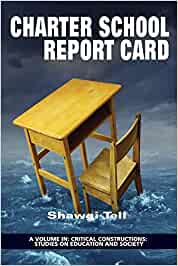
Shawgi Tell: Public Opposition to Charter Schools Steadily Growing | Dissident Voice

Public Opposition to Charter Schools Steadily Growing | Dissident Voice
Public Opposition to Charter Schools Steadily Growing


Over the years, as more problems with charter schools have been exposed, analyzed, and critiqued, more people have come to see the need for opposing them and for defending public education and the public interest. Criticism and rejection of these privately-operated schools has become more mainstream in recent years and it is safe to say that opposition to charter schools will keep growing so long as neoliberals and privatizers impose more charter schools on society.

Public school boards and many different education advocacy groups, along with more legislators, former charter school teachers, many public school teachers, countless teacher educators and teacher education students, teacher unions, and myriad rights and justice groups are just some of the forces that are increasingly speaking out and taking action against charter schools. Many others have also heard of charter schools, and even with little or no investigation, they tend to approach charter schools with some skepticism. The days when charter schools were blindly embraced and investigation was deemed unnecessary are gradually fading. More people are doing their homework and learning about the numerous problems these segregated contract schools create.

Recent Actions

In April 2021, the Buffalo Public School Board voted to close two Buffalo charter schools that have been failing for years. There is also a legal push to pass a moratorium on charter schools for the next three years in the city. And in the past year even the New York State legislature has also become a little CONTINUE READING: Public Opposition to Charter Schools Steadily Growing | Dissident Voice

Charles Siler: A Former Privatizer Changes Sides | Diane Ravitch's blog

Charles Siler: A Former Privatizer Changes Sides | Diane Ravitch's blog
Charles Siler: A Former Privatizer Changes Sides


Charles Siler had excellent credentials to work in the privatization movement. In this article, he explains why he switched sides. To learn more about Charles Siler, watch this video in which I interviewed him.

Confessions of a Former Privatizer Why I Don’t Want to Eradicate Public Schools Anymore

I spent years working to privatize public schools. I realized that I was wrong, and am now proud to call myself a public education advocate.

By Charles Siler

Nearly all my life I believed public schools were obstacles to success, achievement, and social mobility for individuals and our society as a whole. And it wasn’t just schools. This was my belief about nearly all government activity. I saw government agencies as little more than hives of self-serving bureaucrats looking for ways to CONTINUE READING:  Charles Siler: A Former Privatizer Changes Sides | Diane Ravitch's blog

Monday, May 3, 2021

Will Staff Returning from Obama/Duncan Years Compromise Biden’s Public Education Promises? | janresseger

Will Staff Returning from Obama/Duncan Years Compromise Biden’s Public Education Promises? | janresseger
Will Staff Returning from Obama/Duncan Years Compromise Biden’s Public Education Promises?


At the end of his first hundred days, President Joe Biden deserves credit for taking important steps to help public schools serving children living in communities where family poverty is concentrated.

First, the President promised during the campaign to triple funding for Title I schools, and the federal budget he has proposed for FY22 would accomplish two-thirds of that promise by doubling the federal investment in Title I, whose funding has lagged for decades behind what is needed for equity.

Second, in the American Rescue Plan federal stimulus passed in March, the President expanded and made fully refundable the Child Tax Credit. In his new American Family Plan he has proposed to extend these urgently needed changes in the Child Tax Credit until 2025.  The expansion of the Child Tax Credit will make it possible for America’s poorest families with children to qualify for this program for the first time. We know that poverty is an overwhelming impediment for children, and ameliorating child poverty is an important step toward helping America’s poorest children thrive at school.

During the campaign, Biden also promised to move public school policy away from two decades of standardized testing.  That is a promise he has, at least until now, entirely broken.

In a letter, dated February 22, 2021, Acting Assistant Secretary of Education, Ian Rosenblum informed states they must test students this year on the mandated annual high-stakes CONTINUE READING: Will Staff Returning from Obama/Duncan Years Compromise Biden’s Public Education Promises? | janresseger

Good News from Oakland! | Diane Ravitch's blog

Good News from Oakland! | Diane Ravitch's blog
Good News from Oakland!


Several years ago, the Walton Family Foundation and the Gates Foundation decided that it was not enough to open new charter schools. No, they had to devise mechanisms to make sure that school officials put charters on an equal footing with public schools and that the public didn’t care whether schools were run by their elected school board or a private board of directors.

The Gates Foundation created something called “the Gates Compact,” paying districts to treat public and charter schools the same.

The Waltons played a different angle. To advance their agenda of embedding charters and wiping out any differences between public schools and charter schools, they pushed for the adoption of a common enrollment form. The two sectors are intermingled, and neither students nor parents know which schools are public and which have private or corporate management.

In Oakland, where a slate of pro-public school parents won the last school board election, the board voted to eliminate the OneApp system.

Jane Nylund, a parent activist in Oakland, sent the CONTINUE READING: Good News from Oakland! | Diane Ravitch's blog

Friday, April 30, 2021

Florina Rodov: I believed the charter school myth — until I learned about the reality and who was behind it - Alternet org

I believed the charter school myth — until I learned about the reality and who was behind it - Alternet.org
I believed the charter school myth — until I learned about the reality and who was behind it


I fell for the charter school hype. I agreed with former President Obama's education secretary Arne Duncan who advocated for "school choice." I trusted the research that said charters "close [the] achievement gap" for Black and Latino students. When I saw "Waiting for 'Superman,'" I rooted for the kids in the documentary to escape their failing public schools by snagging spots at charter schools. And though I encountered very few bad teachers in my four years teaching and 12 years learning at public schools, I never questioned why Time published stories about "Rotten Apple" teachers being swept out of classrooms by wealthy education "reformers."

I believed the hype so much that in 2012, knowing almost nothing about charter schools and having no administrative experience, I joined a friend in submitting a half-baked petition to the Los Angeles Unified School District (LAUSD) with the intention of starting our own charter school. When LAUSD denied it, we presented it to the Culver City Unified School District, which also, rightfully, rejected it.

Still intrigued by charters, in 2016 I interviewed for an English teacher position with a woman I'll call Ellen Peters, the principal and co-founder of Savior Academy, a charter school serving grades six through 12. (The names of the school, administrators and students have been changed for this story.) Her assertion that the close bond between students and staff made it feel "like a family" inspired me to sign a non-union contract on the spot, though the school had recently lost its co-founder Cathy Reynolds (name changed), who CONTINUE READING: I believed the charter school myth — until I learned about the reality and who was behind it - Alternet.org

Thursday, April 29, 2021

Toolkit: School Privatization Explained - Network For Public Education

Toolkit: School Privatization Explained - Network For Public Education
Toolkit: School Privatization Explained


The Network for Public Education Toolkit: School Privatization Explained was first created in 2017 to alert the general public regarding the various forms that privatization takes and the consequences associated with each. We’ve updated the toolkit to ensure the information is up-to-date. This toolkit presents evidence of what we already know about charters, vouchers and other forms of privatization. It is organized around key questions, providing answers in clear language to the questions we at NPE are most often asked.

Each dropdown below contains a link to a pdf that we hope you will read, share and download.

Charter Schools


Monday, April 19, 2021

CURMUDGUCATION: To Choice Advocates: Some Questions

CURMUDGUCATION: To Choice Advocates: Some Questions
To Choice Advocates: Some Questions


I have concerns about school choice programs, and I usually express them as complaints, criticism, general snark. This time, I'd like to come at it a little differently. Let me frame these concerns as questions, because maybe there are answers that I'm just not aware of. As is obvious from a multitude of posts, I am skeptical; these questions show exactly what I'm skeptical of. 

And before I start, I'll agree that some of these concerns are not always well-addressed by public schools. So I'm not looking for answers in the old mode of "Yeah, but public schools do X!" I'm still wondering how a charter or voucher system would do a better job of managing the issues. If you want to take a shot an answering these, the comments are open.

1) A choice system is built on the idea of making parents the primary stewards of their child's education. Contrary to the usual criticism, I believe that the majority of parents are smart and capable and caring. But a non-zero number are not. I've told the stories: the student whose mother tried to run her over with a car; the student who was always tired because dad spent the utility money on beer; the student whose father threw him out of the house for trying to take some of dad's drugs; the student who was thrown out for coming out as gay; etc.  In those sorts of CONTINUE READING: CURMUDGUCATION: To Choice Advocates: Some Questions

Saturday, April 17, 2021

CAROL BURRIS: Former lobbyist details how privatizers are trying to end public education + ACTION ALERT - Network For Public Education

Former lobbyist details how privatizers are trying to end public education - Network For Public Education
Former lobbyist details how privatizers are trying to end public education


By Carol Burris

Charles Siler worked for two privatization organizations, including the Goldwater Institute in Arizona, where his job was to persuade legislators to pass laws that privatize public services, especially K-12 schooling.

In March, Siler had a conversation with education historian and activist Diane Ravitch as well as with podcaster Jennifer Berkshire, in which he provided insight into the playbook used by “school choice” proponents, the belief system that drives them and their long-term objective. He makes it very clear: Their ultimate goal is to dismantle K-12 public schools.

Carol Burris, a former prizewinning principal and executive director of the nonprofit advocacy group the Network for Public Education, did a Q&A with Charles Siler on the same issues. Here’s the interview Burris did with Siler:

You can read the rest of Carol’s post in The Answer Sheet here.


Tell Congress: Stop Funding Charter Schools Run for Profit

Moc_csp_oversight

Representatives Mark Pocan and Jamaal Bowman have drafted a “Dear Colleague” letter that asks members of Congress to support a reduction in funding, greater oversight, and an end to CSP money for schools run by the for-profits.

We need you to ask your member of Congress to sign on to their Dear Colleague letter.

Members of the U.S. Congress | Congress.gov | Library of Congress - https://www.congress.gov/members?searchResultViewType=expanded

Thursday, April 15, 2021

Revisiting California's Battle of Hastings - LA Progressive

Revisiting California's Battle of Hastings - LA Progressive
Revisiting California’s Battle of Hastings


Courtesy of re:publica/flickr.

The 2005 Sacking of the Netflix CEO as State Education Board Chief Looks Different Now

After long days supervising my children in their struggles with the miseries of distance learning and hybrid school, I try to relax by watching Netflix. As I do, I often find myself thinking about a state legislative hearing from 2005, and how different California education might be if it had gone differently.

The hearing, in a committee of the State Senate, was supposed to be routine. I, an L.A. Times reporter at the time, didn’t even bother to cover it. The subject was reappointment of the president of the State Board of Education. The president, Reed Hastings, was thought to be a shoo-in.

After all, Hastings, a tech entrepreneur and Democratic donor from Santa Cruz, had put together a successful ballot measure to make it easier to pass school bonds, launching a new era of school construction statewide after decades of neglect. He’d supported the state’s accountability system for schools, and backed the establishment of public charter schools in disadvantaged neighborhoods. Hastings also had bipartisan support—he’d been appointed four years earlier by a Democrat, Gov. Gray Davis, and was nominated for re-appointment by Gov. Arnold Schwarzenegger, a Republican.

But the hearing went sideways. Some education groups didn’t like charter schools, or his blunt interest in transforming education systems. Hastings himself suggested that he was felled by CONTINUE READING: Revisiting California's Battle of Hastings - LA Progressive