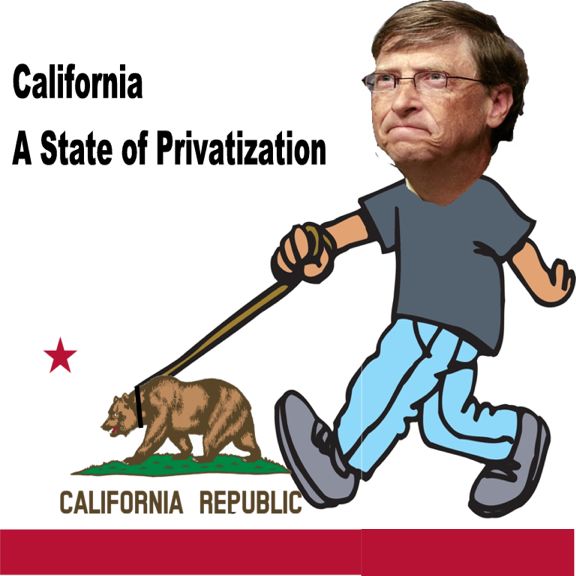
The level of privatization in California since the 1980s can be difficult to measure precisely, as it can refer to a range of different policies and practices across various sectors of the economy. However, some examples of significant privatization efforts in California since the 1980s include:
- Privatization of Prisons: In the 1980s, California began to contract with private companies to operate prisons. By the early 2000s, roughly 10% of the state's prison population was housed in privately-operated facilities.
- Privatization of Utilities: In the late 1990s, California deregulated its electricity market and allowed private companies to compete with the state's utilities. This led to a number of problems, including rolling blackouts and soaring energy prices, and the state eventually re-regulated the market.
- Privatization of Transportation: In recent years, California has increasingly turned to public-private partnerships to fund and operate transportation infrastructure, such as toll roads and express lanes.
- Privatization of Education: California has also seen an increase in the number of charter schools, which are publicly funded but privately operated.
Overall, while California has experienced some privatization efforts in various sectors since the 1980s, the extent and impact of these policies vary widely and can be debated.
Does Privatization Serve the Public Interest?
The answer to whether privatization serves the public interest is not straightforward, as it depends on the specific circumstances and goals of the privatization effort. In some cases, privatization can lead to increased efficiency, cost savings, and innovation, which can ultimately benefit the public. For example, contracting out certain government services to private companies can often be more cost-effective and efficient than providing those services directly.
However, in other cases, privatization can have negative consequences for the public. For example, privatizing certain essential public services, such as healthcare or education, can lead to increased costs, reduced access for low-income and marginalized communities, and lower quality services. Additionally, privatization can lead to a loss of accountability and transparency, as private companies are not subject to the same public scrutiny and oversight as government agencies.
Ultimately, whether privatization serves the public interest depends on the specific context and goals of the policy. Policymakers must carefully weigh the potential benefits and drawbacks of privatization in each case, and ensure that any privatization efforts are transparent, accountable, and equitable.
There are several arguments against privatization, including:
Decreased Access and Affordability: Privatization can result in reduced access to services and goods for those who cannot afford them. Private companies are driven by profit, so they may not provide services to areas that are not profitable, leaving these areas underserved or with no service at all.
Quality of Services: Private companies may cut corners to increase profits, leading to reduced quality of services. Privatization can result in a focus on short-term gains rather than long-term investments in the quality of service.
Loss of Control: Privatization can result in the loss of control of public services or assets by the government, which may lead to less transparency and accountability. Private companies may not have the same level of transparency and accountability as government agencies, which can result in corruption, fraud, or misuse of public resources.
Job Loss: Privatization can lead to job loss for public sector workers. Private companies may not retain the same number of workers, or they may employ workers at lower wages, resulting in a loss of jobs or lower wages for those who previously had secure employment.
Monopoly and Market Power: Privatization can result in the creation of monopolies or oligopolies, where a few large companies control a significant share of the market. This can lead to higher prices, reduced competition, and decreased innovation.
Social Justice: Privatization can be seen as unfair to low-income communities who rely on public services, as they may not be able to afford the higher costs of private services. This can lead to a further widening of the gap between the rich and poor, resulting in social injustice.
Overall, the argument against privatization is that it can result in decreased access and affordability, reduced quality of services, loss of control, job loss, monopoly and market power, and social injustice.
at least this is what chatgpt thinks :)