Latest News and Comment from Education

Showing posts with label NOW AND THEN. Show all posts

Wednesday, March 17, 2021

Classroom Teaching Then and Now | Larry Cuban on School Reform and Classroom Practice

Classroom Teaching Then and Now | Larry Cuban on School Reform and Classroom Practice
Classroom Teaching Then and Now


Most policymakers, researchers, and parents believe that good teachers and teaching are the keys to school improvement yet these very same folks know little about how teachers teach daily. And that is the rub. Good teachers and teaching are the agreed-upon policy solutions to both high- and low-performing students yet reliable knowledge of how most teachers teach and what are the best ways of teaching in either affluent or low-income, minority schools are absent among policymakers, researchers, and parents.

At a time when remote instruction has dominated the practice of teaching during the pandemic year, it is useful to take a moment to consider how teachers have taught for the past century and the traditions of teaching that teachers have straddled since the first age-graded school opened in the mid-19th century.

So how have most teachers taught and teach today?

The long answer can be found in many books such as Mary Kennedy, Inside Teaching (2005), Dan Lortie, Schoolteacher (1975), Philip Jackson, The Practice of Teaching (1986), and Larry Cuban, How Teachers Taught (1984).

The short answer is that teachers today draw from two traditions of teaching.

From the early 19th century, teacher-centered and student-centered traditions have dominated classroom instruction (see photo below of a classroom taught within this tradition a century ago).

The teacher-centered tradition refers to teachers controlling what is taught, when, and under what conditions. Were you to sit for a few minutes in such a CONTINUE READING: Classroom Teaching Then and Now | Larry Cuban on School Reform and Classroom Practice

Sunday, November 8, 2020

Labeling Students Then and Now (Part 2) | Larry Cuban on School Reform and Classroom Practice

Labeling Students Then and Now (Part 2) | Larry Cuban on School Reform and Classroom Practice
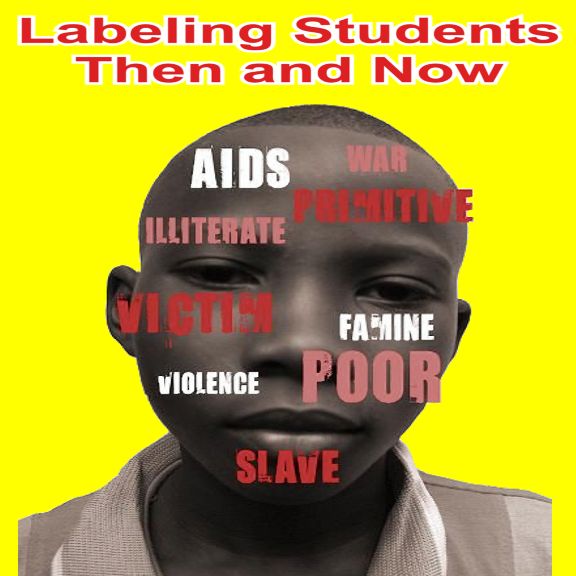
Labeling Students Then and Now


Two decades ago, Sarah Deschenes, David Tyack and I wrote an article published in the Teachers College Record called: “Mismatch: Historical Perspectives on Schools and Students Who Don’t Fit Them.”

Part 1 described the labels educators used in the 19th and 20th century for children who didn’t keep pace with the majority of other students in the age-graded school. This post includes the arguments we used to explain why these labels were used then and, perhaps, even now.

We first look at four ways educators and reformers have assigned blame for failure. We then propose a different historical explanation that locates this problem in a mismatch between students and the structure of schools and in schools’ resistance to adapting to the changing needs of their student populations. We also consider how the current standards movement might reinforce existing age-graded institutional structures.

A. Students who do poorly in school have character defects or are responsible for their own performance. [L]ocating responsibility in the individual—a response with deep roots in American ways of thinking—has been the dominant way of framing the problem. In the educational system of the nineteenth and early twentieth centuries, this manifested itself in a focus first on character deficiencies, which reformers believed children could overcome, and later on students’ low IQs, which students were thought to have no control over. Labels like ne’er-do-well, sleepy-minded, and limited exemplify this way of thinking about students….

In the twentieth century, when the “science” of education informed professional decision making, educators leaned heavily on psychological interpretations for CONTINUE READING: Labeling Students Then and Now (Part 2) | Larry Cuban on School Reform and Classroom Practice
Friday, October 2, 2020

Reimagining the Public High School in the 19th and 20th Centuries (Part 1) | Larry Cuban on School Reform and Classroom Practice

Reimagining the Public High School in the 19th and 20th Centuries (Part 1) | Larry Cuban on School Reform and Classroom Practice

Reimagining the Public High School in the 19th and 20th Centuries (Part 1)


Since 2016, the XQ Institute has awarded almost $140 million to 19 schools across the country to “reimagine” the American high school. They have had five years to do so. Backed by philanthropist Laurene Powell Jobs, these high schools are in the midst of putting into practice the major changes they proposed for their schools.
Then the coronavirus pandemic struck the U.S. Except for essential services, businesses, schools, and public services closed in March 2020. Of the 24,000 secondary schools in the U.S. (2018), nearly all shifted from in-person classroom interactions to remote instruction. Such an immediate and fundamental shift in the medium of instruction had never occurred before in the history of American public schools.
In effect, schooling, under the shadow of Covid-19, was forcibly reimagined by school boards and superintendents. Historically, reformers have talked about fundamental change for decades and have sought such planned changes in previous incarnations of high school reform. Now, massive, sudden, and I must add–unplanned basic changes in classroom teaching and learning happened over night.
While the pandemic caused the emergency closures, such fundamental change in CONTINUE READING: Reimagining the Public High School in the 19th and 20th Centuries (Part 1) | Larry Cuban on School Reform and Classroom Practice