Latest News and Comment from Education

Saturday, September 1, 2018

Reclaiming Educational Reform - Long View on Education

Reclaiming Educational Reform - Long View on Education

Reclaiming Educational Reform

Image result for Reclaiming Educational Reform
“American writers have tended to see themselves as outcasts and isolates, prophets crying in the wilderness. So they have been, as a rule: American Jeremiahs, simultaneously lamenting a declension and celebrating a national dream.”  Sacvan Bercovitch, The American Jeremiad (1978)
“These schools, these students, are the fool’s gold of America’s education system. They’re museum artifacts in the innovation era, the context that will define the adult lives of these children.” Ted Dintersmith, What Schools Could Be (2018)

After keeping their education reform movie Most Likely to Succeed (2015) largely inaccessible to the public for three years, Tony Wagner and Ted Dintersmith have now released it on iTunes for people to buy or rent. Reflecting on the public viewings of the film in his latest book, Ted Dintersmith says that he takes a walk during the community screenings (previously the only way you could watch it), and returns for the last 5 minute “final blow-you-away stretch”.  At this moment, Ken Robinson appears with a truth-bomb, an “irrefutable fact”: “education is a complex human system. It’s about people.” Instead of an industrial metaphor for education (and it’s unclear to whom this metaphor belongs), Robinson says we need an organic one: “the plant grows itself if you create the right conditions”.
And what are ‘the right conditions’ that we see at the end of the movie? As Robinson talks about the problems with standardization, we watch a student at High Tech High work on fitting gears together in a project that culminates with him placing his gears into the larger mechanism built by the class. After studying how civilizations change, his teacher tells the students they must represent their understanding through laser-cutting a gear system. While the film highlights how project based learning benefits the two leaders of different groups, the frustrated group-mates literally disappear in the final scenes. We are told that 4 weeks have passed since exhibition night, and that one of the group leaders has continued working over the summer to get his gear to work and fit (yet the film shows the student and his teacher wearing the same outfit in each shot). Finally, he snaps his mechanical gear into the larger mosaic, ironically contradicting Robinson’s plea for a new organic metaphor.
The film features another project in which students read a play by Euripides, the teacher splits the students into two groups by gender, and then tells them to re-stage the play in modern Pakistan. While High Tech High is supposed to serve as a model of what schools could be, as it is presented in the film directed by Greg Whiteley, it arguably replicates some of the most problematic parts of schooling: students have no meaningful choice, the assessments are inauthentic (why make gears to represent an argument?), and the film focuses on only a select few who are ‘most likely to succeed’. While High Tech High is often presented as having a strong record for getting kids into college (ironically, Dintersmith argues against the drive to make a college an increasingly essential part of education), an important analysis finds that the causal impact of attending High Tech High isn’t what it at first seems.


While Most Likely to Succeed focuses on just one school, in What Schools Could Be, Dintersmith charts his year-long journey across the U.S. school system. In his visits to 200 schools, he “found sparks of learning that are so, so promising but reach only a sliver of our kids.” Dintersmith, a former venture capitalist who writes passionately about trusting teachers (though not enough to give them tenure), positions himself in contrast to other billionaire reformers when he rejects “our core assumption”: “that, in a fair world, kids with lower numbers should be tossed into the reject pile.” That’s refreshing and worth listening to. It’s also been argued by many people who are a part of the education system and have been working for change long before Dintersmith arrived on the scene. That being said, I did genuinely enjoy how Dintersmith emphasizes the plurality of what schools can be, especially when he highlights progressive education in a detention center and a homeless shelter.
Unfortunately, the potential for What Schools Could Be to challenge the dominant narrative about education is quickly lost because of what Dintersmith describes as his ‘frame’:  his “innovation career”, “having lived through waves of disruption”. Dintersmith’s sense of urgency for a transformation of schools is filtered through the late capitalist economics popular in Silicon Valley that, along with the financialization of the economy, has been responsible for the destruction of whatever security some people had gained in the 20th Century. Contrary to the venture capital mythology, it was massive investment by the U.S. government with taxpayer money that fueled innovations and helped to bring them to market.


Dintersmith’s disruption frame comes through most clearly when he describes a fictional abstraction of a ‘good’ suburban school that does well on test scores. Dintersmith says that the school and its students “are museum artifacts in an innovation era”:
“Regarding their studies, I asked which topics they found exciting. Blank stares, as though I was speaking a foreign language… When I inquired about interests pursued in their free time, silence punctuated by a few nervous giggles. No signs of absorbing hobbies, internships, projects, or jobs.”
Rather than rely on what sounds like an implausible caricature of students in a ‘good’ suburban school, you’d be better to read the in-depth Inequality in the Promised Land by R. L’Hereux Lewis McCoy.
In contrast to what Dintersmith describes as dull individuals turned out by ‘good’ suburban schools, he claims that the workforce requires smart creatives: “If adults are competing with smart machines for jobs, they need distinctive and creative competencies – their own special something.” In the first few sentences of the book, Dintersmith warns that: “Machine intelligence is racing ahead, wiping out millions of routine jobs as it reshapes the competencies needed to thrive. Our education system is stuck in time, training students for a world that no longer exists.” Dintersmith writes as if people and corporations have exerted no agency in the destruction of work.
The sections where Dintersmith writes about economic realities are especially dangerous because we might assume that as a venture capitalist, he’s an expert in this area. However, Dintersmith backs up his disruption frame with a sparse fifteen endnotes and no other sources. More importantly, he fails to offer even a basic critical analysis of the ‘new economy’. In contrast, Tressie McMillan Cottom does superb work in Lower Ed dissecting the ways that the new economy “shift(s) new risks to workers.” Dintersmith simply tells us “Everyone needs to be entrepreneurial” when we really need an analysis of precarity and of the fact that many people are over-qualified for the work they do. When Dintersmith Continue reading: Reclaiming Educational Reform - Long View on Education


Diane Ravitch's blog | A site to discuss better education for all - https://wp.me/2odLa via @dianeravitch


2nd BANANA: Top Posts This Week 9/1/18

Top Posts This Week 9/1/18


Top Posts This Month
Big Education Ape: California Legislature Approves McCarty Measure to Ban For-Profit Charter Schools | East County Today - http://bigeducationape.blogspot.com/2018/08/california-legislature-approves-mccarty.html
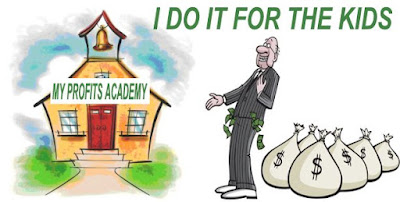
Image result for For-Profit Charter Schools

Big Education Ape: Betsy DeVos Orders Flat Earth Disks In Every Classroom | Andrew Hall - http://bigeducationape.blogspot.com/2018/08/betsy-devos-orders-flat-earth-disks-in.html


Big Education Ape: Wendy Lecker: As public education stumbles, democracy falls - StamfordAdvocate - http://bigeducationape.blogspot.com/2018/08/wendy-lecker-as-public-education.html
This artwork by Kevin Kreneck refers to Betsy DeVos and how she might change and influence the Department of Education. Photo: Kevin Kreneck

Big Education Ape: New direction for Gates Foundation aims to build on progress in L.A. schools - http://bigeducationape.blogspot.com/2018/08/new-direction-for-gates-foundation-aims.html

Big Education Ape: It's time to address the hidden agenda of school dress codes - http://bigeducationape.blogspot.com/2018/08/its-time-to-address-hidden-agenda-of.html
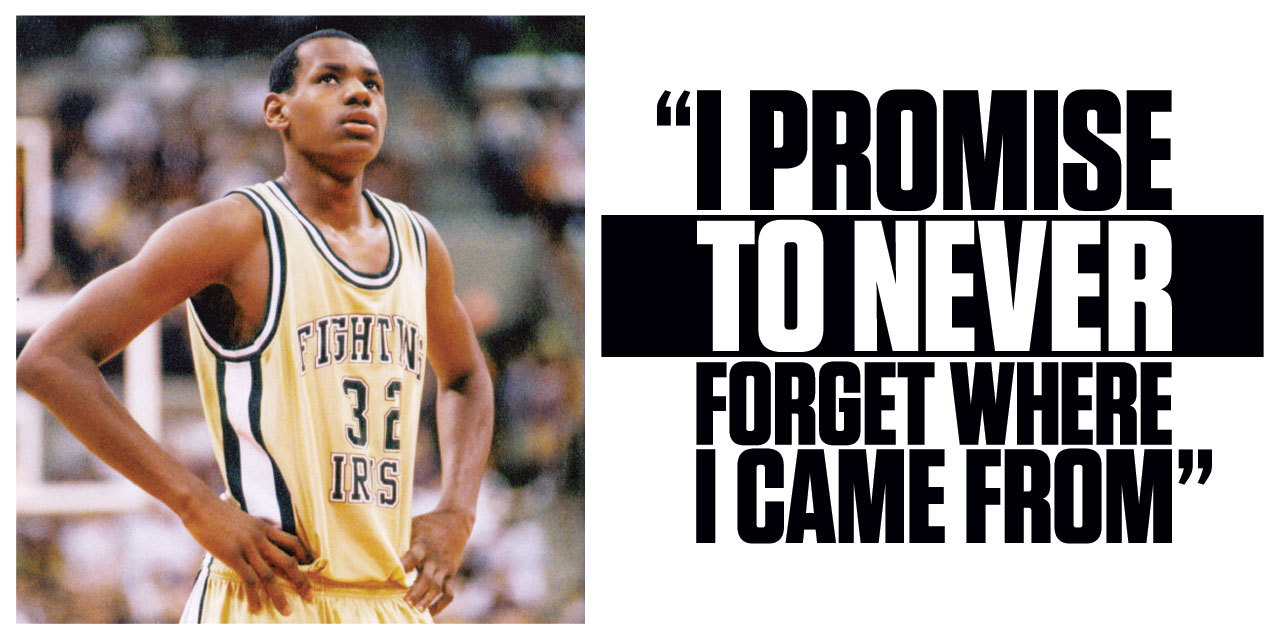
Big Education Ape: LeBron James Akron school: Why it matters that I Promise is public. - http://bigeducationape.blogspot.com/2018/08/lebron-james-akron-school-why-it.html
Image result for LeBronƃʒƂ¢Ćƒ¢Ć¢€Å”Ƃ¬Ćƒ¢Ć¢€Å¾Ć‚¢s Education Promise

Big Education Ape: Nearly 750 charter schools are whiter than nearby district schools - http://bigeducationape.blogspot.com/2018/06/nearly-750-charter-schools-are-whiter.html

Big Education Ape: 'Radical Cram School' is Sesame Street for the Resistance - http://bigeducationape.blogspot.com/2018/08/radical-cram-school-is-sesame-street.html

Big Education Ape: Healthy Kids Survey Results - Year 2018 (CA Dept of Education) - http://bigeducationape.blogspot.com/2018/08/healthy-kids-survey-results-year-2018.html

Big Education Ape: OMG: Arizona school districts and charters that pay teachers the most, least - http://bigeducationape.blogspot.com/2018/08/omg-arizona-school-districts-and.html


The NYT Editorial Board | Schools Can Keep Kids Safe Without Giving Their Teachers Guns - The New York Times

Opinion | Schools Can Keep Kids Safe Without Giving Their Teachers Guns - The New York Times
Schools Can Keep Kids Safe Without Giving Their Teachers Guns
Betsy DeVos’s latest scheme flies in the face of expert advice.


Betsy DeVos, the education secretary, floated a plan last week that stood out in its absurdity even among her many other foolish proposals: She is considering using an obscure federal grant program to let schools buy guns and pay for firearms training for faculty and staff members.
That news stoked the ire of educators and gun-control advocates. They argue that guns will contribute to a climate of fear in schools and note that study after study equates more guns with more injuries and deaths.
Still, Ms. DeVos is not alone in her thinking. Since the deadly shooting at Marjory Stoneman Douglas High School in Parkland, Fla., this past February, lawmakers in at least 14 states have proposed laws that would use taxpayers’ dollars to arm educators.
Only one of those state laws has passed. And Congress, for its part, has barred new school safety funds from being used to buy firearms. (Ms. DeVos’s plans would circumvent this restriction by drawing from a different fund.) But it’s clear that plenty of policymakers still see this as an option worth pursuing.

That’s too bad. In their rush to arm up, they are overlooking solutions that are both more promising and less contentious, and that violence prevention experts have spent years clamoring for.

Prioritize “school climate.” That term refers to the general level of well-being and comfort students and teachers experience on campus. Is bullying pervasive? Do students feel comfortable confiding in the adults around them? The concept might sound fuzzy and foreign — it rarely comes up in the national conversation about violence prevention — but experts say that a healthy school climate is crucial to reducing the threat of violence.
The Department of Education has developed at least some protocols for doing this: frameworks for how to respond to outbursts, guidelines for how to penalize students without alienating them. But there is no national requirement that schools implement such protocols, nor any dedicated funding for doing so.
Provide more mental health services. If you put an armed guard into a school, there’s at best a possibility of preventing a shooting there, says Dewey Cornell, a professor of education and a clinical psychologist at the University of Virginia. But, he says, “put a counselor or psychologist in a school, and you have the potential to prevent shootings in any building anywhere in the community.”

The average student-to-counselor ratio in the United States is nearly 500 to one. According to the American School Counselor Association, it should be closer to 250 to one. Mr. Cornell and his colleagues say that schools also need far more psychologists and social workers than they currently have. Hiring more of these professionals is the key to helping students who are on a path to violence before they bring a gun to school.
Implement proven threat-assessment programs. Law enforcement has long used threat assessment to protect public figures, but after the Columbine massacre in 1999, psychologists began adapting the protocol for schools. In such programs, teams of educators, mental health professionals and law-enforcement officials work together to assess threats within a school and decide how to respond them on a case-by-case basis.

Since 2013, Virginia has required all of its K-12 public schools to employ threat-assessment teams. The results so far have been encouraging. Fewer than 1 percent of students seen for a threat assessment have carried out their threats; none of the threats to kill, shoot or seriously injure someone were carried out; and, in most cases, students deemed a threat were able to get help without having to leave school. This past July, the Secret Service endorsed this approach to school safety.
These three ideas for improving school safety, along with several others — including the obvious need to strengthen federal gun control laws — were included in a call for action published earlier this year. So far, it has been endorsed by some 4,000 experts in the field.
Similar reforms were called for in 2013, after the massacre at Sandy Hook Elementary School in Newtown, Conn., that killed 26 people, 20 of them small children. But those calls were never heeded, and in the years since, more than 100 students, teachers and school staff members have been killed in American schools. That should infuriate everyone, regardless of their personal feelings about guns.

The price of punishment — new report shows students nationwide lost 11 million school days due to suspensions | EdSource

The price of punishment — new report shows students nationwide lost 11 million school days due to suspensions | EdSource

The price of punishment — new report shows students nationwide lost 11 million school days due to suspensions

The data, from the 2015-16 school year, also show California students losing nearly 750,000 days

Image result for school suspension
Children in America’s public schools lost more than 11 million instructional days due to suspensions during the 2015-16 school year, with California students losing nearly 750,000 days, according to a report released this week by the ACLU and the UCLA Civil Rights Project.
The report, based on federal government data, also found that racial disparities in suspensions remain an acute problem. Nationwide, African-American students lost 66 days of instruction per 100 students enrolled in 2015-16, which is five times as many days as white students lost.
In California, meanwhile, there are four times as many white students enrolled in public schools as African-American students, yet the total number of instructional days lost by African-American students due to suspension was nearly the same as the number of days lost by whites — 141,000 for African Americans compared with 151,000 for whites, the report said.
“There are too many evidence-based alternatives to suspensions for there to be this level of educational deprivation,” said Amir Whitaker, a staff attorney for the ACLU of Southern California who co-authored the report with Daniel Losen, director of the Center for Civil Rights Remedies at UCLA’s Civil Rights Project.
The disparities were also wide for California’s Native American students and students with disabilities. Native Americans lost 2.5 times as many days to suspensions as white students, and disabled students lost 2.6 times as many.
The gap between whites and Latinos was much smaller, with Latinos statewide losing 12 days of instruction per 100 students enrolled due to compared to 10 days for whites, the report said. Asian students were the least affected group — losing only three days of instruction per 100 students enrolled in California.
The report is based on data kept by the U.S. Department of Education’s Office for Civil Rights, which collects suspension data from nearly every public school in the United States. The 2015-16 school year was the first time every school was required to collect and report data on the days of lost instruction due to out-of-school Continue reading: The price of punishment — new report shows students nationwide lost 11 million school days due to suspensions | EdSource
Image result for school suspension


Friday, August 31, 2018

***UPDATE SEA & SPS have reached a tentative agreement*** Seattle Teachers Poised to Strike Draw Solidarity from Their Brothers and Sisters In Puerto Rico - Progressive.org

Seattle Teachers Poised to Strike Draw Solidarity from Their Brothers and Sisters In Puerto Rico - Progressive.org

***UPDATE SEA & SPS have reached a tentative agreement***

SPS and SEA Negotiations 2018 - Seattle Public Schools - http://www.seattleschools.org/district/calendars/news/what_s_new/sps_and_sea_negotiations_2018

District logo

Seattle Teachers Poised to Strike Draw Solidarity from Their Brothers and Sisters In Puerto Rico
To prepare for what we are likely to face in our struggle for a just contract, Seattle educators recently organized a panel that included a representative from the Puerto Rico Federation of Teachers.


Seattle teachers and staff have authorized a strike unless negotiations with Seattle Public Schools don’t result in a tentative contract by the first day of school, September 5. Our vote to strike is part of a unified labor action across Washington to protest the lack of adequate and equitable funding for schools and teachers in this state.

Seattle teachers are hardly alone in the struggle for fair working conditions for educators and better learning conditions for students. The wave of teacher walkouts and protests that swept through West Virginia, Oklahoma, Arizona, and other states this spring brought to the fore the need for teachers to receive competitive pay raises and improved learning resources and smaller class sizes.

To prepare for what we are likely to face in our struggle for a just contract, Seattle educators recently organized a panel that included a representative from a community of educators that’s been hit hardest by financial austerity and the privatization movement: Mercedes Martinez, president of the Puerto Rico Federation of Teachers.

These teachers have been leading courageous struggles not only for their own pay, but to defend public education and create the schools Puerto Rican students deserve.

Their fight has escalated since the devastation of Hurricane Maria brought disaster capitalists flocking to the island in an effort to profit off the island’s vulnerability.

In the aftermath of the hurricane, Julia Keleher, Puerto Rico’s secretary of education, echoed former U.S. Secretary of Education Arne Duncan’s comment that Hurricane Katrina was the best thing that ever happened to New Orleans schools. She called New Orleans a “point of reference” for the reorganization of schools in Puerto Rico into charter schools, and an “opportunity” to remake education according to a vision of outsiders.

Using what Naomi Klein calls the “shock doctrine” playbook for privatizing Continue reading: Seattle Teachers Poised to Strike Draw Solidarity from Their Brothers and Sisters In Puerto Rico - Progressive.org


Connecting School Quality Dots: Money, Race, Suspension, and Safety Education Law Prof Blog

Education Law Prof Blog

Connecting School Quality Dots: Money, Race, Suspension, and Safety

School quality and school discipline are intertwined.  As I explain in Reforming School Discipline, "[s]ocial science increasingly demonstrates that while student misbehavior is a function of individual choices that students make, individual student misbehavior is also a function of the school environment in which they learn and act. Quality schools and orderly environments consistently produce higher student achievement and less misbehavior. Low quality schools with disorderly, hostile, and punitive environments produce lower student achievement and higher rates of suspension and expulsion."  And as Bruce Baker, Kirabo Jackson, and official government reports establish, there is a direct link between school funding and school quality and student outcomes.
If we take these two basic insights about money and school discipline and throw some basic data points together, a pretty stark image emerges. This week, the ACLU and UCLA Civil Rights Project issued a new report on race, discipline, and school safety that gave me the tools to do just that.  They issued heat maps that show on a district-by-district basis how many students are suspended, whether there is a shortage of school counselors.  And earlier this year, Bruce Baker and his colleagues issued a report that measured school spending levels against what it would take for students in each district to achieve at average levels.
Side by side these maps nearly look like mirror images, even though they are measuring two seemingly different things.
Side by side

The bright spots in the image on the left show districts with high rates of school suspension.  The yellow, orange and red spots in the image on the right show districts that are the most underfunded.  The dark blue on the left image and the green on the right image show the other end of the spectrum--schools with low discipline rates and high funding levels.  There are, of course, exceptions.  Texas, for instance, has a serious school funding problem, but relatively low discipline rates.  Although you can still see that within Texas, there are discipline problems in the southern and eastern part of the state, where underfunding is also a problem.
Trying to draw an even more vivid picture, this morning I decided to do it the new, old-fashioned way--cutting and Continue reading: Education Law Prof Blog

Thursday, August 30, 2018

Former Schott Foundation Board Member Andrew Gillum Selected by Florida Voters to be Democratic Nominee for Florida Governor | Schott Foundation for Public Education

Former Schott Foundation Board Member Andrew Gillum Selected by Florida Voters to be Democratic Nominee for Florida Governor | Schott Foundation for Public Education

Former Schott Foundation Board Member Andrew Gillum Selected by Florida Voters to be Democratic Nominee for Florida Governor

On behalf of the Schott Foundation for Public Education, I would like to take this moment to congratulate Tallahassee Mayor Andrew Gillum for being selected as the Democratic nominee for governor of the state of Florida. The media called it an upset victory, and certainly the results defied the experts and pundits. But I’ve known Andrew Gillum for close to two decades, as a friend, staunch advocate for an opportunity to learn for all students and ultimately as a colleague as a member of the Schott Foundation Board of Directors. Defying the odds is what Andrew does. Since his first election to the Tallahassee City Commission as a student, its youngest ever member, continuing throughout his career as a public servant, he has brought indefatigable energy, deep thoughtfulness, a compelling vision and courage to every organizing endeavor. Organizing — bringing people together, encouraging them to believe in themselves and what they can achieve together. Florida’s primary voters clearly saw these qualities in Andrew when they propelled him to victory. 

Andrew shares Schott’s core belief that change comes from the bottom-up. That belief is a strong light in these dark times of rancor and divisiveness—it is our guiding light to a better future.

Andrew’s focus on public education reflects a deep understanding of the issues facing Florida’s children, families, and educators. He is a proud #PublicSchoolGrad who knows the struggles of low-income communities, and we applaud his emphasis on reinvestment, equity, and opposition to the failed privatization policies of the past.

All of us at Schott are proud of what our colleague and friend has accomplished, and can’t wait to see what Andrew Gillum, Florida voters and the growing movement for public education in Florida achieve next.

Yours in the struggle,

John H. Jackson
President and CEO


Former Schott Foundation Board Member Andrew Gillum Selected by Florida Voters to be Democratic Nominee for Florida Governor | Schott Foundation for Public Education

Support Andrew Gillum for Florida Governor - https://andrewgillum.com/

Image result for Andrew Gillum for Florida Governor

Support Andrew Gillum for Florida Governor - https://andrewgillum.com/


Today’s lesson, boys and girls? “G” is for guns in your schools. | Miami Herald

Today’s lesson, boys and girls? “G” is for guns in your schools. | Miami Herald

Today’s lesson, boys and girls? “G” is for guns in your schools.


Certainly no Republican (with the possible exception of the president who nominated her) has done more than DeVos has to antagonize and energize Democratic and independent voters, and particularly the student and parent activists awakened by the Parkland, Florida, school shootings. Confirmed by a single vote in February 2017 when Vice President Mike Pence cast the tie-breaker, DeVos has spent most of her first year-and-a-half in office trying to emasculate the department Donald Trump selected her to lead.
This is not an act of insubordination, but a sabotage mission that has enjoyed the White House’s enthusiastic support. The big idea: Slash billions of dollars earmarked for public schools and divert part of the savings to initiatives to expand for-profit charter schools and vouchers for private and religious schools.
It is of a piece with the agenda DeVos and her clan promoted with their privately bankrolled Great Lakes Education Project before Trump handed them the keys to the U.S. Department of Education. So far, though, members of the U.S. Congress have displayed little interest in DeVos’ grand scheme, routinely ignoring the administration’s proposals to decimate federal funding for education and passing budgets that maintain or increase support for the public school districts they represent.

Lawmakers have also taken pains to limit the administration’s discretion in spending funds earmarked for student safety. Just this past spring, after the president responded to another cluster of school shootings with a proposal to arm teachers, Congress allocated $50 billion to help local school districts bolster security but explicitly forbade them from spending the money to purchase firearms.
But now, according to the New York Times, DeVos and her merry band of public school saboteurs believe they have discovered a way to tap a $1 billion grant program established to benefit students in the nation’s most underfunded school districts to pay for the guns Congress forbade them to buy with school safety funds. Money allocated under the Every Student Succeeds Act (ESSA) is supposed to be used to improve learning conditions and promote digital literacy. But because its congressional sponsors failed to include language specifically barring its use for firearm purchases, the Department of Education is considering allowing schools to use the money to purchase firearms for school staffers.
Until now, the Times reports, the Department of Education has encouraged grant recipients to spend ESSA money on mental health counseling, dropout prevention initiatives and programs to facilitate the re-entry of students returning to school from the juvenile justice system.
But departmental researchers have proposed that gun purchases could fall under ESSA’s charter to improve learning conditions in schools that serve low-income students. If it also bolsters revenues for firearm manufacturers and gun shop dealers, well, that’s just icing on the cake.
Surely anyone with the money and executive authority at DeVos’ command has the Continue reading: Today’s lesson, boys and girls? “G” is for guns in your schools. | Miami Herald