Latest News and Comment from Education

Thursday, April 10, 2014

Mike Klonsky's SmallTalk Blog: What? Is Duncan really bailing out on Common Core?

Mike Klonsky's SmallTalk Blog: What? Is Duncan really bailing out on Common Core?:


What? Is Duncan really bailing out on Common Core?

“I believe the Common Core State Standards may prove to be the single greatest thing to happen to public education in America since Brown v. Board of Education.” -- Arne Duncan, June 25, 2013
“I’m just a big proponent of high standards. Whether they’re common or not is sort of secondary.” -- Arne Duncan, April 8, 2014 report to House Appropriation Committee
Stephanie Simon at Politico reports that Common Core is losing it biggest supporter, Sec. of Education Arne Duncan. 
It was less than a year ago that Education Secretary Arne Duncan delivered a no-holds-barred defense of the Common Core in a speech to newspaper editors. He cited example after example of the benefits of common standards: Teachers in different states could use the same lesson plans; children of military personnel could move across country “without a hitch” in their schooling; and, first and foremost, “a child in Mississippi will face the same expectations as a child in Massachusetts.” In short: “I believe the Common Core State Standards may prove to be the single greatest thing to happen to public education in America since Brown v. Board of Education,” Duncan said.
 I don't believe that Duncan was ever bought in to all that Mississippi/Massachusetts rhetoric. This latest distancing dance is in fact, Duncan's way of placating his friends on the right who are leery of anything that even smells like big gummint enforcement of civil rights law. While Mike Klonsky's SmallTalk Blog: What? Is Duncan really bailing out on Common Core?:

PCAPS Statement in Support of Steel Parents and the Nicetown Community | WeArePCAPS

PCAPS Statement in Support of Steel Parents and the Nicetown Community | WeArePCAPS:


PCAPS Statement in Support of Steel Parents and the Nicetown Community

images

Philadelphia Coalition Advocating for Public Schools, a labor-community coalition representing school workers, parents, and students, stands firmly with Steel parents and the Nicetown Community in opposing the conversion of the last public school in the neighborhood to a charter school. 
First the District starves our schools, then faults them for not performing and sells them off to charter operators as if they were bankrupt real estate.   Renaissance schools cost the district thousands of extra dollars per student over traditional neighborhood schools, but students don’t see any of this money.  During a time of extreme budget cuts that have decimated counselors, arts programs, sports, teachers, and schools staff, the district wants to send some of its scant funds to Mastery Charter which wants to control all the schools in this part of the city. 
As Steel parent Nikki Bagby said ““Charters should be a choice of individual parents – they should not be forced on entire school communities.”   Charter schools are run as private businesses with little accountability to the public.   Charter conversion means Steel’s experienced staff, many of whom have been there for decades, would be lost and PCAPS Statement in Support of Steel Parents and the Nicetown Community | WeArePCAPS:

Why have national Hispanic organizations been silent on the common core testing’s negative effects on ELLs & Hispanic students? | Parents Across America

Why have national Hispanic organizations been silent on the common core testing’s negative effects on ELLs & Hispanic students? | Parents Across America:


Why have national Hispanic organizations been silent on the common core testing’s negative effects on ELLs & Hispanic students?


HispaneducaBy Maria de Lourdes Pérez Ramírez, MA, President, Founder, HispanEduca, Inc.
After a follower asked me if I knew of any legal action submitted or was pending against the common core standards’ testing to ELLs, I embarked on a search.
I asked, emailed and called Hispanic national organizations.
Unfortunately, not even national Latino/Hispanic advocacy organizations such as LULAC, NALEO, MALDEF, and others have undertaken a legal action against common core testing for ELLs.
In fact, also unfortunately, most of these organizations tend to support the new common core standards and the testing that are glued to them.
Why, when we all know that Hispanics have the lowest education level among minority groups; that only a handful is meeting the so-called “benchmarks” of standardized testing such as FCAT, ACT, SAT, and others; that despite the fact that more Hispanic students are going to college, only a few graduate with a higher education diploma; that our children are attending urban public schools where the most basic resources ( water, books, equipment, well-paid teachers, among many other things ) are nowhere to find; that education policy research experts have confirmed that Hispanics/Latinos are the victims of the education APARTHEID?
There might be several reasons for that.
1. First, the new common core initiative is part of President Obama’s Race to The Top (RTTT) program; his response after not being able to convince Congress (well, particularly Republicans and the Tea Party faction) to reauthorize ESEA (Elementary and Secondary Education Act) of 1965, after the last Bush’s re-authorization with the No Child Left Behind Act.
2. A huge percentage of Latinos/Hispanics elected President Obama, who sold this RTTT and the eventual Common Core Standard Initiative as a way to guarantee a quality education for “all”, etc. etc.
3. Given that Hispanics/Latinos are the population segment with the lowest education level, no one would argue (I would though, and if you do too, welcome to the club) that RTTT, including the common core state standard initiative is highly supported by Hispanics. So there might be cultural, loyalty, and maybe ideological issues that prevent national Hispanic organizations from publicly opposing any of Obama’s education programs. I guess opposing the common core might be basically seen as opposing Obama.
4. This stand or lack thereof makes me think that, although Hispanics voters have said that education is a high priority issue, even more important than immigration, when measured by action, there are other more important issues for national Hispanic organizations such as the Affordable Health Care Act (Obamacare) than protesting against the common core.
Unfortunately, that only shows that these organizations, are not informed (I hope it is not that they don’t care) about how these new common core standards and their tests, will practically leave intact education inequities, disparities, and discrimination against Hispanic students.
Still more unfortunate is the fact that Hispanics are being kept in the dark about the movement to eradicate public education (the one that best serves the poor and minorities); the corporatization of education; the evident way in which education profiteers manipulate Hispanic parents by making them believe that “parent choice” laws such as Parent trigger will really empower them to provide their children better schools and that charter schools will help their children succeed.
HispanEduca is at the service to those who want to examine and push legal action, an injunction, against common core testing.
For starters, that is.
- See more at: http://parentsacrossamerica.org/national-hispanic-organizations-silent-common-core-testings-negative-effects-ells-hispanic-students/

Gulen Movement 101: Session Two THE PERIMETER PRIMATE

THE PERIMETER PRIMATE: Gulen Movement 101: Session Two:


Gulen Movement 101: Session Two


Navigating the webinar
  • 00:00 – 18:27 min.:  Recap from Session One (overview of Fethullah Gulen and the Gulen Movement, overview of the GM's US activities)
  • 18:28 – 37:10 min.: Concept Schools history, founders, etc.
  • 37:11 – 1:00:45 min: The specific theology of the Gulen Movement (presented by Tim Furman)
  • 1:00:46 – 1:24:40 (end): Local GM-associated organizations, Concept Schools leadership patterns, etc.


Be sure to check out Tim Furman’s excellent commentary about this webinar.

It’s always a head-scratching experience to observe the Gulen charter school operators deny connection to all the other cookie-cutter charter schools in their network. Take a look at this very early example of mutually used text.


Russ on Reading: What if they gave a test and nobody came?

Russ on Reading: What if they gave a test and nobody came?:


What if they gave a test and nobody came?


It is standardized testing season in elementary and secondary schools across the nation. I cannot remember a time in the past 40 years, where this testing season has stirred-up so much controversy. Parents all over, but especially in New York, are opting their children out of the tests. Outraged champions of reform, like Michelle Rhee and Chester Finn, are chastising any and all who would opt out. Today the New York Times ran an anti-Common Core test op-ed by Elizabeth Phillips, Principal of PS 231 in Brooklyn, NY. Testing seems to be on everyone’s mind right now and the opposing camps are getting “testy” indeed.

And so today I am wondering, what if they gave the tests and nobody came? What would be the consequences? Would our education system as we know it fall apart and would children run amok in the streets like a scene from a Dickens novel? Would the country fall farther behind Finland and Singapore in educational achievement? Would the sun fall out of the sky? Would the Kansas City Royals win the pennant? Not likely.

In truth, if they gave the tests and nobody came very little would change as it relates to children, their teachers and their learning. The only thing these state-wide standardized tests measure with any accuracy is the socio-economic status of a child’s parents. David Berliner has addressed this very well here. The tests are less than useful for the classroom teacher since the results are rarely available to them in a timely manner (the students have moved on before the results are delivered to the school sometime in the summer) and even when they are delivered they offer scant information about what kinds of topics individual learners had difficulty with. Teachers gather much better and much more useful diagnostic information by working alongside the children daily, watching as they problem solve, reading what they write, listening while they read, asking them questions and listening to their responses.

So what would happen if nobody took the standardized tests? Here a just a few of the possible outcomes:
·         Children would get more time for genuine instruction, not test prep and day after day of testing.

Parents oppose HR10′s increased funding for charter schools | Parents Across America

Parents oppose HR10′s increased funding for charter schools | Parents Across America:


Parents oppose HR10′s increased funding for charter schools


 Congress does not seem to be able to agree on the proper role of the federal government in public education. They have not been able to agree on how to revise the No Child Left Behind Act, which expired in 2007. NCLB is now referred to as the Elementary and Secondary Education Act (ESEA), an act in search of substance.

PAA has shared our suggestions for an improved ESEA, as have many other progressive groups and individuals that support our public schools. The Republican-led House and the Democratic-led Senate have each passed their own versions of ESEA, with no compromise likely any time soon.
So, what’s the one thing Congress has decided it may actually do? What’s of utmost importance to our leaders right now?
Getting more money to charter schools.
Last week, the House Education Committee passed Congressman John Kline’s HR10 proposal, called “The Success and Opportunity Through Quality Charter Schools Act.”
Did they decide to move quickly now because people are catching on more and more every day that charter schools are mostly boondoggles that direct scarce public education dollars away from the neediest children and into the pockets of hedge funders and edu-entrepreneurs?
Is it a going-away present for retiring House Education Democratic minority leader George Miller, an original architect of NCLB and a charter cheerleader?
Or, most likely, just more kow-towing to the ongoing demands of well-funded charter school advocacy folks?
In any case, parents are not buying it.
Here’s what PAA sent to the U.S. Senate and House Education Committee members. Please copy and send it to your Senators and Congressmen, or send them this link to the document.
Parent Voices Education Fax
April 10, 2014
Parents OPPOSE HR 10,
the “Success and Opportunity Through Charter Schools” bill
PAA’s position: PAA opposes efforts to privatize public education through the expansion of charters, vouchers or other privately-run programs at the expense of regular public schools. Over the years, PAA has shared our concerns that:
  • Charter schools have turned out to be no better academically overall, and many cases worse than traditional schools.
  • Charter school “choice” too often lies with the charter school and not the families, as reports of skimming and push-out practices grow.
  • Some franchises like Chicago’s Noble Network use regressive discipline measures, charge fees for minor infractions, and expel students at many times the district rate.
  • Charter schools historically enroll fewer students with disabilities or English language learners.
  • The increased proliferation of charter schools could be harmful to students and communities,and may waste scarce education dollars.
PAA OPPOSES HR10: PAA is opposed to HR10, which promotes expansion of charter schools without addressing most of the above problems, with the possible exception of the weighted lottery for special populations. At a time when so many public schools are drastically cutting their basic budgets, why would Congress provide millions more to private school management companies that have not proven they are better alternatives?
PAA’s recommendations:
  • We believe in improving the schools we have, rather than shutting schools down in order to expand charter schools.
  • All charter schools should have neighborhood boundaries and accept all children from within those boundaries whose parents choose to enroll their child at the charter school. Charter school enrollment processes should be consistent with and as simple as those of neighborhood public schools.
  • Charter schools should not require fees, charge financial penalties, or otherwise create a financial barrier for students to be in school.
  • Charter schools and all other schools receiving public funds must be equally transparent and accountable to the public.
For more detail on PAA’s position on charter schools, please see http://tinyurl.com/bczrjqa
For more information please visit us online at www.parentsacrossamerica.org

The Network For Public Education | NPE Call for Congressional Hearings on Testing

The Network For Public Education | NPE Call for Congressional Hearings on Testing:


NPE Call for Congressional Hearings on Testing

call for hearings 2
On March 2, 2014, The Network for Public Education issued a call for congressional hearings on the overuse and misuse of testing in our public schools.


Together, we have managed to catch the attention of members of Congress. We created a Twitter Storm that sent out over 20K tweets and reached 400K people via social media while trending #1. We flooded the offices of Congress with phone calls from concerned constituents. We continue to bring attention to the plague of over-testing and the media has taken notice!
For the next part of our campaign, we are asking our Friends & Allies to print out and mail a copy of this letter to the offices of our friends at Institute for America’s Future in Washington D.C.. In the coming weeks, we will hand deliver our letters to Congress. Keep an eye out for details!
Thanks for doing your part by printing out a copy, placing on a stamp and dropping the letter into a mail box. You might consider making copies and bringing them to PTA meetings or passing them out to your friends and family. In this age of email and electronic media, mail in campaigns are not very common. This will make our presentation to Congress that much more effective. Send your letter to:
NPE Call for Hearingsc/o Institute for America’s Future1825 K St. NW, Suite 400Washington, DC20006
If you are not able to print out a letter and would like to be included in our Call for Hearings, we will add your name and information to our letter. Just fill out this form and we will add you to our campaign!
We’re calling for Congressional leaders to pursue these eleven inquiries:
1. Do the tests promote skills our children and our economy need?
2. What is the purpose of these tests?
3. How good are the tests?
4. Are tests being given to children who are too young?
5. Are tests culturally biased?
6. Are tests harmful to students with disabilities?
7. How has the frequency and quantity of testing increased?
8. Does testing harm teaching?
9. How much money does it cost?
10. Are there conflicts of interest in testing policies?
11. Was it legal for the U.S. Department of Education to fund two testing consortia for the Common Core State Standards?
The following documents and press releases contain further information about NPE’s Call for Congressional Hearings!

WE ARE MANY. THERE IS POWER IN OUR NUMBERS. TOGETHER WE WILL SAVE OUR SCHOOLS.

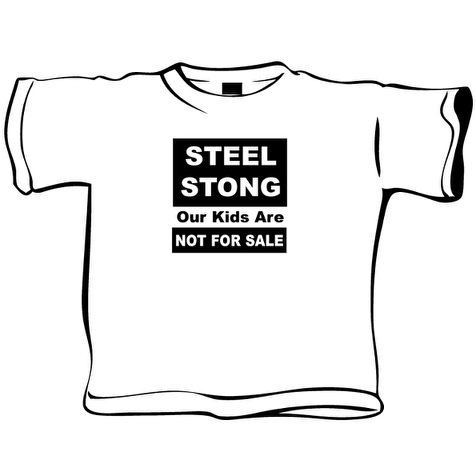
Parents United statement in support of Steel Elementary School | Parents United for Public Education

Parents United statement in support of Steel Elementary School | Parents United for Public Education:


Parents United statement in support of Steel Elementary School


Image
Parents United for Public Education fully endorses the concerns of parents and community members of Steel Elementary School who are outraged over what is effectively an 8-day process to determine if Steel remains a neighborhood public school or not. More than 100 parents came out on April 8 to hear the District speak for the first time about why Steel was designated for charter conversion – an announcement which came out of the blue on April 1. The District came with few answers and zero information about a responsible process. Parents will hear the FIRST presentations on April 23 and will be forced into a vote on May 1 – 8 days later. That is no process.

We also join with parents and community members upset at the fact that the District is willing to incur costs of almost $2 million to convert Steel to a charter school, but refuses to put in additional money into the school if it remains under District control. Supt. William Hite has called the $4,000 per pupil costs of charter conversion an “investment.” We call it an abdication of the District’s mission.
Parents United supports the community and parent call to scrap a botched parent trigger attempt at Steel Elementary as well as at Munoz-Marin Elementary Schools. We believe that a parent voice matters greater than a false parent choice.
Read the letter by Concerned Neighbors of Nicetown below. Contact us if your organization can support Nicetown community’s efforts for a responsible process and a public investment in the Steel Elementary School.
Update: Sen. Christine Tartaglione and Sen. Shirley Kitchen issued a statement saying the District must reconsider the designation of Steel and Munoz Marin as Renaissance charter targets. Read their letter here.
Image
April 9, 2014
 “This is not a process that is respectful to parents”
Concerned Neighbors of Nicetown, parents raise concerns 
about 8-day process for Steel Elementary charter vote
PHILADELPHIA – Concerned Neighbors of Nicetown (CNN) and members of the Steel Elementary School parent community today decried an 8-day process to decide whether to turn over Steel Elementary School to a Parents United statement in support of Steel Elementary School | Parents United for Public Education:

Test Season Reveals America’s Biggest Failures Education Opportunity Network

Education Opportunity Network: "Test Season Reveals America’s Biggest Failures"


Education Opportunity Network -


New Extremists In The Education Debate


For people who like to think of themselves as being “exceptional,” Americans can sometimes abandon the very principles their exceptionality is founded on. Nowhere is this more apparent than in the current debate of education policy. A feature that has long made America’s public school system exceptional for sure is its governance through democratically elected [...]


Education Spring ‘Year Of Action’ Revs Up


When President Barak Obama, in his State of the Union address, called for a “year of action,” he probably didn’t have this in mind. An extensive and diverse coalition of forces opposed to the education policies pushed by his administration, and many state governors, is organizing on an unprecedented scale to spur a variety of [...