Building Literacy in the Lower 9th Ward
We are excited for the opportunity to expand the Lower 9th Ward Street Library with the potential support of the
Cross-posted from Parenting.com
September 2011
Dear Claire and Ryan,
We always enjoy the joy and excitement you show when you go back to school. It’s comforting for us to know that you love learning and go to a great public school that challenges and supports you.
Now that you’ve been back in class for more than a week, we’re so happy that you’ve settled in and are enjoying school. Our hope for you this year is that you will be challenged academically. You have some terrific teachers to support you. We want your love of literature to grow, and we’ll do our part by reading to you every night. We hope you will develop critical thinking skills in math, and we promise to help you when you’re struggling and celebrate when you’re succeeding. We would like to see you engaged in learning science, civics, and history, and we will continue to explore the natural world at nature centers, museums, and many of the other great resources in the Washington area.
We also want you to enjoy so many other enriching experiences that are so important to a complete education. We know you have great music, art, and physical education teachers at your school, and we believe that these subjects are essential for a well-rounded curriculum. And so is recess. We want you to have fun!
Because we believe that learning happens outside of the classroom, we would encourage you to seek out opportunities for leadership and service. As a family, we’ve all enjoyed service events like building playgrounds and painting murals in local schools. We hope you’ll do service activities with your classmates and strive to be leaders in the student government and other activities at school.
We are proud of you and excited for you. We have dedicated our lives to learning and to helping others receive a great education. Our greatest hope is that you’ll go back to school every fall excited and ready to learn.
Love,
Mom & Dad
Tomorrow 5:00pm at Prudential Plaza, Chicago, IL
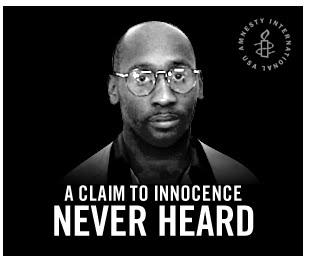
**RALLY TO SAVE TROY DAVIS** Prudential Plaza (Barack Obama’s 2012 Reelection Headquarters) 130 East Randolph Street.Troy Davis has received an execution date of September 21st. Troy has no appeals left, so his life lays in the hands of the Georgia Board of Pardons and Paroles. We don’t have much time, but the fight is far from over.
Troy has already fought back three execution dates with the help of an outpouring of international support. His sister, Martina Corriea, has spearheaded the national and international efforts to save
SACRAMENTO—State Superintendent of Public Instruction Tom Torlakson today commented on the results of the SAT® for the California high school class of 2011 that were part of this morning's national release by test administrator, The College Board.
"I am pleased that more than half of California seniors took the SAT in 2010 and that the participation of minority students set a new record for our state," Torlakson said. "College has increasingly become the price of admission to the job market, so it is encouraging that more students than ever see college in their futures."
According to the College Board, 222,658 students—or 53 percent—of California seniors in this year's class took the test at some point during their high school careers, which is a 4 percent increase over 2010 and a 13 percent increase since 2007. Of those, 184,890 were public school SAT takers, representing 48 percent of the state's public high school graduates.
Minority students accounted for 65 percent of California's SAT takers in the class of 2011, making it the most diverse class in state history. Minority students composed 64 percent of test-takers in 2010 and 58 percent in 2007.
Among California public school students in 2011 compared to last year, writing scores decreased 5 points to 494; critical reading scores dropped 6 points to 494, and math scores dropped 6 points to 513.
An increase in the participation rate may result in a drop in the mean score.
When looking beyond year-to-year comparisons at longer-term trends, critical reading and mathematics scores among all California SAT takers are unchanged and writing scores increased by 1 point since 2007. Public school mean scores showed improvement since 2007, with critical reading up 2 points, mathematics up 1 point and writing scores up 3 points since 2007.
"While more students are becoming serious about higher education, we still need to ensure they are prepared to succeed once they get to college," Torlakson said.
Among the California SAT takers who answered optional questions about their college plans, 27 percent of students indicated plans to attain a bachelor's degree, 54 percent indicated plans to attain a more advanced (master's or doctoral) degree, and 76 percent indicated that they planned to apply for financial aid.
Students from the California class of 2011 who took the SAT and/or SAT Subject Tests™ sent score reports to a total of 2,811 institutions.
For more information on the College Board and the SAT®, please visit College Admissions - SAT - University & College Search Tool (Outside Source).
Downloadable data files on how specific California school districts performed on the SAT® and the ACT® will be available later this year at Postsecondary Preparation.
# # # #
Tom Torlakson — State Superintendent of Public Instruction
Communications Division, Room 5206, 916-319-0818, Fax 916-319-0100
I may never see the Grand Canyon.
Unless things change in Arizona, I’m not going there. The anti-immigrant stuff is just to0 crazy.
The latest news is that the Feds have dropped their civil rights suit against the state of Arizona in the case where Arizona was monitoring teachers for mispronunciation of English language words in the classroom.
As a result of the settlement the state has agreed to stop their practice that was targeting non-native speakers. Local districts, however will continue the monitoring.
The investigation began after unnamed parties filed a civil-rights complaint in
Class Warfare: that’s the title Stephen Brill gave to his recent book on the state of American education.
With such a title, one might think that that Brill’s book would investigate how the deep class divisions between America’s wealthy class and our poor and working class, a gap that has grown immensely over the last four decades, has harmed our schools and our students. After all, educational research has shown that greatest challenge our schools face is the grinding effect of poverty on so many of the students we teach.
But Brill’s book embraces without question or qualification the diagnosis of the wealthy Wall Street hedge-fund managers who have driven much of the dominant ‘education reform’ agenda: in their view, the educational failures of schools and students are the fault of public school teachers and teacher unions. This Wall Street
11:34 am September 14, 2011, by Maureen Downey
I am about to get on a conference call on a new Senate initiative to fix the federal No Child Left Behind Act. But here is the official statement about a series of GOP bills designed to increase the state role and decrease the federal one. Georgia Sen. Johnny Isakson is among the sponsors.
U.S. Senators Lamar Alexander (R-Tenn.), Richard Burr (R-N.C.), Johnny Isakson (R-Ga.) and Mark Kirk (R-Ill.)— all members of the Senate Health, Education, Labor, and Pensions Committee — today announced they are introducing a series of education bills to “fix” No Child Left Behind.
The senators said that for the nation’s 100,000 public schools, the legislation would end the federal mandates through which Washington, D.C., decides which schools and teachers are succeeding or failing.
According to the senators, much has happened over the last 10 years and it is time to transfer responsibility back to states and communities. Since No Child Left Behind was enacted in 2002, 44 states have adopted common core academic standards, two groups of

...in 33 of the 35 occupational categories it reviewed, federal government employees were less expensive than contractors. On average, the federal government pays contractors 1.83 times more than it pays federal employees and two times more than what comparable workers in the private sector are paid.
For instance, the government on average pays contractors $299,374 for accounting services, while it pays federal employees $124,851 for accounting services. By comparison, workers in the private sector (not under contract by the
By Marisol Bello and Greg Toppo, USA TODAY
Fewer than half the states routinely analyze suspicious numbers of erasures on standardized school tests, a key method of detecting cheating by teachers or their bosses.
Erasure analysis launched a Georgia investigation that uncovered widespread cheating in Atlanta schools and has triggered probes in Washington, D.C., and Pennsylvania.
A survey by USA TODAY of state education agencies found that 20 states and Washington, D.C., did erasure analysis on all pencil-and-paper tests required during the 2010-11 school year under the federal No Child Left
The numbers are nauseating. According to the just released new Census Bureau data , based on 2010 data:
*22 percent of American children live in poverty
*39 percent of black children live in poverty
*35 percent of Hispanic children live in poverty
The federal government set the poverty level in 2010 for a family of four living with an income of no more than $22,314 or a single person with
Rahm sends his kids to Lab School.
He flies into Rahmrage if anyone brings it up. His kids are not to be brought up in a discussion of public school policy.
But our kids? Different story.
So, today the Chicago Teachers Union responded to Rahm and CEO JC Brizard with common sense.
What is good for Rahm’s kids should be good for ours. Not that CPS is going to start spending per student
SEPTEMBER 14, 2011
IN THE NEWS
By MariaShriver.com
In 1964, just six months after the assasination of President John F. Kennedy, Jacqueline Kennedy sat down with historian Arthur Schlessinger, Jr. and recorded more than eight hours of recollections, insights, observations and lessons about her life with the President, all to preserve his legacy. The tapes of those sessions were then sealed and stored at the John F. Kennedy Library and Museum.
This never-before-heard conversation and historical record -- captured in an illustrated book and 8-CD set -- is being released today by Caroline Kennedy and the Kennedy family to commemorate the fiftieth anniversary of President Kennedy's Inauguration.
In this Q&A with Caroline Kennedy, one of the few interviews she granted, she recalls her mother's intellectual curiosity and love of reading, discusses her mother's initial apprehension about becoming First Lady, and marvels at how far women have come.
Q. Why did your mother choose to record an oral history?
Library aide Mary Bates reads “The Giving Tree” to students at Burton Elementary School. Her hours are being cut and she is losing her health benefits.(Anne Cusack / Los Angeles Times) |
September 14, 2011
by Frederick M. Hess • Sep 14, 2011 at 8:59 am
Cross-posted from Education Week
There's been a surge in attention paid to edu-philanthropy of late, especially with Sam Dillon's piece in the New York Times in May and Bill Gates' WSJ interview this summer. The condemnations of "corporate philanthropy" and of philanthropists giving away tens of millions as "MBAs run amok" fly hot and heavy. I think the critics are mistaken and way too quick to hurl accusations here. I don't remember them raising concerns about the pernicious influence of grantors when the Ford Foundation bankrolled litigation to boost edu-spending or when the Annenberg Challenge pumped $500 million into a mash-up of ineffectual mid-1990s reforms that educators happened to like.
But I want to focus for a moment on the foundations themselves, and particularly my friends who enjoy