Latest News and Comment from Education

Thursday, July 20, 2017

Christine Pellegrino - TEACH17 Welcome

Christine Pellegrino - YouTube:

Christine Pellegrino


Joshua Hall


 AFTHQ - YouTube - https://youtu.be/jz2TQOKWlkA?list=TLGGJt9GO2Ldbx4yMDA3MjAxNw  @AFT

CURMUDGUCATION: Petrilli's Retro Stool Sample

CURMUDGUCATION: Petrilli's Retro Stool Sample:
Petrilli's Retro Stool Sample


At the Thomas Fordham, Mike "Ed Reporters Call Me First" Petrilli is engaged in a little summary, prognostication, and cheerleading for philanthropists, but mostly, a retelling of many favorite  reformster tales from yesteryear. "Education philanthropy and the unfinished business of policy reform" opens with what may well be a True Thought--

The era of hyperactive education policymaking is about to come to an end.


The states will take back power through ESSA plans. The DeVosian voucher dream will die in Congress. The USED will lapse into sleepy inaction. In short, Petrilli envisions the center of action to be shifting away from lawmakers (oh, please, let him be right this time), and so his eyes turn to the philanthropists.

Petrilli and I probably disagree about what constitutes philanthropy these days. Modern Phauxlanthropists aren't really giving gifts to Good Works, and their work is no more philanthropy than when I hand a tailor a "gift" of money in hopes that he will "gift" me with a pair of pants. If you expect some Quo for your Quid Pro, it's not philanthropy-- it's a transaction.

Petrilli uses some Very Special Language to cover that-- my personal favorite is when he starts to sum up Our Story So Far and says

Yet over the course of the past two decades, generous philanthropists helped to build a robust 
CURMUDGUCATION: Petrilli's Retro Stool Sample:

Betsy DeVos claims philosophy of Margaret ‘Iron Lady’ Thatcher as her own - The Washington Post

Betsy DeVos claims philosophy of Margaret ‘Iron Lady’ Thatcher as her own - The Washington Post:

Betsy DeVos claims philosophy of Margaret ‘Iron Lady’ Thatcher as her own


Yes, Education Secretary Betsy DeVos went there — and a few other places, too.
Speaking at an annual conference of a powerful conservative organization, she invoked the words of Margaret Thatcher, the late prime minister of Great Britain, who instituted tough conservative policies that supporters say helped save the British economy and foes say hurt the poor and destroyed heavy industries and communities.  Thatcher became known as the “Iron Lady” for her tough policies, both domestic and foreign, and is a hero to conservatives here and abroad. (You can see DeVos’s entire speech below.)
DeVos, appearing at the American Legislative Exchange Council (ALEC), framed her keynote speech around Thatcher’s philosophy of society, saying that it was hers as well. DeVos said:
What, exactly, is education if not an investment in students?
I was reminded of something another secretary of education once said. Her name was Margaret.  No, not Spellings — Thatcher.  Lady Thatcher regretted that too many seem to blame all their problems on “society.” But, “who is society,” she asked. “There is no such thing! There are individual men and women and there are families” — families, she said — “and no government can do anything except through people and people look to themselves first.”
 The Iron Lady was right then and she’s still right today.
(Margaret Thatcher was secretary of education and science under British Prime Minister Edward Heath before taking control of the Conservative Party herself.)
And that is as clear a distillation of DeVos’s philosophy of government as she has given since becoming education secretary in February after Mike Pence became the first vice president in American history to have to break a tie for the Senate to confirm a Cabinet member. To DeVos, public institutions are impediments to individuals who want freedom to access opportunities, and the traditional public education system, which has been the most important civic institution in America since its creation, is a failure that can’t be fixed.
DeVos was in friendly territory when she spoke in Denver at the annual conference of ALEC,  a Betsy DeVos claims philosophy of Margaret ‘Iron Lady’ Thatcher as her own - The Washington Post:

Remarks from Secretary DeVos to the American Legislative Exchange Council | U.S. Department of Education

Remarks from Secretary DeVos to the American Legislative Exchange Council | U.S. Department of Education:
Remarks from Secretary DeVos to the American Legislative Exchange Council


Thank you, Lisa, for the kind introduction.
It's good to be here at ALEC, with so many friends and quality leaders shaping policy across all 50 states. A special thanks to my fellow Michiganders, thanks so much for joining us and for your hard work in the Great Lakes State.
I'm no stranger to state-based advocacy; it was a primary focus of mine for 30 years before I entered public service.
After my husband Dick and I acknowledged our philanthropy could only directly help a limited number of kids, we jumped into the policy arena to empower as many students and parents as possible. It was the only way to help foster the fundamental – and necessary – shift in how we approach education in America.
This advocacy has led to some... let's call it... "excitement" on the Left. You're certainly no strangers to organized protests by defenders of the status quo. But, it's the first time in recent history I've been to an event where the protesters aren't necessarily here just for me! But I consider the "excitement" a badge of honor, and so should you. Our opponents, the defenders of the status quo, only protest those capable of implementing real change. You represent real change.
You have led the way in helping states across the nation craft innovative solutions to today's problems: in healthcare, taxes, regulations, entitlements, and importantly, education.
Instead of seeking today's headlines, you've played the long game. We've all benefitted from this patient approach. Through your leadership, your respective states have truly become the laboratories of democracy our Founders intended. Thank you for putting their vision into practice.
The reason the Founders believed in empowering states is because states are best equipped to solve the unique problems each of them face. I suspect all of you share that belief. New Hampshire has different challenges than Illinois, Utah or California. Leaders in each state are likely to better understand their own circumstances. They are closest to the issues, and thus are more able to devise solutions, than someone perched in Washington, DC.
School choice reforms continue to gain momentum across the nation precisely because they have been driven from within states. Minnesota passed the nation's first charter law in 1991, and the first voucher program was launched in Milwaukee, Wisconsin that same year. They paved the way for states like Florida and Indiana and Louisiana to create robust and successful choice programs. Last year, in Florida alone, 111,000 students utilized Florida's Tax Credit Scholarship Program, Gardiner Education savings accounts, and McKay scholarships for students with disabilities – and the numbers grow every year to meet increasing parental demand.
And new waves of legislation are sweeping through state capitals. Kentucky passed its first-ever charter law this year—where are the Bluegrass State legislators? Congratulations! North Carolina's legislature overrode their governor's veto to provide special needs students with Education Savings Accounts. North Carolina, keep up the fight! And Arizona now provides ESAs to every student in the state. What a huge accomplishment!
These are just a few examples of school choice's increasing momentum. In the first six months of this year, 40 legislative chambers in 23 states have passed bills expanding school choice for students and their families.
Progress in providing parents and students educational choices didn't come through a top-down federal dictate – it came as a result of leadership from governors like John Engler, Tommy Thompson, Jeb Bush and Mitch Daniels and continued with governors like Doug Doocey, Scott Walker, Eric Holcomb, Rick Scott and Matt Bevin.
And it came from state legislative leaders like Polly Williams in Wisconsin, Brian Bosma and Todd Husted in Indiana, Anne Duplessis in Louisiana, Debbie Lesko in Arizona, Dan Forrest in North Carolina, and so many others, many of whom are in this room today. And the next reforms won't originate from Washington, DC: they'll come from you.
Choice in education is good politics because it's good policy. It's good policy because it comes from good parents who want better for their children. Families are on the front lines of this fight; let's stand with them!
Parents have seen that defenders of the status quo don't have their kids' interests at heart. Just the other week, the American Federation for Teachers tweeted at me. Can you please put this up on the screen? You have to see it. They said, "Betsy DeVos says public should invest in indiv[idual] students. NO we should invest in a system of great public schools for all kids."
I couldn't believe it when I read it, but you have to admire their candor. They have made clear that they care more about a system – one that was created in the 1800s – than about individual students. They are saying education is not an investment in individual students. And they are totally wrong.
What, exactly, is education if not an investment in students?
I was reminded of something another secretary of education once said. Her name was Margaret. No, not Spellings – Thatcher. Lady Thatcher regretted that too many seem to blame all their problems on "society." But, "who is society," she asked. "There is no such thing! There are individual men and women and there are families" – families, she said – "and no government can do anything except through people and people look to themselves first."
The Iron Lady was right then, and she's still right today!
This isn't about school "systems." This is about individual students, parents, and families. Schools are at the service of students, not the other way around.
Now, let's be clear: providing more educational options isn't against public schools. It's actually not against anything. School choice is about recognizing parents' inherent right to choose what is best for their children. That's the manifestation of expanding human liberty in America.
And for those of you here today, who have been on the front lines, you understand the struggle at the very core of this debate: There are those who defend a system that by every account is failing too many kids...and there are those who know justice demands we give every parent the right to an equal opportunity to access the quality education that best fits their child's unique, individual needs.
That, of course, doesn't always sit well with defenders of the status quo. But despite the teachers unions' not-so-veiled threats and millions of dollars, can anybody name a single legislator who has lost a seat for voting to support parents and students?
You can't. That's because it's never happened. It's because equal educational opportunity is common sense and because it's the right thing to do.
Now this drives the big-government folks nuts, but it's important to reiterate: education is best-addressed at the state, local and family levels.
If you need another reason to believe the federal government shouldn't be involved in education, look no further than Obamacare. The federal government couldn't build a website that worked, but progressives think it should run a national healthcare system?
We need healthcare reform that rewards innovation and puts patients at the center, just like we need changes in education that put students at the center, empowers educators and spurs creativity.
The same principle applies to fixing our nation's broken tax code: we need to reduce the financial burden on hard-working individuals and job providers to unleash the economic potential that has been held captive for too long. Without reform, the next generation of entrepreneurs will swim upstream against the developed world's highest corporate tax rate and a system that punishes risk-taking rather than encourages it.
On these issues and more, President Trump is determined to place power back in the hands of people.
The President has said that this administration will reduce the federal footprint in education, and he signed an executive order this past April instructing our Department to review every regulation that might obstruct parents, teachers, communities and states from best-serving their students.
It's a sad state of affairs in Washington when common sense requires an executive order.
We're taking concrete steps to realize that vision, beginning with the implementation of the Every Student Succeeds Act. While we must comport with the law Congress passed, we urge states to embrace the opportunity for creativity and flexibility and to break away from the "compliance" mentality that has for too long afflicted education.
This path is a stark departure from the previous administration, which issued regulations that were a far cry from – and even ignored – Congressional intent. Thanks to the Congressional Review Act, we've returned to the law that Congress actually passed, and I'm looking forward to reviewing and ultimately approving every plan that meets the law.
In accordance with the President's executive order, we're undertaking a "regulatory reset" to review the previous administration's most harmful and costly regulations. And, there are plenty that fit that description.
Without Congressional action or authorization, the last administration rushed a new Borrower Defense to Repayment rule into effect and put taxpayers on the hook for an estimated cost of up to 17 billion dollars. While students should have protection from predatory practices, schools should also be treated fairly.
Similarly, the previous administration's Gainful Employment rule took two words from the Higher Education Act – passed over 50 years ago, mind you – and turned it into 215 pages of regulations. It was textbook overreach, and was solely to advance their administration-wide war on every type of organization they didn't like. The uncomfortable truth for those rule-makers, however, was that if many traditional institutions were held to the same standards as for-profit entities, many of them would fail the Gainful Employment requirements too. This concern was widely shared throughout the higher education community, so this entire area needs to be reexamined.
We've pushed the pause button on both of these poorly written regulations. While they might have been well intentioned, they would cause more harm than good. Most importantly, they would fail to serve students, institutions and taxpayers well.
The time of inefficient, top-down, one-size-fits-all mandates is over. This approach does not work; it has not worked; and it will never work! And we're fooling ourselves to think otherwise. My job is to get the federal government out of the way, so that you can do your jobs.
Back to the Every Student Succeeds Act, just as we applaud the federal government's return of decision-making power and flexibility to states under ESSA, I want to go a step further and challenge you to grant that same flexibility to your state's districts, principals and – importantly – to teachers.
Teachers are on the front lines, and they know how to best meet the needs of their students. Yet too often, their voices aren't heard. Last week, I met with a number of teachers who no longer teach. I wanted to understand why they aren't doing what they all professed to really love doing – teach. I heard from Matt, who was berated for not being on page 72 of the lesson plan along with everyone else, on a certain day on the calendar. And I heard from Jed, who was told to "keep it down" because his class was "too energetic" and "having too much fun."
These talented ex-teachers expressed frustration that they weren't entrusted with more responsibility, honored with more flexibility, and weren't respected as professionals who know their students and what each of them needed to learn and achieve. Their "system" mandated that teachers follow the same written and unwritten rules, rather than do what is right for students.
I come back to the same simple philosophy: those closest to the students know best.
Parents know best what learning environment is right for their child. And teachers know best how kids will succeed in their classroom. But the bottom line is that neither our parents nor teachers are empowered.
We all know that the solutions to the problems that have vexed education in America for decades will not be realized unless we work together to overcome the status quo, to give parents the opportunity to choose what is right for their children, and to give educators the opportunity and flexibility to teach their students in ways that will allow them to flourish.
Let's foster and encourage solutions from the bottom-up. Let's honor America's grassroots, entrepreneurial history and spirit and embrace the changes that doing so promises. It's the best way to give our students and their parents the best chance at the quality education they deserve.
Our work will not be done until every child in America – every single child – has an equal opportunity to a world-class education. The rising generation is 100 percent of our future, so they deserve nothing less than 100 percent of our effort.
Thank you all, God bless you, and I look forward to working with you.Remarks from Secretary DeVos to the American Legislative Exchange Council | U.S. Department of Education:


The Aftermath: Time for an Emergency Procedure policy | Parents United for Public Education

The Aftermath: Time for an Emergency Procedure policy | Parents United for Public Education:

The Aftermath: Time for an Emergency Procedure policy

23788196975942878-bal-bus-crash-on-i-95-20170515-001-full


This past May, there was a horrific bus accident involving eighth grade students, staff and parents of Charles W. Henry Elementary school. All 30 passengers and driver were injured when a car collided with the charter bus and eventually overturned on I-95.
 It is understood that this was indeed and accident. However, everything that is done in the aftermath has to be intentional.

It was immediately noticed that the district did not have a plan to proceed with this type of emergency. Though a crisis team was sent to the school by the district, it was clear that there were minimal questions that would be answered. Parents and community members were roughly handled by this team, leaving most people extremely frustrated. (expand?) Once the immediate effects of the accident had cleared, parents were faced with continued inability to get necessary information from the school administration, district administration, vehicle insurers, etc.
“While the immediate response of getting passengers triaged was difficult, once the dust settled the next day there was no word on how the PSD was going to help parents move forward with post accident support.” Linda Gordy, grandparent of former 8th grade Henry student 
It is understandable that there is a legal need to maintain a level of control at the school and district level. However, everything was flipped for students and their parents who now had broken bones, head and spinal injuries, laceration, and emotional trauma. Information was needed to assure than children would be able to continue medical, surgical, and psychological follow ups. Many children were unable to return to school due to lack of accessibility. It took 3 weeks for children to regain access to their education at home. When parents tried to figure out what the procedures are for their questions, they realized that Philadelphia school district has no emergency procedure policy for field trips. They were left to call one department after another to try to find someone who could accurately answer their questions and address their concerns. Many found it extremely difficult to navigate the system at 440 and resorted to obtaining their own legal assistance.
After the May 15th accident, parents were stressed with the primary concern being the well-being of their childrenThe Aftermath: Time for an Emergency Procedure policy | Parents United for Public Education:

Want to reduce racial segregation? Elect a Democrat to school board, study says | Chalkbeat

Want to reduce racial segregation? Elect a Democrat to school board, study says | Chalkbeat:

Want to reduce racial segregation? Elect a Democrat to school board, study says


Image result for real democrat accept no substitutes


When Republicans won control of the Wake County, North Carolina school board in 2009, they promised to eliminate the district’s racial integration program in favor of “community schools” closer to students’ homes — and they did. By 2012, Democrats had retaken control and were trying to change course.
The shifts caught the attention of Duke professor Hugh Macartney, who wondered whether party labels predict how school boards will address — or fail to address — school segregation.
Now, a new study released by Macartney and John Singleton of the University of Rochester suggests that Wake County was not unique. Electing Democratic school board members, they found, leads to less-segregated schools.
The results are substantial: Electing at least one Democrat leads to students being “reassigned in such a way that the school board is now 18 percent closer to achieving the district [average racial breakdown] for each school,” said Macartney.
The first-of-its-kind paper, which is set to be released through the National Bureau of Economic Research, examines hundreds of school board elections in North Carolina between 2008 and 2012. The researchers compared districts that narrowly elected Democrats to those that narrowly elected non-Democrats — largely Republicans, but including independents. (Like most school board races, the North Carolina elections Want to reduce racial segregation? Elect a Democrat to school board, study says | Chalkbeat:
 Image result for real democrat accept no substitutes

Still a Sow’s Ear — Isthmus Montessori Academy Contract | AMPS

Still a Sow’s Ear — Isthmus Montessori Academy Contract | AMPS:

Still a Sow’s Ear — Isthmus Montessori Academy Contract 

61rMMB84X7L
Pigbag — Papa’s Got a Brand New Pigbag (click to listen and watch).
On Monday July 31, 2017, The Madison Metropolitan School District Board of Education will consider and vote on a contact for an Isthmus Montessori Academy Charter School (IMACS).  This will be the third time the Board has voted on a version of this proposal.  The previous two times the Board and the Administration agreed that the proposal did not meet the requirements of the MMSD Charter School policy (related concerns about state statutes were also expressed by some Board Members).  Each time, a majority of the Board voted to advance the proposal in order to provide opportunities to address the shortcomings (I voted no each time).  Among the questions before the Board on July 31 is whether this has been accomplished; whether sow’s ear has been transformed into a silk purse.  I think it is still a sow’s ear.
In this post I detail how I reached that conclusion by looking at three big areas: charging tuition to place students in public school classrooms; a staffing plan that does meet Association Montessori International standards (and perhaps violates state Administrative Rules; and most importantly, will not serve students well), and a budget that is not sustainable.   These overlap with, but are not identical to the areas where the Administration and the Board previously concluded that the proposal did not meet expectations.  It should also be noted Still a Sow’s Ear — Isthmus Montessori Academy Contract | AMPS:

ESSA, Pay for Success & the McCleary Crisis | Seattle Education

Pay for Success & the McCleary Crisis: Did the Every Student Succeeds Act (ESSA) Help Position Social Impact Bonds as a Last Resort Funding Option for Our Public Schools? | Seattle Education:

Pay for Success & the McCleary Crisis: Did the Every Student Succeeds Act (ESSA) Help Position Social Impact Bonds as a Last Resort Funding Option for Our Public Schools?

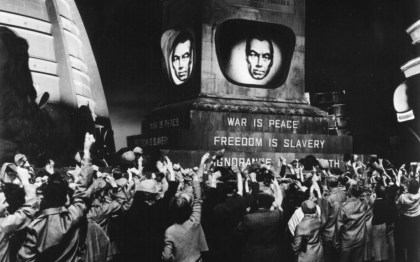
two minutes of hate
The horrible thing about the Two Minutes Hate was not that one was obliged to act a part, but that it was impossible to avoid joining in. Within thirty seconds any pretence was always unnecessary. A hideous ecstasy of fear and vindictiveness, a desire to kill, to torture, to smash faces in with a sledge hammer, seemed to flow through the whole group of people like an electric current, turning one even against one’s will into a grimacing, screaming lunatic. And yet the rage that one felt was an abstract, undirected emotion which could be switched from one object to another like the flame of a blowlamp. -George Orwell, Nineteen Eighty-four
No one makes a better villain than Secretary of Education, Betsy DeVos. She’s the enemy of public education that everyone – on the left and right – can agree to hate.
DeVos is our very own Emmanuel Goldstein, the bipartisan uniter and designated enemy, who continues to bring all of us together in our updated – dare I say innovative – version of Orwellian inspired two minutes of hate.
Sadly, the fix was in long before DeVos was summoned by Donald Trump and convinced to leave behind her public education destroying work in Michigan and take her callous, innovative disruption to scale as the nation’s Secretary of Education.
The ground work for the destruction of public education as we know it was already laid by the ESSA, the victory of bipartisanship and ticking time bomb of education innovation.

Don’t Look Behind the Velvet Curtain

One of the horrible ironies of the ESSA is that so many lobbyist had a hand in writing the bill, these special interest groups just can’t help bragging about their work.

Mike Klonsky's SmallTalk Blog: The IL Gov's Race: I don't like Kennedy.

Mike Klonsky's SmallTalk Blog: The IL Gov's Race: I don't like Kennedy.:

The IL Gov's Race: I don't like Kennedy.

To be honest, I just don't like this guy. 

Needless to say, dumping Rauner is our main goal in next year's race. But until then, I'm trying to sort out the gaggle of Democrats running in the primary. The way things look now, any of them --or Dave the cable guy -- could beat the billionaire incumbent, even in this, the most expensive gov's race in history.

Chris Kennedy is definitely not my favorite among the Dems running for governor. Yes, I know the Kennedy name still puts lots of liberals in nostalgia mode and the name alone may be enough to beat Rauner.

But to be honest, I just don't like the guy. It might have something to do with the way he tried to use his power as head of the U of I Board of Trustees and family wealth (president of the Merchandise Mart) to tarnish the career of my friend and former UIC colleague, Distinguished Prof. of Education, Bill Ayers over something "uncivil" Bill supposedly wrote 40 years earlier about Kennedy's father.

Then there was matter of Kennedy denying a UI teaching job to Prof. Steven Salaita over his tweeting critically about Israel. It was a move that ended up costing the scandal-ridden, cash-strapped university more than $2M in settlement and legal costs and the university president her job.

That kind of pettieness and propensity for taking revenge on critical writers, educators or Mike Klonsky's SmallTalk Blog: The IL Gov's Race: I don't like Kennedy.:


Jersey Jazzman: When "Miracle" Charter Schools Shed Students

Jersey Jazzman: When "Miracle" Charter Schools Shed Students:

When "Miracle" Charter Schools Shed Students


A follow-up to yesterday's post:

As I noted, NBC's Sunday Night with Megan Kelly broadcast a story earlier this month about Boys Latin Charter School, a "successful" charter school in Philadelphia which claims to have ten times the college completion rate of its neighboring high schools.

To his credit, reporter Craig Melvin didn't swallow the claims of the school whole, and pushed back on the idea that Boys Latin serves an equivalent student population to those surrounding high schools. But he did miss two important points:

First, and as I documented in the last post, Boys Latin raises funds outside of the monies it collects from public sources. The amounts add up to thousands of dollars per pupil per year.

As Bruce Baker notes in this (somewhat snarky) post, you really can't make a comparison between two schools and call one "successful" without taking into account the differences in resources available to both. Philadelphia's public school district has been chronically underfunded for years. It's hardly fair for Boys Latin to collect millions in extra revenue, then brag about their college persistence rate compared to schools that don't have enough funding to provide an adequate education.

But there's another issue Melvin missed -- an issue that Boys Latin's founder, David Hardy,
Jersey Jazzman: When "Miracle" Charter Schools Shed Students: 

Why Teachers Need To See Themselves as Experts – Jose Vilson – Medium

Why Teachers Need To See Themselves as Experts – Jose Vilson – Medium:

Why Teachers Need To See Themselves as Experts

I just got back from the NNSTOY Conference in Washington D.C. The conference features some of the most decorated and outspoken teachers in the country. This year’s foci included racial and social justice (my raison d’etre, really), student voice, and teacher agency. I was fascinated with the conference’s forward thinking on this profession and the ways the organizers allowed its most potent practitioners to thrust this agenda forward. When you’ve assembled such a cadre of the country’s most visible spokespeople for this profession, you’re likely to get a good sense of where we are as a profession.
As an invited guest who is a National Board Certified teacher (NBCT), an internationally-recognized (notorious?) teacher-writer, and not-Teacher of the Year, I was fascinated by the humility. Even with all the A-type personalities in the room, the teachers in this space had a humility in their work that ought to be recognized. They generally come into their work with their hearts in the right place, and their minds on constant evolution. The folks in the room know how to walk into a classroom and make the space a learning vehicle.
That’s known as expertise in most professions, but for some reason, not this one.
(note: I’m defining “teacher” here as a licensed practitioner in our classrooms who works with such a title in a PK-12 setting in the classroom. That’s another fight entirely.)
I’m always concerned about how we own expertise. For an example, one of the things I learned through the NBCT process was that I had no idea how to directly talk about the profession. I’d use words like love, empathy, compassion, and failure to speak about my work in helping youth people find their paths. I still tell others that my work is nothing without my students and others who do the work.
I didn’t know how to directly say “I did this. Therefore, my students learned Why Teachers Need To See Themselves as Experts – Jose Vilson – Medium:

CURMUDGUCATION: Back the Hell Up

CURMUDGUCATION: Back the Hell Up:
Back the Hell Up


And there it was, the question cutting through the various nuanced and complicated discussions of the various threads of ed policy, privatization, and the Newest Big Thing for making a buck in education changing the face of education.

What do you want?

If you don't like X or Y or Z, what is it you want?


Here it is. My short, simple answer for what I want to see in a perfect world.

I want bureaucrats and politicians and business people and profiteers and other interested amateurs to just back the hell up and let the professionals work.

When the call goes out for an expert in education, I want the call to go a real live experienced classroom teacher. This morning Jose Luis Vilson has a great piece about the need for teachers to view-- and treat-- ourselves as experts. I want that.

There's more I'd like. I'd like the US to really commit to great education for every student, instead 
CURMUDGUCATION: Back the Hell Up:

Cartoons: The Politics of Schooling | Larry Cuban on School Reform and Classroom Practice

Cartoons: The Politics of Schooling | Larry Cuban on School Reform and Classroom Practice:

Cartoons: The Politics of Schooling

For this month, I have selected cartoons that get at the vulnerability of public schools to social, economic, and political demands. The cartoonist’s pen captures how fads and fashions easily spill over schools since they are wholly dependent upon the beliefs and whims of taxpayers and voters for their annual budget. Enjoy.


f6cf9-polschool.jpg
govteducation.jpg
105241_600.jpg
More: Cartoons: The Politics of Schooling | Larry Cuban on School Reform and Classroom Practice:

The Jeff Bryant Report: How Budget Austerity Puts Public School Parents On Par With Criminals

7/20/2017 – How Budget Austerity Puts Public School Parents On Par With Criminals:

The Jeff Bryant Report: How Budget Austerity Puts Public School Parents On Par With Criminals


THIS WEEK: School Costs Rise … Voucher Black Hole… Trump And Teen Pregnancy … Charter School Warning … Republicans And Rape

TOP STORY

How Budget Austerity Puts Public School Parents On Par With Criminals

By Jeff Bryant

“In a budget environment of forced scarcity, there are increasingly strong demarcations between winners and losers, and parents who plan on sending children to free public schools are increasingly losers … To pay for the costs of crime, under-funded local governments are increasing fines and fees associated with the criminal justice system … As it is for the accused in the criminal justice system, parents in local schools are having to bear more of the burden of education costs.”
Read more …

NEWS AND VIEWS

Backpack Index: The Cost Of School Supplies Nearly Doubled In 10 Years

NBC

“In the last decade, the price of supplies and extracurricular activities increased by 88% for elementary school students, 81% for middle school students and 68% for high school students, according … an annual survey of the cost of school supplies and other expenses … The Backpack Index was just shy of $1,500 for high schoolers last year, the most recent year available. It was $1,001 for middle schoolers and $662 for elementary schoolers … If a high school student plays more than one sport, that’ll incur up to $375 in fees.”
Read more …

Trump Wants To Spend Millions More On School Vouchers. But What’s Happened To The Millions Already Spent?

The Washington Post

“Congress dedicates $15 million a year to a program that helps low-income D.C. students pay tuition at private schools, but it’s impossible for taxpayers to find out where their money goes: The administrator of the D.C. voucher program refuses to say how many students attend each school or how many public dollars they receive … It’s also not clear how students are performing in each school … And private schools can continue receiving voucher dollars no matter how poorly their students fare.”
Read more …

Trump Administration Abruptly Cuts Off Teen Pregnancy Prevention Funding

Education Week

“The Trump administration has cut off grants that fund teen pregnancy prevention programs and research their effectiveness … Leaders at the Department of Health and Human Services … have publicly favored an abstinence-based approach to sex education … The 5-year grants … go to 81 organizations around the country … Congress had approved $101 million for the third year of the grants … Births to American teenagers have continued a pattern of decline, dropping 40% in the last decade.”
Read more …

Ohio’s Online Charter Scandal Is A Warning To The Nation

The Progressive

“With Betsy DeVos, a long-committed charter school proponent, in charge of the U.S. Department of Education, the country should look to recent goings-on in Ohio as a warning sign … In the 2015-2016 school year, [Ohio’s online charter school] was paid $106 million in public tax dollars for the more than 15,000 students it said were enrolled, but the state was able to verify the active participation of only 6,300 students … As lawmakers sort out ways to effectively address the political cronyism behind these schools, what should be abundantly clear to the state and the nation is that continuing to expand charters will only worsen the problem.”
Read more …

Republicans And Campus Rape: The Department of Education’s Bizarre Christian-Right Tilt Is No Accident

Salon

Amanda Marcotte writes, “When it comes to the issue of sexual assault on campus, the inclination of [Betsy] DeVos and her Bible-hugging staff members is to minimize, excuse, and blame the victims. It’s a reminder that the Christian right’s emphasis on policing sexuality is almost entirely about punishing and controlling women and LGBT people. Holding men accountable for abusive behavior comes second, if at all, to punishing women for being sexual or living independent lives … When it comes to the issue of sexual assault on campus, the inclination of DeVos and her Bible-hugging staff members is to minimize, excuse and blame the victims. It’s a reminder that the Christian right’s emphasis on policing sexuality is almost entirely about punishing and controlling women and LGBT people. Holding men accountable for abusive behavior comes second, if at all, to punishing women for being sexual or living independent lives.”
Read more …
7/20/2017 – How Budget Austerity Puts Public School Parents On Par With Criminals: