Latest News and Comment from Education

Friday, July 29, 2016

CURMUDGUCATION: Looking for Mr. or Ms. Change Agent

CURMUDGUCATION: Looking for Mr. or Ms. Change Agent:

Looking for Mr. or Ms. Change Agent


Over at the Fordham, Mike Petrilli has been slowly unspooling a series of posts looking at how reform goals might be pursued through means other than policy and politics. In his latest, he considers the leadership development approach to school reform.

Petrilli expresses mixed feelings about the argument. On the one hand, he recognizes that great leaders have value. On the other hand, he's not sure that leaders can make a difference in the vast dry dead desert of public schools, and wouldn't we all be better off just putting our energy into helping leaders grow in the lush gardens that are charter schools?


As always, Petrilli has part of a point. Superintendents and principals are fighting an uphill battle these days, though it's certainly worth noting that many of the obstacles were created by reformsters like Petrilli, hamstringing schools with the crappy Common Core State [sic] Standards and bad-test-based accountability. The last decade-plus of ed reform have sidled school leaders with truckloads of crap and foisted on them priorities like "get student test scores up or get fired." So yes-- there are "government" policies in place that subject principals to "the dysfunction of the larger system within which they must work, and the Gordian knot that’s been tied by decades of contradictory, often compromising, laws and regulation"-- and that big mess has been largely grown and built with the assistance of guys like Petrilli, criss-crossing the country to advocate for those same government regulations.

Petrilli also throws shade at "unruly elected school boards," and I wonder once again why reformsters love the rugged chaos of parents choosing their own schools, but hate the rugged chaos of voters choosing their own school board. Choice is good except when it's terrible.

Petrilli nods to Rick Hess's cage-busting while rightly acknowledging that the cages are real and 


American Students of Color Are Still Not Treated to an Equal Education | US News Opinion

American Students of Color Are Still Not Treated to an Equal Education | US News Opinion:

An Unequal Start

Racial bias still persists in U.S. schools, and we must fix it.


 Is racial bias hindering the success and well-being of our nation's children? Civil rights,racial justice scholars and activists have long answered yes; they have also continuously worked to address the structural racism they see as pervasive in our nation's institutions.

During the first night of the Democratic National Convention, the speakers addressed education and inequality at home. "It's about making sure that young people in this country are in good schools and at good jobs, not in jail cells," Vermont Sen. Bernie Sanders said. Massachusetts Sen. Elizabeth Warren and First Lady Michelle Obama both touched on critical gaps in the educational system we provide our nation's children. And last week, Donald Trump underlined the pervasive bias in his Republican National Convention nomination acceptance speech by asking, not declaring, if all American children have the same rights. "Every action I take," Trump said, "I will ask myself: Does this make better for young Americans in Baltimore, in Chicago, in Detroit, in Ferguson who have really, in every way folks, the same right to live out their dreams as any other child in America?"
But American children are not treated or protected equally – especially when it comes to education. A report last month from the U.S. Department of Education's Office for Civil Rights provides important and troubling data on the detrimental consequences of racial bias for students of color, and draws from the Civil Rights Data Collection from 2013-2014, which included data for 99 percent of public schools and districts in the country.

RELATED CONTENT

The Cross African-Americans Must Bear

Strict parenting and reliance on prayer aren't just preferences to African-Americans. They're matters of life and death.

Among the findings is that black and Latino children are disproportionately issued school suspensions as early as pre-kindergarten. Black preschoolers are 3 1/2 times more likely than their white peers to be suspended – despite an overall decline in overall suspensions nationwide.
Black students are also disproportionately expelled from schools and, along with Latino students, are more than twice as likely as their white peers to be arrested or deal with law enforcement throughout the K-12 years. The targeting of students of color for disciplinary actions is all the more troubling because, as the report points out, it is coupled with the reality that these same students are more likely to have underprepared teachers and lack advanced courses in their high schools.
These findings are echoed elsewhere, too. A recent study of Virginia public schools further evidences racial disparities in disciplinary actions taken by schools. They find that American Students of Color Are Still Not Treated to an Equal Education | US News Opinion:

One Democratic Convention Speech Nailed The Progressive Vision

One Democratic Convention Speech Nailed The Progressive Vision:

One Democratic Convention Speech Nailed The Progressive Vision


When Rev. William Barber, best known in progressive circles as the leader of the Moral Mondays protests against the right-wing governor and legislature in North Carolina, was brought to the stage at the Democratic National Convention Thursday night, there was cheering from the North Carolina delegation but polite applause from the rest the hall. They did not know who Barber was, and then they not know what was coming.
Ten minutes later, when Barber finished his address, the entire convention hall was on its feet.
“I come before you tonight as a preacher,” he began, and from that moment Barber took the convention delegates through the convergence of progressive populism and “faith and morality.”
“It may sound strange, but I am a conservative,” he said, “because I work to conserve a divine tradition that teaches us to do justice, love mercy and walk humbly with our God.”
The core of his speech was a challenge for the delegates at the convention to be “moral defibrillators” of the nation. “We must shock the nation with the power of love.”
It is a message that Barber has been consistently pushing as the director of the North Carolina NAACP and an increasingly sought-after spokesperson for his unique ability to frame progressive policy objectives in a values frame. As Barber put it Thursday, “Some issues are not just left vs. write or liberal vs. conservative; they are right vs. wrong.”
In 2013 the Campaign for America’s Future gave Barber the Paul Wellstone Citizen Leadership Award for his work in North Carolina organizing against the budget cuts, voter suppression and other policies advanced by the state’s Republican government.
The words of the Biblical prophet Isaiah, Barber said, calls on us to “pay people what they deserve, share your food with the hungry. Do this and then your nation shall be called a repairer of the breach. Jesus, a brown-skin Palestinian Jew, called us to preach good news to the poor, the broken and the bruised and all those who are made to feel unaccepted,” he said.
The use of religion and faith to promote “meanness” shows that we have a “heart problem,” Barber said. We need to “embrace our deepest moral values and push for revival at the heart of our democracy. … When we fight to reinstate the power of the Voting Rights Act, and we break the interposition and nullification of the current Congress…when we fight for 15 and a union, and universal health care, and public education, and immigrant rights, and LGBTQ rights, we are reviving the heart of our democracy.”One Democratic Convention Speech Nailed The Progressive Vision:

A Quick Note on Race Talks in Education Spaces #EduColor | The Jose Vilson

A Quick Note on Race Talks in Education Spaces #EduColor | The Jose Vilson:

A Quick Note on Race Talks in Education Spaces #EduColor

educolorme
Premise: educators who aren’t challenged to think about systemic inequity offline don’t want to think about it online.
In the last week, much has been made about my impromptu #educolor chat about race and schools, but, like #EduColor itself, it wasn’t borne of a chat, but by resistance to ignorance amongst our colleagues.
You can read the recap for yourself here.
Behind the scenes, I had contemplated whether I even wanted to participate. There were pros and cons to both. The main con was that connected folks of color shouldn’t have to participate in this chat because white educators should do the work themselves without our involvement. This puts the onus on white folks to talk to white folks about race in a space that normally doesn’t do it.
But as I watched it unfold, I started to see how few participants either wanted to engage. In fact, the folks who were originally energized by the topic started to drop out quickly as they saw how quickly A Quick Note on Race Talks in Education Spaces #EduColor | The Jose Vilson:


CURMUDGUCATION: Other Suns and the Illusion of History

CURMUDGUCATION: Other Suns and the Illusion of History:

Other Suns and the Illusion of History

It was impossible to drive across the country without thinking of Isabel Wilkerson's masterpiece The Warmth of Other Suns, a stunning telling of the story of the Great Migration.


Wilkerson weaves numerous threads together (including those of her own life) and shifts effortlessly between close focus and the larger picture, but the book revolves around the stories of Ida Mae Brandon Gladney, George Starling, and Pershing Foster, as each of them makes their own personal journeys. The Great Migration was an unprecedented shift of population in this country and, as Wilkerson says, "it was the first big step the nation's servant class ever took without asking."

I won't try to capture the entire book, but I will share some of what hit me when reading it.

Some were simple factoids. The first Jim Crow law? Passed in Massachusetts.

Some of it echoes our present. Foster's parents were educators, and the picture of black schooling in the South is brutal. For instance, on the matter of financing schools:

"The money allocated to the colored children is spent on the education of the white children," a local school superintendent in Louisiana said bluntly. "We have twice as many colored children of school age as we have white, and we use their money. Colored children are mighty profitable to us."

And perhaps most striking and effective because of Wilkerson's thoroughness, is the ordinary everydayness of the racism these people lived through.

Travel always makes me think of the book because of Foster's story. At one point, this educated physician sets out to drive cross country, heading out West to create a new life, and the simple 
CURMUDGUCATION: Other Suns and the Illusion of History:


Private Prisons on Steroids …The for-profit detention centers - Wait What?

Private Prisons on Steroids …The for-profit detention centers - Wait What?:

Private Prisons on Steroids …The for-profit detention centers


While many are aware of the rise of private prisons in the United States and the lucrative contracts that are given to for-profit companies to run those correctional facilities, far less attention has been given to the for-profit largess associated with massive contracts to run the federal government’s immigration detention centers and other related programs around the country.
As the Center for American Progress explains;
Surprisingly, the largest detention and supervised release program is not operated program in the country is not operated by the U.S. Department of Justice (DOJ), but by the U.S. Department of Homeland Security (DHS), which oversees the nation’s immigration detention centers.  According to the Department of Justice, its Federal Bureau of Prisons has nearly 200,000 individuals in custody as of December 2014.  On the other hand, the Department of Homeland Security’s immigration detention program detains around 400,000 each year.
The nation’s paranoia about immigrants has dramatically enhanced the revenues for two massive for-profit prison companies that are now raking in over $1 billion a year in taxpayer funds running much of the federal government’s prison and detention programs.
As a result of legislation approved by the United States Congress and signed into law by President Obama, the Department of Homeland Security MUST maintain no less than 33,400 detention beds a day — regardless of whether those beds are needed.  It is the only mandated bed quota of any federal agency.
To acquire that many beds, the government turned to for-profit companies to build and run many of the facilities.  Today, more than 60% of the immigrant detention beds are Private Prisons on Steroids …The for-profit detention centers - Wait What?:


To locate your detained loved one:


Contact the Bureau of Immigration and Customs Enforcement Deport Office (see Phone List below). 
Ask to speak with a supervisory deport officer. Give them your loved one’s full name and A#. (Note: Deportation officers may be mean and not speak to anyone besides an attorney. However, it is still worth trying) 
Contact your Consulate. Some Consulates are required by law to be notified when one of their nationals is detained.
The last resort is always to contact the different county detention facilities or wait for your loved one to call.
Remove any blocks on your phone for collect calls.


Do not rush to hire an attorney if you don’t have a basic idea about your loved ones case. First learn as many facts about your loved one, and then approach an attorney
Hire someone specializing in deportation. Many attorneys do not know immigration law and many immigration attorneys do not know deportation very well. If the lawyer does real estate, business and immigration, they are most likely not deportation specialists.
Keep the full information of EVERY lawyer you had. Make sure you receive a copy of everything your lawyer files.
Get a written contract before you give the lawyer money. The lawyer must give you a “retainer agreement.” Read it carefully. Make sure you understand it.
Make sure to inform your lawyer of your entire criminal and immigration history so that they may give you the best advice possible. Do not assume that ANY information is not important.
Ask your lawyer for written information about the immigration consequences of your crime before you plead guilty. If you have an old order of deportation ask your lawyer for written information about how they will prevent your deportation.
If your attorney ever refuses to provide information he promises you in writing, send a certified mailed letter to him outlining the promises he made to you and asking for written verification or clarification of those promises.
File a complaint with the Attorney Grievance Committee if your lawyer cheated you (see Phone List).

Free Legal Information/Advice
Legal Aid Immigration Unit:  (212) 577-3456
Immigration Defense Project: (212)725-6422
Northern Manhattan Coalition for Immigrants Rights: (212) 781-0355
Brooklyn Defenders Services: (718) 254-0700)
Bronx Defenders: (718) 383-7878
Pennsylvania Immigrant Resource Center: (717) 600-8099

Hillary Clinton Declares: I Sweat the Policy Details on Education, Children's Issues - Politics K-12 - Education Week

Hillary Clinton Declares: I Sweat the Policy Details on Education, Children's Issues - Politics K-12 - Education Week:

Hillary Clinton Declares: I Sweat the Policy Details on Education, Children's Issues

DRD_3442.jpg
Philadelphia
Democratic presidential nominee Hillary Clinton, in her historic acceptance speech here Thursday, pledged to provide broader access to a quality education, praised teachers in the couse of attacking her GOP rival Donald Trump, and highlighted her past work on behalf of students with disabilities. 
Her speech was light on K-12 policy specifics, in keeping with a Democratic National Convention that has largely bypassed substantive education talk in favor of more general rhetoric. And she also leaned on language often used by the teachers' unions, some of her staunchest and earliest allies. 
Clinton, the first woman to receive a major party nomination, said she would to build a country where parents can "send their kids to a good school no matter what ZIP code you live in." That's a line straight from the National Education Association's list of talking points about education. 
Excoriating Trump for his remark at the GOP convention last week in Cleveland that "I alone can fix it," Clinton mentioned a litany of professions, including "teachers who change lives" who work to address the nation's needs and problems. 
DRD_3453.jpgJust as other speakers from previous nights of the convention did, Clinton highlighted her work for the Children's Defense Fund, such as advocating on behalf of students with disabilities in Massachusetts, and how it led to changes in legal protections for those children.
"It's a big idea. Every kid with a disability has a right to go to school," Clinton said, adding that she sweated policy details "because it's not just a detail if it's your kid."
She promised to push for affordable child care. And touching on a theme that's been a top priority for her vice-presidential pick, Virginia Sen. Tim Kaine, Clinton gave a nod to career and technical education, saying, "We will help more people learn a skill or practice a trade, and make a good living doing it."
Clinton also pledged to pass comprehensive immigration reform and to "keep families together," touching on a theme earlier in the DNC. 
Clinton mentioned that plan as well on Thursday, and also promised to "liberate" people from student debt
Clinton still doesn't have a comprehensive K-12 plan, and she didn't lay one out during her Thursday speech. But she has addressed specific elements of education policy, such as her plan to eventually create universal prekindergarten programs in the U.S.

Breaking the Glass Ceiling

Policy details or not, Jon Fielbrandt, a high school math and science teacher and Michigan delgeate, said Thursday night he was heartened by everything Clinton has said about bullying, standing up for teachers' collective bargaining rights and early-childhood education.
"I've got faith she's going to take us in the right direction on education," said Fielbrandt, who's a member of the NEA.
But he was most excited to be here Thursday night because he has two daughters.
"That feeling of that glass ceiling being broken. That means a lot," Fielbrandt said.

Early Learning, Equity, Crumbling Schools

In an interview at the convention Thursday, Sen. Patty Murray D-Wash., said she's "just ecstatic" about the prospect of working with a possible President Hillary Clinton on expanding access to early-childhood education.
"I just say the words to her 'early-childhood education.' And she says, 'What do we need to do?' This is a passion for her," said Murray, ranking member of the Senate education committee.
California Rep. Xavier Bacerra raised that issue, too, in his speech Thursday night, highlighting Clinton's plan to provide universal preschool to Americans' 4-year-olds. And he raised Clinton's stated "Chelsea test." That's Clinton's line that if she didn't think a school was good enough for her daughter Chelsea Clinton, it wasn't good enough for any child.
"She'll rebuild our crumbling schools. She'll give our teachers the support and tools they need and the pay they deserve," Becerra said. (Presidents don't directly control and can't dictate teacher salaries, although a portion of the 2009 American Recovery and Reinvestment Act directed funds to shore up local funding for schools.)
DRD_2476.jpgDavid Wils, an 8th grade social studies teacher in North Carolina, gave brief remarks Thursday night—but he didn't talk about K-12.
Instead, Wils, who has $35,000 in student loan debt, detailed his belief that Clinton would help relieve the college debt burden for Americans.
"Teaching offers so many rewards. A big salary isn't one of them," Wils said.
The nation has two educational systems, New York Gov. Andrew Cuomo said in his speech during the 7 o'clock hour: one for rich students, where they work on laptops; and one for poor students, where the most sophisticated technology they encounter is a metal detector.
"That is not educating every child equally," said Cuomo, who's had an uneven relationship with the New York State United Teachers.
Reps. Tim Ryan of Ohio and Becerra promised the crowd that Clinton would put people to work building schools. She expressed a desire to rebuild crumbling schools earlier this year. 

Track Record With Children

When education was discussed throughout the convention, much of it dealt with Clinton's work in her younger years to help children disadvantaged in various ways.
President Bill Clinton made that work a major focus of his Tuesday night speech, ticking off the nominee's efforts in Alabama and Massachusetts, for example, to help put a spotlight on segregated schools and inequality for students with disabilities, respectively. And in Arkansas, Clinton recalled, the nominee worked to improve early-education programs, overhaul the state's academic standards, and change the school funding setup.
electionslug_2016_126x126.jpg
That night, both Bill Clinton and Dustin Johnson, an 5th grade teacher in Arkansas, also discussed Clinton's work on improving classroom instruction and educational standards.
In fact, Clinton said in Iowa last December that, "I wouldn't keep any school open that wasn't doing a better-than-average job," although her campaign later clarified that she wasn't intent on shutting down schools en masse.

Connections to Education

Speakers this week also connected hot-button issues in the campaign to education.  
On Wednesday Sen. Chris Murphy of Connecticut spoke about the 26 students and school staff killed at Sandy Hook Elementary in 2012.
And the daughter of the school's principal, Erica Smegielski, said the nation should not have "our teachers and principals going to work in fear" of gun violence.
DRD_2112.jpg
The school-to-prison pipeline, meanwhile, made it into the speech given by Sen. Bernie Sanders of Vermont on Monday.
Clinton's one-time rival for the Democratic nomination, Sanders urged the nation to make sure young people are not "rotting in jail cells" and added, "Hillary Clinton understands that we have to invest in education and jobs for our young people."
The same night, Sen. Elizabeth Warren of Massachusetts highlighted Clinton's plan to provide free tuition for public colleges and universities. And the children of undocumented immigrants also spoke about their fears of Donald Trump and their confidence that Clinton would support them.
Assistant Editor Alyson Klein contributed to this post. 
Photos: Democratic presidential nominee Hillary Clinton with vice presidential nominee Sen. Tim Kaine of Virginia at the Democratic National Convention on Thursday, July 28; Clinton and Kaine after she finished her acceptance speech; the floor of the DNC the previous day; DNC attendees hold signs in favor of Clinton on Wednesday. (Deanna Del Ciello/Education Week) Hillary Clinton Declares: I Sweat the Policy Details on Education, Children's Issues - Politics K-12 - Education Week:

Don't miss another Politics K-12 post. Sign up here to get news alerts in your email inbox.

Democrats Are Spotlighting A Big Education Problem Pushing Kids Out Of School

Democrats Are Spotlighting A Big Education Problem Pushing Kids Out Of School:

Democrats Are Spotlighting A Big Education Problem Pushing Kids Out Of School

For the first time, the party platform address the school-to-prison pipeline.


Democrats are giving unprecedented attention to a phenomenon that pushes kids out of school and into the criminal justice system.
The Democratic Party platform calls for putting a stop to the school-to-prison pipeline, for the first time ever. The platform, finalized this month, reads:
“We believe a good education is a basic right of all Americans, no matter what zip code they live in. We will end the school-to-prison pipeline and build a cradle-to-college pipeline instead, where every child can live up to his or her God-given potential.”
The school-to-prison pipeline describes an education system that funnels kids ― disproportionately black and brown ones ― out of school and into jail. Reasons for its existence include the proliferation of cops in school, who are more likely to be assigned to buildings where the majority students are minorities. School cops increase the likelihood that a student will be referred to law enforcement, even for a minor offense, according to research from University of Florida law professor Jason Nance.
Practices like school suspensions, which remove kids from classrooms as a form of punishment, add to the pipeline.  
“For the first time ever, our platform calls for ending mass incarceration, shutting down the school-to-prison pipeline, and taking on the challenges of systemic racism,” Maya Harris, senior policy advisor for Hillary Clinton, said in a statement
Marlyn Tillman, a member of the Dignity in Schools Campaign ― a national coalition of organizations dedicated to ending the practice of pushing kids out of school ― called the attention “unprecedented.”
“We appreciate these issues we’ve been fighting for a long time have finally been listed by one of the parties in their education agenda,” said Tillman. “Welcome to where we are and will be for quite some time. Our children don’t come with red and blue labels, so we challenge both parties to push for agendas that are child centered.”
One of Tillman’s sons fell prey to the school-to-prison pipeline. When he was in middle school, he was suspended for wearing what school leaders said looked like Democrats Are Spotlighting A Big Education Problem Pushing Kids Out Of School:

California’s new public school history curriculum reflects state’s diversity | The Sacramento Bee

California’s new public school history curriculum reflects state’s diversity | The Sacramento Bee:

California’s new public school history curriculum reflects state’s diversity

Dolores Huerta, vice president of the National Farm Workers Association, and Cesar Chavez, the association’s general director, are seen in November 1965.
Dolores Huerta, vice president of the National Farm Workers Association, and Cesar Chavez, the association’s general director, are seen in November 1965. Carl Crawford Sacramento Bee file

After 10 years, thousands of public comments and contentious debates, the California Department of Education has rewritten the history curriculum for California’s more than 6.2 million public school students.
The new History-Social Science Framework for grades K-12 was adopted by the state school board on July 14. It reflects the struggles and progress of LGBT Americans in the United States and California. It also contains more detail on Latino history, along with the role Filipinos played in both World War II and the United Farm Workers movement.
It includes sections on the impact of the missions on California Indians and the challenges faced by Chinese and Japanese immigrants, including the Asian Exclusion Act of 1882 and the forced incarceration of Japanese Americans in World War II.
California’s Hmong history isn’t included, but books by Hmong authors are recommended. The story of Americans with disabilities is also addressed. There’s a much deeper discussion of African American history, relying on slave narratives and firsthand accounts of rebellions and nonviolent protests during the Civil Rights movement.
Nearly every major ethnic group in California has been given a voice in the 900-page rewrite, which is expected to show up in textbooks by 2018.
“We want students to understand that California and this country developed in part because of people like them,” said Tom Adams, deputy superintendent for instruction and learning in the California Department of Education. “At the same time, it’s never been a smooth story of progress. It’s one in which people have had to struggle for equality.”
Once the new standards make their way into textbooks, their impact could be felt nationwide. California is the largest textbook market in the nation, Adams said.
The new curriculum aims to teach students to think critically about key historical events, said Adams, who has been working on the new framework since 2009, along with retired Berkeley professor Onkar Bindra, a Sacramento Sikh.
“We’re not going to tell them how to think on each issue,” Adams said. “Along with beingCalifornia’s new public school history curriculum reflects state’s diversity | The Sacramento Bee:

Renowned Scholars Examine Effective, Equitable School Reforms in New NEPC Book

Renowned Scholars Examine Effective, Equitable School Reforms in New NEPC Book:

Renowned Scholars Examine Effective, Equitable School Reforms in New NEPC Book

With chapters written by a who’s who of the educational research world—a collection of authors that Larry Cuban describes as “a cast of all-star scholars” and Gloria Ladson-Billings calls “some of the nation’s best minds”—the National Education Policy Center released its latest book: “Learning from the Federal Market-Based Reforms: Lessons for ESSA.” Editors William Mathis and Tina Trujillo brought these researchers together to create a critique of recent reforms followed by a series of proven, research-based reform strategies.
With states now finalizing their improvement plans for the new federal “Every Student Succeeds Act” (ESSA), the book provides a timely guide for policymakers and practitioners.
BookPointing to the need to move beyond the discredited test-based, discipline-and-punish mentality, David Kirp says the volume makes a clear and convincing case for a genuine reform agenda. “It’s a must-read for anyone concerned about the quality of American education.”
Pedro Noguera adds, “This book points to what we must do differently if we are to succeed in providing all children an education that will prepare them for life in the 21st Century.”
Throughout the book, scholars such as David Berliner, Gary Orfield, Mike Rose, Janelle Scott, Richard Rothstein, and Angela Valenzuela remind readers that reform requires society to address the root causes of inequities within schools and beyond the school walls, closing opportunity gaps wherever they arise. The community must address deprivation, poverty, racism and the inadequate and unequal distribution of resources.
Among the federally promoted reforms examined in the book are school choice, testing, teacher evaluation and school reconstitution. Other chapters look at the research around class size, early education, adequate and equitable funding, community involvement, and detracking.
In its foreword, Jeannie Oakes praises theBack cover book as a tool for closing the gap between research knowledge and education policy decisions: “We must marry the best empirical evidence with efforts to shift cultural norms and increase the political power of those who are seen as the beneficiaries of research-based reforms. We must convince our communities, large and small, of the relationship between having better facts and being better people. . . . [W]e have this book to help.”
The book is available from Information Age Publishing here and from major booksellers.
EARLY ORDER SAVINGS – Purchase the book on the IAP website at a substantially reduced price of $30 per paperback or $70 per hardcover plus s/h. The code to use at checkout is LFMBR30350.
The book will also be available as an eBook within the next 90 days from Google, Apple, and over 25 other online outlets.
The National Education Policy Center (NEPC), housed at the University of Colorado Boulder School of Education, produces and disseminates high-quality, peer-reviewed research to inform education policy discussions. Visit us at: http://nepc.colorado.edu
Find Documents: 
Press Release: http://nepc.info/node/8137

Clinton’s vice-presidential pick could raise profile of K-12 issues in presidential campaign | EdSource

Clinton’s vice-presidential pick could raise profile of K-12 issues in presidential campaign | EdSource:

Clinton's vice-presidential pick could raise profile of K-12 issues in presidential campaign

One issue that has strangely taken a back seat in the presidential campaign so far has been K-12 education.
That could change with the selection of Sen. Tim Kaine, D-Va., as Hillary Clinton’s running mate.
Because of Clinton’s lifelong interest in and attention to early childhood education, early learning and preschool have featured far more prominently than what happens to children in kindergarten through high school.
She has made lowering costs of going to college a central  part of her education platform, echoing proposals put forward by her major rival, Bernie Sanders.
In her acceptance speech Wednesday night she spoke at some length about her plans to make “college tuition free for the middle class and debt free for all,” and “liberating millions of people who already have student debt.”
“It’s just not right that Donald Trump can ignore his debate, but students and families can’t refinance theirs,” she said.
She also observed that “a four-year degree should not be the only path to a job,”  and pledged to “help more people learn a skill or practice a trade and make a good living doing it.”
In her speech she made passing references to “teachers who change lives” and the right of Americans to have access to a “good school,” but those were the only references to K-12 education.  She has previously expressed support for the Common Core standards in English and math in a pro forma way Clinton’s vice-presidential pick could raise profile of K-12 issues in presidential campaign | EdSource:
 
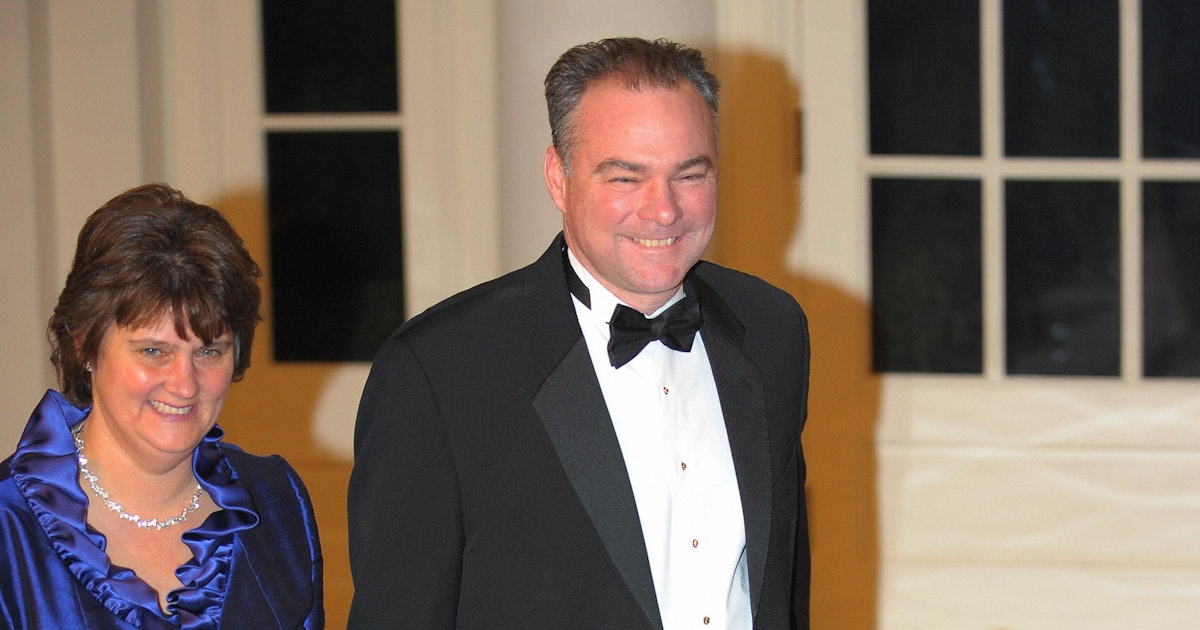
Big Education Ape: Tim Kaine Loves Public Schools. So Does His Wife Anne, Who is Virginia’s Secretary of Education http://bigeducationape.blogspot.com/2016/07/tim-kaine-loves-public-schools-so-does.html

The future of school accountability under ESSA | Brookings Institution

The future of school accountability under ESSA | Brookings Institution:

The future of school accountability under ESSA

Children, going to the first grade, gather in a classroom after an event marking the start of another school year

On July 27, the Brown Center on Education Policy hosted a discussion on the recently passed Every Student Succeeds Act. The panel was moderated by Arne Duncan, nonresident senior fellow with the Brown Center and former U.S. Secretary of Education for the Obama administration. The other two panelists were Hanseul King, State Superintendent of Education for the District of Columbia, and Chris Minnich, Executive Director of the Council of Chief State School Officers.

The No Child Left Behind Act: What Has Been Learned

Following a brief introduction from Brown Center Director Michael Hansen, the panel launched into a discussion of the predecessor to ESSA, the No Child Left Behind act. Mr. Minnich spoke highly of the continued testing mandate of NCLB under ESSA. He stated that NCLB was crucial in instigating state collection of student achievement data and disaggregation of data to identify achievement gaps, declaring that “we cannot go back to a time where we don’t have information on how schools are doing.” However, Mr. Minnich also urged states to learn from their struggles under NCLB, particularly state communication of information and expectations to schools and parents. He recalled that under NCLB several state agencies successfully began to track school performance and demanded that underperforming schools provide plans to raise student achievement, but failed to provide resource support or follow up on implementation. ESSA should give states an opportunity to provide more flexibility and support to fix those problems of the past.
The panelists additionally spoke to the power of higher, clearly defined, standards that were promoted during Race to the Top and the NCLB waiver period. Ms. Kang attributed rapid DC Public School achievement growth to teachers adapting to new standards by changing the types of teaching and learning taking place in classrooms. One example was a new writing assessment that asked students to analyze texts, rather than free-write an imaginative narrative. Ms. Kang described classroom practices focused on reading, discussing, and analytically writing about texts just a few years after adoption of the new assessment. Mr. Minnich concurred with the support for higher standards, remarking that the states that have established clear, higher, standards have seen students rise to the challenge and drive state-wide progress in student achievement.

The Ideal Accountability System

Under ESSA, states will be taking greater control of accountability systems. So what would an ideal accountability system look like? The panelists began by describing the dangers of having too many or too few metrics of student achievement. Under NCLB, a single proficiency standard was used to measure student progress. With so much weight on this one indicator, states were incentivized to push schools and districts to solely chase after higher proficiency rates in reading and math. Yet a system with fifteen to twenty metrics is easily just as ineffective, leading to confusion with unclear educational priorities. Thus, Mr. Minnich explains, an effective accountability system would be holistic while still focusing on clear priorities. Districts should first decide what they value and what improvements they want to see in their schools, and based on these established values, pick three or four clear metrics to focus on. These may include proficiency, growth, graduation rates, student engagement, and college or career-readiness. A limited number of such clear metrics would be easy to report and communicate clearly to schools, parents, and communities.
States will also have to decide on a balance between input-based metrics and output-based metrics. As Ms. Kang said, there is likely no magic proportion between the two, and indeed a large benefit of ESSA is in allowing states to design their accountability measures around their individual contexts. But to inform decisions, states will need a balance of both. Mr. Minnich explained “input metrics tell you how to improve; output metrics tell you where you are.” Both are clearly crucial to the task of identifying problems in school systems and solving them.

Addressing the Achievement Gap

Another important topic for states will be the achievement gap. The panelists agreed that states need to acknowledge historical underinvestment in education resources for certain minority racial groups and establish a dedicated commitment to now overinvesting in children from disadvantaged situations. Ms. Kang discussed the DC Publics Schools’ At-Risk Fund, a new category of spending dedicated to providing additional support for students considered at risk due to factors such as poverty, foster care, or homelessness. Mr. Duncan further discussed the challenge of local, property-tax-based school funding as a contribution to unequal resources and student achievement. He raised the idea of monetary incentives to attract the best faculty and staff to work in high-need schools, underscoring the need for states to overinvest in disadvantaged children and their schools to compensate for at-risk factors.

More Work to be Done

Even after states establish their educational priorities and accountability systems, more questions will have to be answered. How districts will work to raise student achievement matters. For example, focusing on underperforming schools is necessary, but using high-performing and high-growth schools as exemplary models can help districts define what they are aiming for. For effective implementation and a smooth transition from NCLB, states will need to communicate expectations and available support clearly with districts and schools. States will also need to decide what to do when new data, potential metrics, and methods of change are available. Teacher certification and renewal, for example, could prove a useful tool in impacting teaching processes for higher student achievement. It falls to states to determine how they will respond to their increasing quantities of information and new responsibilities.
With the end of NCLB and the beginning of ESSA, there is clearly much work to be done. As Ms. Kang put it, “the power is not just in having information, but how the system should be designed.” How states choose to design new accountability systems will clearly be a large development in years to come.
A full audio recording of the event can be found here.