Latest News and Comment from Education

Monday, November 9, 2015

Schools Matter: My Reaction to Interview with Relay's Dean

Schools Matter: My Reaction to Interview with Relay's Dean:

My Reaction to Interview with Relay's Dean


A puffball questioner at Hechinger Report gave Relay dean, Mayme Hostetter, all the space she needed for a prime infomercial

This is my reaction, posted at Hechinger as the first comment:


Just as charter schools are businesses aimed to supplant most public schools and to desensitize the public to inhumane corporate environments for all public schools, Relay is a business aimed to supplant legitimate college teacher preparation programs and to replace pedagogical theory and practice with an oppressive and rigid instructional catechism based largely on a single book by a Harvard MBA, Doug Lemov.  The remainder rests on the acceptance of servile drudgery by would-be teachers who are brainwashed to believe that only they can save the children, even if dehumanizing practices are required to do so.

Both corporate charters and corporate teacher prep take for granted the educational value of a simplistic and primitive kind of psychometric bean counting that accepts standardized test scores, gained by whatever means necessary, as a proxy for learning, evidence of teaching effectiveness, and proof that these businesses should be rewarded with larger and larger chunks
Schools Matter: My Reaction to Interview with Relay's Dean:
 

State lets Cash revamp five schools without union OK - City & Region - The Buffalo News

State lets Cash revamp five schools without union OK - City & Region - The Buffalo News:

State lets Cash revamp five schools without union OK


In one of her most significant actions as state education commissioner, MaryEllen Elia has granted Buffalo Superintendent Kriner Cash unprecedented power to make changes at the district’s most struggling schools without negotiating them with the teachers union.
Those changes could include a longer school day and year, required teacher training and more control over staffing – all things Cash says are essential to improve student performance.
“Students at these persistently struggling schools need help right now,” Elia wrote in a statement. “The receivership law gives the superintendent enhanced authority in order to maintain local control while facilitating rapid improvement in student outcomes. This receivership collective bargaining agreement will, among other things, enable Dr. Cash to more effectively utilize and deploy effective teachers and make changes to programs and teaching assignments – all of which will ensure that students in these struggling schools are provided with increased educational opportunities.”
In her decision, Elia imposes Cash’s proposals, but with modifications based on her review of parties’ positions and the existing collective bargaining agreement.
Cash indicated last week he wants to act quickly at those schools, but Elia’s decision will likely launch a court battle with the Buffalo Teachers Federation, which could seek an immediate injunction to prevent the changes.
Union President Philip Rumore has been working with New York State United Teachers putting together a case, and Rumore said they will file a lawsuit as soon as they can pull all of the appropriate materials together.
“Our position is receivership is the wrong answer to the wrong problem,” said Carl Korn, a NYSUT spokesman. “There is a concern that the state is rushing too fast without adequate support and funding for the districts.”
Buffalo, which comes second only to New York City in its number of receivership schools, is the first district to ask Elia to intervene under a part of the law that allows her to step in when school leaders cannot negotiate contractual changes with the union. Korn said other districts State lets Cash revamp five schools without union OK - City & Region - The Buffalo News:

Search firm creates the profile for LAUSD's next superintendent - LA School Report

Search firm creates the profile for LAUSD's next superintendent - LA School Report:

Search firm creates the profile for LAUSD's next superintendent 


It doesn’t matter if the next superintendent is a he or she, but it does matter if the he or she is bilingual. The person should be good at communicating and love Los Angeles. And, the candidate should have been a teacher at one point in his or her career.
Those are some of the findings in the draft Leadership Profile compiled by the search firm hired to seek candidates for the next LA Unified superintendent.
In preparation for a public presentation tomorrow to the LAUSD school board, the search firm of Hazard, Young, Attea & Associates posted an array of responses collected from the surveys and from the 100-plus community meetings and interviews the firm held. The data dump includes breakdowns of the kinds of people they’ve heard from as well as all the comments posted on the surveys and all of the issuesbrought up at community meetings and by the board members.
From the seven school board members themselves, the suggestions included finding a fast learner, a listener, someone who cares about children and education, and someone who is media savvy.
A total of 9,461 people filled out the survey either online or on paper, and the same number of teachers filled out the survey as did parents (about 28 percent each). The number of students filling out the online survey was higher than the number of administrators (10 percent compared with about 8 percent).
A total of 1,605 people participated in interviews and focus groups, and the number of “community members” attending was higher than the combined totals of teachers, staff and students.
In a fascinating comparison with more than 70 other school districts and 35,000 responses nationwide, the search firm found that some of the characteristics wanted in an LAUSD superintendent were far different from the national trend. LA Unified Search firm creates the profile for LAUSD's next superintendent - LA School Report:

CURMUDGUCATION: Let's Play Teacher

CURMUDGUCATION: Let's Play Teacher:
Let's Play Teacher


No other profession sees anything quite like it.

Sure, we occasionally see stories about a guy who declares himself a doctor and sets up a practice with no real qualifications. Or a person who just opens a law office without benefit of a legal degree. Or a person who finds ordination documents on line and declares himself a preacher.

We have names for these people. Charlatan. Faker. Con artist. And they generally keep a low profile because everyone understands that such behavior is wrong.

But not in education.

Consider, for instance, the Relay Graduate School of Education. Back in 2007, three charter school operators decided they needed a better pipeline for staffing, a wider pool of teachers to chose from. So they figured out a way to "make" their own "teachers." Hunter College (CUNY) agreed to partner with them, they decided what they thought teachers should know, and they proceeded to crank out "teachers." Who did they work with? Who would sign up for teacher training pioneered by amateurs with no real background in public education. Here's a sentence from a glowing 2012 tribute to Relay on Education Next:

Its students are full-time elementary- and middle-school teachers, almost all of them fresh out of college, almost none of them with a traditional teaching degree.

In effect, Relay filled a special market niche of Teach for America workers who, once in the classroom, realized that their virtually-none training was not sufficient to help them do the work of teaching with real live students.

But Relay served another market as well-- the market for Content Delivery Specialists who would 
CURMUDGUCATION: Let's Play Teacher:


God Bless Vermont


This has been extensively covered, but there are some stories that just can't get too much coverage.

In an era of weaselly lobbyist-hugging education-crumpling behavior in our states, Vermont has been a breath of fresh air.

It was a little over a year ago that the Vermont Board of Education let standardized testing have a piece of their collective minds. 

While the federal government continues to require the use of subjectively determined cut-off score, employing such metrics lacks scientific foundation. The skills needed for success in society are rich and diverse. Consequently, there is no single point on a testing scale that has proven accurate in measuring the success of a school or in measuring the talents of an individual. Claims to the contrary are technically indefensible and their application would be unethical.

And their "whereas..." portion of the testing resolution contained one of my favorite phrases ever in a government document about education:

WHEREAS, the culture and structure of the systems in which students learn must change in order to foster engaging school experiences that provide joy in learning, depth of thought and 

God Bless Vermont

What Did Hillary Clinton Really Mean on Charter Schools? - Politics K-12 - Education Week

What Did Hillary Clinton Really Mean on Charter Schools? - Politics K-12 - Education Week:
What Did Hillary Clinton Really Mean on Charter Schools?


So as I'm sure you've read by now, over the weekend Hillary Clinton, a longtime charter fan, had some tough words for charters, specifically when it comes to equity.
And that sent the Internet into a bit of a tizzy as folks tried to parse her words and figure out what they might mean for charters in a potential Clinton administration, take two.electionslug_2016_126x126.jpg
To recap: During a town hall meeting in South Carolina, Roland S. Martin, a commentator for TV One, asked Clinton what she thought of charter schools and school vouchers, which he pointed out, black parents in South Carolina overwhelmingly support some school choice.
In response, Clinton called out charters for not educating the toughest kids, while public schools have to. And she argued that the point of charters is to figure out what works in education, to benefit regular public schools. (Some charter advocates see the school's purpose differently, more as an alternative.)  
It's possible her comments were inspired by recent coverage of problems at Success for All Charter School, detailed in the New York Times and elsewhere.
Click below to watch the exchange, which begins at about the 35th minute:


Here's a condensed transcript of the interview:
Martin: At TV One, we conducted a poll of black parents. And we asked them the question about charters and vouchers. Seventy-four percent of black parents said they were interested in enrolling their kids in charter schools, seventy-eight percent favored school vouchers ... Do you support the expansion of charter schools and school vouchers?
Clinton: I have for many years now, about thirty years, supported the idea of charter schools, but not as a substitute for the public schools, but as a supplement for the public schools.  ... There are good charter schools and there are bad charter schools, just like there are good public schools and there are bad public schools.
Roland: So let's get rid of all the bad and accept [the] good?
Clinton: The original idea behind the charter schools was to learn what worked and then apply them in the public schools. And here's a couple of problems. Most charter schools, I don't want to say everyone, but most charter schools, they don't take the hardest to teach kids. Or if they do, they don't keep them. And so the public schools are often in a no-win situation. Because they do, thankfully, take everybody and then they don't get the resources or the help and support that they need to be able to take care of every child's education. So I want parents to be able to exercise choice within the public school system not outside of it but within  ... I am also fully aware that there are a lot of substandard public schools. But part of the reason for that is that policymakers and local politicians will not fund schools in poor areas that take care of poor children to the level that they need to be.
So the bolded part of her comments is the part that set the edu-internet on fire. Edu-historian turned progressive uber K-12 blogger Diane Ravitch said she'd like to see the feds focus more on accountability for charters.
But in the conservative journal Education Next, Robert Pondiscio argues that wealthier schools are just as likely to counsel out behavior-problem kids as charters.
Charlie Barone, the director of federal advocacy for Democrats for Education Reform was also unhappy. He called Clinton's comments "highly disappointing" and said they seemed to reinforce fears about how her endorsements from both major teachers unions would affect her K-12 platform.
The part that really bummed Barone out? As he sees it, Clinton completely ignored Martin's comments about a poll showing that two-thirds of black parents support expanding school choice, both through charters and vouchers.
So does all this mean that Clinton would be an anti-charter president?
It's hard to say. For one thing, Clinton is hardly the first generally pro-charter Democrat to raise equity concerns. Former Rep. George Miller, D-Calif. and Barone's one-time boss, asked the Government Accountability Office, Congress' investigative arm, to look into how charters are serving students in special education—and charters came up short.
Barone says a key difference here is that Clinton said "most" charters fail to serve all kids not just "some." And, he's bummed she seems to think charters are outside the public school system, and only to be used as testing grounds, not as alternative schools.  
But Barone also said it's early in the game, and hard to say at this point how a President Clinton would deal with charters, or other edu-issues.
A lot would depend on who a President Clinton would pick for her education secretary. Plus, politicians tend to sound a bit different during the heat of a campaign. (Just ask U.S. Secretary of Education Arne Duncan, who toned down his reformy-rhetoric when speaking to the Democratic National Convention in Charlotte.)
Another thing to note: Clinton didn't seem to answer the voucher question directly. (In listening to her comments, I'll admit I was kinda confused on this point. I thought Clinton was arguing against vouchers when she said, "I want parents to be able to exercise choice within the public school system not outside of it but within." But that could also be interpreted to mean that she's discouraging charters.)
What do you think she was trying to say? And what do you think of Clinton's comments? Internet blip, or is she seriously anti-charter? Comments section is open!What Did Hillary Clinton Really Mean on Charter Schools? - Politics K-12 - Education Week:


Testing, Charters and Strikes, oh my! Video of panel with Jesse Hagopian, Wayne Au and Dora Taylor | Seattle Education

Testing, Charters and Strikes, oh my! Video of panel with Jesse Hagopian, Wayne Au and Dora Taylor | Seattle Education:

Testing, Charters and Strikes, oh my! Video of panel with Jesse Hagopian, Wayne Au and Dora Taylor

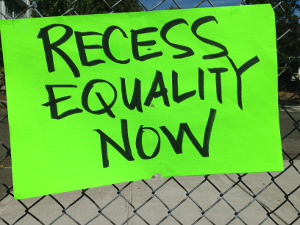
recess_equity


On October 17 of this year, Jesse, Wayne and I spoke on a panel at the annual Northwest Teaching for Social Justice Conference sponsored by Rethinking Schools about the testing opt out movement, the recent Seattle teachers’ strike and the Washington State Supreme Court decision on charter schools.
Hope you enjoy it.
Dora

Boston Charter Schools - Mayor Marty Walsh Reverses Position on 'School Reform'

Boston Charter Schools - Mayor Marty Walsh Reverses Position on 'School Reform':

Boston's Mayor Goes Full Scott Walker on Charter Schools

Mayor Marty Walsh has broken up with Candidate Marty Walsh.


C'mon, Marty Walsh. This is not acceptable.
The ever-essential Diane Ravitch catches Walsh in the middle of performing what we like to refer to around the shebeen as a "full Scott Walker"—namely, pulling a fast one once you're elected that you never made a part of your campaign. It's not breaking a campaign promise.  It's breaking a campaign presumption, which is supposed to make a difference. Anyway, Walsh beat John Connolly at least partly by accusing Connolly, who is an open ally of the education "reform" grifters, of trying to destroy the public school system in the city where public schools were invented in this county. Now, it appears that Mayor Walsh has broken up with Candidate Walsh. He's cut a deal with some of the most odious practitioners of the school "reform" grift, including the Walton Family of Wingnuts, and he did so under the radar. His goal, a "facilities plan," is to close 36 public schools in order to make way for charters—and, it seems, for the city's parochial schools. Fortunately, a local blogger filed a FOIA request and got her hands on the relevant documents.
The real irony is that, while he's covertly soliciting money from Bill Gates and from the heirs of Sam Walton, Walsh is also squabbling with Republican Governor Charlie Baker's plan to open the floodgates of charterism statewide. The results of this can be seen in the testimony of an administrator from a suburban Massachusetts public school district.​
Ruth C. Gilbert-Whitner, superintendent of the Whitman-Hanson Regional School District in Southeastern Massachusetts, said charter schools have siphoned $309,000 from the district's budget this year, causing drastic cuts in its library services. "Each and every student in the Commonwealth deserves a high-quality education," she said, "[not] a dual system of publicly funded education that charges traditional districts for circumstances beyond their control and requires them to operate school systems under a vastly different set of regulations."
​Charterism is privatization on the public's dime, the worst of all possible worlds. It doesn't matter if the tap gets turned on slowly, or all at once. It's about corporations being allowed by law to get their mitts in the till. C'mon, Marty. You know that's true.​Boston Charter Schools - Mayor Marty Walsh Reverses Position on 'School Reform':

Seattle Schools Community Forum: A Vote of No Confidence in Nyland Coming?

Seattle Schools Community Forum: A Vote of No Confidence in Nyland Coming?:

A Vote of No Confidence in Nyland Coming?


I haven't raised this idea but others have. 

My analysis of the situation is below but here's what made me a "vote of no-confidence" believer; it's a quote from a story that KIRO radio did about the State of the District speech.

He also defended his salary. 

"My raise is not going to solve anywhere near any of the issues that we have on the table," he said. "I have done better than anybody else. I'm gonna take the smallest raise in the district, as far as I know.

Sadly, he didn't explain why he deserves a raise. 

The raise is about $13K+.  He is offering to donate half of it back to the General Fund for this year. 

I can only gently say that $13,000 won't solve big issues but let's start a list of how it could help (because for some groups/schools, that money is a big deal.)

- fund more ORCA cards at RBHS - I am still waiting on the data from SPS 
Seattle Schools Community Forum: A Vote of No Confidence in Nyland Coming?:

Anatomy of a School Board Election: When Big Money Wins, Kids Lose | Kaplan for Kids

Anatomy of a School Board Election: When Big Money Wins, Kids Lose | Kaplan for Kids:

Anatomy of a School Board Election: When Big Money Wins, Kids Lose


“Reformers” in Denver are claiming victory, and to some extent they should.  They have been successful in buying a 7-0 school board.  Following is the story of how the last seat was purchased on November 3 and how the big money was able to hold on to the two “reform” seats up for re-election.
Should you not wish to read all of my analysis here are the headlines:
District 1: The incumbent was going be difficult to beat, for while voting for all things “reform,” she has managed to keep most of “reform” out of her mostly affluent, mostly white district.
District 5: There was no way “reformers” were going to lose this seat.  This was the only remaining obstacle to a unanimous board, the only thing standing between  public dialogue and silent acquiescence to all staff proposals.
At large: Had the election been held on Friday, October 28, 2015, the challenger, Robert Speth, parent not politician, would have defeated Board President Allegra “Happy” Haynes.
Now on to the details.
While anti-reformers locally and nationally are celebrating the victories in Colorado’s Jefferson County (Jeffco) and Douglas County (Dougco), we in Denver are left with a unanimous board devoted to continuing the destruction of public education in Denver Public Schools. Those of you unfamiliar with Colorado, briefly, Jeffco and Dougco are suburban Denver counties. They are more affluent and less diverse than Denver. The issues in both counties differ greatly from the “reform” happening in Denver.  Dougco and Jeffco boards were overtly arrogant in their power grabs. Not so in Denver, so while I take my hat off to them and while I am very envious of their victories, Denver is a completely different ball game. Koch brothers’ money along with money from Democrats for Education Reform (DFER)  and some from the Colorado Education Association (CEA) flowed into Jeffco;  Koch brothers’ money flowed into Dougco; unlimited and unknown amounts of money from (DFER) and Stand for Children money flowed into Denver.  Democrats in Denver undoing public education.  Who ever would have thought that possible?
Denver is well down the “reform” road. Ten years. National attention has been showered on Denver Public Schools for its success in implementing the business model in spite of data showing snails’ paced academic improvements. (See here and here).  And while national “reform” publications and institutions try to tell you Denver is a success story, the recent data tell you something completely different.(Center on Reinventing Public EducationCouncil of Great City SchoolsNational Assessment of Educational Progress ).  Implementing “reform” is one thing; getting results a completely different thing.  Test and punish should be the mantra of this District as our students, communities, families, and teachers, suffer.  And, ironically, on election day the New York Times published an analysis of a new report which strongly suggests American schools are not failing students.  American society is.  Schools cannot and should not be held responsible for poverty and its consequences.  Society can and should be. Also, on Thursday, November 5, 2015 the Colorado Court of Appeals ruled against part of the state’s punitive teacher evaluation bill SB 10-191. And on the same day the DPS Board of Education had a staff presentation making school closures more institutionalized, including providing the board with predetermined questions! Now, if you are one of seven elected Board members and you need the District staff to provide you with questions to ask, I  Anatomy of a School Board Election: When Big Money Wins, Kids Lose | Kaplan for Kids:

American Education Week to Celebrate the Nation's Public Schools and Educators - NEA Today

American Education Week to Celebrate the Nation's Public Schools and Educators - NEA Today:

American Education Week to Celebrate the Nation’s Public Schools and Educators


November 16-20 marks the National Education Association’s 94th annual celebration of American Education Week. The AEW festivities will honor the team of people who work in the nation’s public schools, everyone from the bus driver and classroom teacher to the cafeteria worker and administrative staff, plus countless others. The celebration is also an opportunity for school and community leaders to renew their commitment and support for quality public education for all students.
Video: NEA President Lily Eskelsen García announces the celebration of American Education Week 2015.
The 2015 theme, “Great Public Schools: A Basic Right and Our Responsibility,” will be reflected throughout the week of activities. NEA President Lily Eskelsen García kicks off the week with a special video message and blog featuring NEA Education Support Professionals and the important work they do to ensure every child has a great education. The spotlight on NEA ESP members continues throughout the week, featuring a host of resources, from NEA’s ESP Coloring Book to fun facts and videos showcasing the work of education support professionals.
NEA Vice President Becky Pringle and Secretary Treasurer Princess Moss will visit Maryland and Virginia schools, joining state and local leaders in AEW festivities and thanking public school teachers, education support professionals and parents for the work they do every day to make sure all students are safe, ready, and able to learn.
American Education Week’s schedule of activities include:
  • Monday, November 16: National Kickoff Day
  • Tuesday, November 17: Parents’ Day
  • Wednesday, November 18: Education Support Professionals Day
  • Thursday, November 19: Educator for a Day
  • Friday, November 20: Substitute Educators Day
American Education Week also marks the launch of the new NEA Brand campaign, a year-long advertising campaign promoting the work of NEA members. The ads, which will appear on cable news, social media, digital, and NPR, are designed to tell the story of the great work our members do for each and every student they serve. The ads will run from American Education Week to Back to School week 2016. For more on the campaign, go to www.nea.org/GreatPublicSchools.
American Education week artwork and activities are available at www.nea.org/aew.
Video: “Inspiration”

WTU contract negotiations team - Written by Candi Peterson, WTU General Vice President

The Washington Teacher:

Candi Peterson

Candi Peterson
Education blogger & activist


Written by Candi Peterson, WTU General Vice President

Statements or expressions of opinions herein 'do not' represent the views or official positions of DCPS, AFT, Washington Teachers' Union (WTU) or its members. Views are my own. 

For the record, I am not a member of the WTU contract negotiations team. Like you are, I am an elected officer and concerned union member. 

From where I sit, it’s not looking good for the negotiations between WTU and DCPS. Let’s just say negotiations aren’t dead, but negotiations seem to have broken off with WTU and members of the Chancellor’s team.

DCPS teachers are complaining because the last contract expired in August 2012, and three years later, they still are without a contract. Having gone this long without a contract, it’s understandable why many teachers’ see no real end in sight.

In reaction to teachers’ concerns about not having a contract, WTU recently released a contract update on October 19, 2015; titled WTU-DCPS Contract Talks FAQs. This fact sheet states:

“WTU President Elizabeth Davis and our negotiators are committed to reaching a new agreement by the end of December. In order to accomplish this, the WTU will direct its focus to engaging in full-time contract negotiations. We’re pushing hard towards that goal….”

We must ask if President Davis is recommending full time contract negotiations, is this a viable option given that most of the members on the negotiating team are  either full-time principals on the chancellor’s team or full-time teachers on the WTU team? Is it likely that DCPS would agree to this when this proposal would require that teachers and principals on both sides would have to abandon their schools/classes for an extended period of time?  Is the end of December 2015 a realistic time frame for the completion of a tentative agreement?  It seems highly unlikely unless Davis has a tentative agreement tucked away in her hip pocket. When did both sides-WTU and DCPS last meet? Was it during last school year (14-15) ?

The WTU FAQ sheet gives the following responses regarding Why negotiations
are taking so long?

“Bargaining can be a long and complicated process particularly when there are significant issues to be resolved. The talks have now stretched over two administrations. The former administration had offered proposals that would have lowered the professionalism and undercut the voice of teachers….

Your bargaining team drafted new proposals that would move us in a better direction …. Time and again, the school district has appeared to take the slow play approach to bargaining. We repeatedly proposed full time negotiations everyday-DCPS said no. We proposed meetings over the summer-DCPS said no. Back in January, we requested the financial and programmatic data essential to informed negotiations nearly 10 months later, we are still waiting. DCPS says it agrees with the goal of finishing by the end of the year, and we are hopeful DCPS actions in the future will represent a real commitment to this aim.

WTU and DCPS shared their respective proposals, and it was clear that we were far apart on some major issues; including protected planning time, class size, supplies and support.”

It’s a given that contract negotiations can be long and complicated and have spanned  two administrations under Saunders and now Davis. This is not news. This explanation  focuses on what former President Saunders’ The Washington Teacher:

Mike Klonsky's SmallTalk Blog: Rahm's hidden corruption tax

Mike Klonsky's SmallTalk Blog: Rahm's hidden corruption tax:

Rahm's hidden corruption tax


As Rahm Emanuel is about to hit city residents with the biggest property tax increase in history, there's another hidden tax we already pay. It's one Rahm never mentioned in recent budget hearings. I  call it the corruption tax, and it's a big one. 

According to a recent study, everyone in this state pays an annual corruption tax of $1.308 and Chicago remains the "corruption capital" of the U.S. with 1,642 public corruption convictions from 1976 through 2013. That total has obviously risen in the past two years.

The latest installment of the tax will go to pay the lawyers defending the CPS Gang of 4, charged or implicated in the SUPES scandal. That's Barbara Byrd-Bennettand her three aides (who've also been named as perps in Detroit's Houghton Mifflin Harcourt corruption scandal) Sherry Ulery, Rosemary Herpel andTracy Martin. While CPS isn't currently on the hook for Byrd-Bennett's criminal defense lawyers, they (we) are still paying a hefty sum for her salary, benefits and golden parachute contributions.

According to the Sun-Times, Chicago Public Schools’ lawyers’ bills for the Mike Klonsky's SmallTalk Blog: Rahm's hidden corruption tax:


Xavier University's Way to Keep Higher Ed from Becoming the Next Victim of Corporate Ed Reform | John Thompson

Xavier University's Way to Keep Higher Ed from Becoming the Next Victim of Corporate Ed Reform | John Thompson:

Xavier University's Way to Keep Higher Ed from Becoming the Next Victim of Corporate Ed Reform


As Kwame Anthony Appiah reminds us, universities advance great science, literary culture, and the educated citizenry necessary for a democracy, and they do so by bringing a diverse set of conflicting ideas and ideals into a learning culture. The same could be said about the New York Times Magazine's special issue, "Collegeland."
The magazine begins with Appiah's "What Is the Point of College," which explains two competing visions for higher education today - "Utility U." and "Utopia U." The bifurcation is between Utility U., and its goal of getting a good return on your college investment, and Utopia U., which is "about building your soul as much as your skills." The divide goes a long way towards explaining other legacies of the growing corporate dominance of America.
The special issue ends with Nicole Hannah-Jones's "Conscience of the Nation." She concludes with a statistic that should shock all of us into action. In 1978, just 542 black men went to medical school. Even though the nation's black population had increased markedly, last year just 515 black men entered medical school!
In between, Appiah, Hannah-Jones, and the other contributors explain how global and national economic and political forces have changed universities and how transformations in higher education will affect the broader society. To understand their nuanced analyses, however, we must return to Appiah's introduction and the foundation it lays for "Collegeland."
Appiah explains that universities have always been a place to explore both "the qualities of your skills and of your soul." These "are two separate questions that aren't quite separable." But, "college was a pretty good place to work out some answers to both."
In Utility U., Appiah writes "students are consumers; they have needs and desires to Xavier University's Way to Keep Higher Ed from Becoming the Next Victim of Corporate Ed Reform | John Thompson: